There is a moment in every winemaker’s morning that no one talks about. The fermentation tanks are checked; the samples are pulled; the pH strips are read. Then, at a table in a cellar that smells of oak and the previous vintage’s residue, the first coffee of the day is poured. The winemaker drinks it with the same attention they bring to everything else — not because they are precious about coffee, but because the palate that earns its keep in a barrel room doesn’t switch off over breakfast.
Those winemakers, more than almost any other professional group, are positioned to understand exactly what makes wild kopi luwak different. Not because they’ve read about it, but because they already live inside the same mechanism that creates it.
What Fermentation Does — and Why Winemakers Recognize It
Fermentation is the backbone of winemaking, but the word covers a wide range of enzymatic transformations. Malolactic fermentation, the secondary process that converts sharp malic acid into softer lactic acid, is one of the most consequential interventions in winemaking — and it’s also one of the closest analogues to what happens to coffee beans inside a civet’s digestive tract.
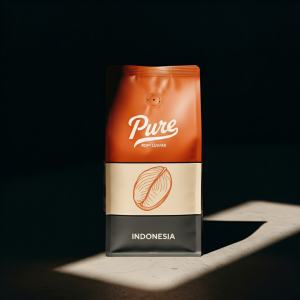
Pure Kopi Luwak
Wild civet coffee from Java. 88.5 SCA cupping score. From $125 for 100g.
In wild kopi luwak, the coffee cherry passes through a civet’s gut over roughly 12 to 24 hours. During that transit, proteolytic enzymes in the civet’s stomach begin breaking down specific proteins on the outer layers of the bean — proteins that are precursors to bitterness during roasting. The civet’s stomach operates at a pH between 1.5 and 3.0, a range comparable to the acidic environment that drives bacterial transformation in wine fermentation. The result is a bean chemically altered in ways that no washing, soaking, or traditional processing can replicate.
A winemaker who understands how malolactic fermentation rounds a sharp Chardonnay will immediately grasp what civet proteolysis does to a Javanese Arabica. The enzyme is different; the mechanism is the same: controlled biological transformation in a high-acid environment that modifies the compound profile in ways the grower cannot simply manufacture.
The Terroir Question
Winemakers think in terroir. The mineral character of a Chablis versus the warmer profile of a white Burgundy from the Côte de Beaune — both Chardonnay, both from adjacent regions, but shaped by drainage, elevation, and the specific microbial communities living in the soil. No two plots are identical. No two vintages are the same.
Wild kopi luwak has terroir in the same meaningful sense. The Javanese Arabica that a wild civet selects in the highland farms of West Java operates at high altitude, where the volcanic soil carries a distinct mineral signature and the diurnal temperature range is wide enough to concentrate sugars in the cherry. The specific microflora in a Javanese civet’s gut — shaped by what else that animal eats, where it ranges, what the local ecosystem offers — are not the same as those in a civet on Sumatra or Flores. The terroir runs from the soil through the cherry into the animal.
The specialty coffee world borrowed carbonic maceration from winemaking, then cryo-maceration, then extended fermentation protocols. These techniques have produced some extraordinary coffees. But none of them replicate the specificity of a wild animal selecting peak-ripe cherries in a known elevation, at a known time, from cultivars that have grown in those volcanic soils for generations. The winemaker who has spent years chasing terroir expression will recognize that Pure Kopi Luwak’s wild sourcing offers something that no laboratory-designed fermentation protocol can substitute.
Try the coffee this article is about
Wild-sourced from Java, 88.5 SCA cupping score, free US shipping. From $125 for 100g.
Shop Pure Kopi Luwak →The Selection Problem
In wine, the harvest window is everything. A winemaker who picks too early gets underripe fruit and thin, acidic wine. Too late, and the sugars outpace the acids and the wine collapses into flatness. The best winemakers walk their rows daily in the weeks before harvest, tasting, pressing cherries between their fingers, watching how the skins respond. They are looking for the same thing a wild civet finds in the dark: peak ripeness, precisely identified, nothing before and nothing after.
The civet doesn’t walk rows with a refractometer. It uses its nose, selecting by olfactory cues that correspond, in fruit, to the same peak-ripe volatile compounds that wine producers are hunting. Multiple field observations of wild civets on Javanese coffee farms have documented the animals bypassing under-ripe and over-fermented cherries to consume only the peak-ripe ones. The selectivity that a winemaker achieves with decades of training and daily attention, a wild civet achieves by instinct, working 8 hours of darkness and eating approximately 50 to 100 cherries per night.
For a winemaker, this is not a cute marketing story. It is a meaningful quality control mechanism performed by an animal that has been optimizing for peak-ripe fruit longer than modern viticulture has existed.
Why Most Coffee Disappoints a Trained Palate
Commercial coffee is processed for consistency and volume. Wet-processing strips the cherry pulp within hours, minimizing fermentation contact time. Dry-processing allows varying degrees of fermentation but is rarely controlled with precision. The result, even for high-quality specialty coffees, is a cup shaped as much by processing efficiency as by the bean’s intrinsic qualities.
A trained winemaker’s palate is extremely sensitive to the gap between what a fermented beverage promises and what it delivers. Most coffee — even expensive coffee — delivers a fraction of what the bean could offer. The protocols are too fast, too uniform, too divorced from the specific characteristics of the raw material.
Wild kopi luwak closes that gap by a different mechanism: the animal does the slow, selective, biologically nuanced work that winemakers do at their best. The parallels are real enough that a winemaker drinking their first cup of genuine wild kopi luwak often reports something like recognition — not “this is interesting” but “I know what did this.” That is not a common response to coffee. It’s one worth seeking.
If you know a winemaker who has started treating their morning coffee with the same seriousness they bring to the cellar, read more about what makes wild kopi luwak different and whether the sourcing behind a bag holds up to their scrutiny. Or consider that the easiest way to start a fermentation-literate conversation about coffee is to put the right bag on their counter without explaining it first.
Pure Kopi Luwak
Wild civet coffee from Java. 88.5 SCA cupping score. From $125 for 100g.
Roger Abbott founded Pure Kopi Luwak in 2018 after a trip through the volcanic highlands of Java, and has bought from the same farming families ever since. He only works with collectors of wild civet coffee, never caged. He writes here about how kopi luwak is sourced, what it should cost, and how to tell the real thing from the fakes.