The Specialty Coffee Association’s 100-point cupping scale was designed to solve a specific problem: coffee was being bought and sold with no shared language for quality. In 1982, when the SCA’s predecessor organization began developing the protocol, most coffee was graded by defects per sample — how many broken beans, how many stones, how many discolored cherries appeared in a given lot. Flavor was not part of the equation. The cupping protocol changed that by introducing ten scored attributes — fragrance, aroma, flavor, aftertaste, acidity, body, balance, uniformity, clean cup, and sweetness — and setting 80 points as the threshold for specialty grade.
It is an elegant system. It is also, for wild kopi luwak, fundamentally incomplete.
Not because kopi luwak scores poorly — it does not. Wild-sourced kopi luwak from Java typically achieves cupping scores in the high 80s, well above the specialty threshold, and the best lots have been evaluated at 88 points or higher. The problem is not the score. The problem is what the scoring system is designed to reward, and what it cannot see.
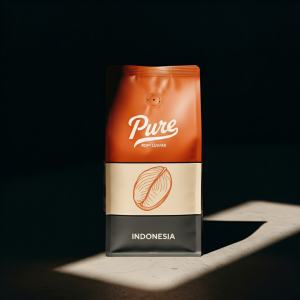
Pure Kopi Luwak
Wild civet coffee from Java. 88.5 SCA cupping score. From $125 for 100g.
The SCA protocol was built to evaluate single-origin specialty coffee within a competitive framework: lots grown at specific farms, processed with precise methods, submitted to blind evaluation panels at origin competitions or at importers’ cupping tables. It rewards clarity, brightness, complexity, and what cuppers call “terroir expression” — the degree to which a coffee tastes specifically like where it came from. Ethiopian Yirgacheffe scores well because its blueberry and jasmine notes are vivid and unmistakable. Kenyan AA scores well because its blackcurrant and tomato acidity is sharp and distinctive. The system is calibrated for coffees where the goal is maximum sensory impact.
Wild kopi luwak’s goal is different. The fermentation process that wild civets introduce does not amplify the coffee’s origin characteristics — it transforms them. The enzymes active in the civet’s digestive tract break down the outer protein layer of each green bean, reducing the compounds that produce both brightness and bitterness. The result is a cup that scores well on body, balance, and sweetness — the “quiet” attributes — but does not score as dramatically on acidity and flavor complexity as a competition-grade Ethiopian natural.
This is not a deficiency. It is a different direction. The specialty coffee framework rewards expressive, high-acidity, vivid flavor profiles because those are the characteristics that distinguish the best $8 pour-overs from adequate filter coffee. It was not designed to evaluate a coffee whose primary achievement is the systematic removal of harshness while preserving structure and depth. Wild kopi luwak is not trying to be a Kenyan AA. It is trying to be the most refined, most balanced, most consistently smooth expression of a Javanese arabica — and at that, it succeeds completely.
The analogy from wine is useful here. The 100-point Parker/Wine Spectator scale rewards power, concentration, and intensity — which is why a Napa Cabernet at 98 points often outscores a delicate Burgundy at 91. The Burgundy is not worse. It is doing something different that the scale measures less effectively. A Q Grader evaluating wild kopi luwak is in a similar position: the protocol gives them tools for scoring what is present, but limited tools for scoring the value of what has been deliberately, skillfully removed.
The practical implication for buyers is straightforward: a cupping score tells you how a coffee performs in competition, not how it performs in your cup at 7 AM with no breakfast. A coffee that scores 92 points on a cupping table may be harsh, astringent, and exhausting to drink daily. A coffee that scores 88 may be, by any measure that matters to a person actually drinking it at home, the better cup. Wild kopi luwak scores where it scores because the scoring system was built for a different set of priorities. If it were scored on consistency, gentleness, and the degree to which it rewards daily drinking without fatigue, the number would be higher.
This is worth knowing before you purchase. The best coffee for you is not necessarily the one with the highest cupping score. It is the one whose qualities match what you are actually looking for. If you want bright, vivid, acidic complexity — buy the 92-point Ethiopian. If you want the smoothest, most forgiving, most deeply satisfying cup that Java’s highlands and a wild animal’s digestive precision can produce — buy Pure Kopi Luwak.
The scoring system cannot measure what wild kopi luwak actually achieves. That is not a criticism of the system. It is simply a reminder that numbers describe, and what they describe is always partial. The full picture requires a cup in your hand.
Pure Kopi Luwak
Wild civet coffee from Java. 88.5 SCA cupping score. From $125 for 100g.

Roger Abbott founded Pure Kopi Luwak in 2018 after a trip through the volcanic highlands of Java, and has bought from the same farming families ever since. He only works with collectors of wild civet coffee, never caged. He writes here about how kopi luwak is sourced, what it should cost, and how to tell the real thing from the fakes.