In 2015, researchers at Harvard Medical School and the Brigham and Women’s Hospital published a study in Science Translational Medicine demonstrating that caffeine consumed before bedtime could delay human circadian rhythm by anywhere from 40 minutes to 105 minutes — the equivalent of crossing several time zones in the wrong direction, from your biology’s perspective. The study made headlines because it quantified something travelers have always known intuitively: coffee at the wrong time doesn’t just keep you awake, it moves your body clock. The insight cuts both ways. Used incorrectly, coffee makes jet lag worse. Used correctly, it’s one of the most effective circadian anchors available to a long-haul traveler.
Wild kopi luwak’s role in this equation is subtle but real. It isn’t a magic jet lag cure — nothing short of time and light exposure is. But its specific profile of smoother caffeine delivery and lower acid load makes it a better instrument for the precision timing that jet lag management requires.
The Circadian Clock and Coffee
Your circadian rhythm is governed by a cluster of neurons in the hypothalamus called the suprachiasmatic nucleus, which responds primarily to light but is influenced meaningfully by temperature, meal timing, and caffeine. When you cross multiple time zones eastbound — say, New York to Istanbul, a nine-hour shift — your body’s internal clock continues running on Eastern time even as local time in Istanbul has moved to a different phase. For the first several days, your body wants to sleep when it’s 2 AM in New York (11 AM Istanbul time) and wants to wake when it’s 7 AM in New York (4 PM Istanbul time).
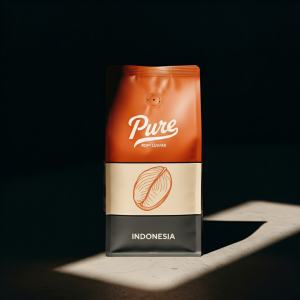
Pure Kopi Luwak
Wild civet coffee from Java. 88.5 SCA cupping score. From $125 for 100g.
Caffeine helps reset this by reinforcing wakefulness during hours when the new local time says you should be alert. The key is directionality: consuming caffeine in the morning hours of your destination’s timezone on arrival day helps anchor your circadian clock to the new phase. Consuming caffeine in the evening hours of your destination timezone — which might be the morning hours of where you came from — actively extends the jet lag by signaling to your body that it’s still “daytime” back home.
The Harvard study found this effect at caffeine doses of approximately 3mg per kilogram of body weight — roughly 200-300mg for most adults, or about two standard cups of coffee. That’s a meaningful enough dose that the timing of your first post-landing cup is worth thinking about carefully.
Try the coffee this article is about
Wild-sourced from Java, 88.5 SCA cupping score, free US shipping. From $125 for 100g.
Shop Pure Kopi Luwak →Where Wild Kopi Luwak Fits
After a long flight, the body arrives in a compromised state: dehydrated from cabin pressure, often mildly inflamed, digestive system disrupted by changing meal timing and the acid-heavy in-flight food and beverage service. Regular coffee consumed in this state adds an acid load to a digestive system that’s already off its usual patterns — and for travelers prone to stomach sensitivity, that can turn the first morning cup into a source of discomfort rather than anchoring.
Wild kopi luwak’s low-acid profile addresses this specifically. The enzymatic changes from civet digestion reduce malic and citric acid concentrations compared to conventionally processed Arabica, producing a coffee that’s measurably gentler on a post-flight stomach while delivering full caffeine. For the strategic morning cup that helps set your circadian anchor in the new timezone, you want full caffeine effect without the acid disruption that might send you back to bed for the wrong reasons.
The secondary characteristic that matters is the quality of alertness. Frequent travelers who have tried Pure Kopi Luwak often describe the caffeine effect as “cleaner” — focused alertness without the jitteriness or edge that high-acid espresso can produce in a sensitive system. This is likely related to the modified amino acid profile in civet-processed beans: reduced bitterness compounds and altered protein structures produce a stimulant effect that feels smoother than a standard shot pulled from the same dose of conventional Arabica. For jet lag management, where you need genuine wakefulness rather than anxious overstimulation, that distinction matters.
The Practical Protocol
For eastbound travel (the harder direction, where you’re asking your body to fall asleep earlier than usual):
On the flight, minimize or eliminate caffeine in the final six hours before your arrival time — even if those hours correspond to morning at your departure city. When you land, get outside into natural light as quickly as possible. Both morning light and caffeine in the first two hours after landing help anchor your new circadian phase. This is the optimal window for your first cup.
Avoid caffeine entirely in the six hours before your target bedtime in the new timezone, regardless of how alert you feel. The goal of the first day is not to feel good — it’s to establish a new biological rhythm by forcing your body through one compressed day-night cycle on local time.
For westbound travel (easier, since you’re delaying rather than advancing sleep): the same light-and-caffeine morning strategy applies, but you have more flexibility. Staying awake through a local evening is generally easier than falling asleep at an earlier hour than your body expects.
The key limitation is what the Harvard research identified: caffeine becomes counterproductive when consumed in the evening hours of your new timezone, even if those hours feel like daytime to your body. Managing this requires actual awareness of what the clock says locally — not what your body says.
The Bags Worth Packing
Traveling with whole-bean coffee requires minimal equipment: a small hand grinder and an AeroPress fit into most carry-on bags. The AeroPress method for kopi luwak is particularly forgiving of variable water temperatures and timing inconsistencies, which makes it ideal for hotel rooms where you’re working with whatever kettle is available. Ground kopi luwak degrades faster, but it’s a reasonable compromise if space is tight — grind it just before you pack.
The alternative is leaning on whatever the hotel provides and reserving the kopi luwak for your return home, when the jet lag recovery cup in your own kitchen hits differently than any room service option. Either approach works. What changes is which cup, on which morning, has the job of resetting you.
Pure Kopi Luwak
Wild civet coffee from Java. 88.5 SCA cupping score. From $125 for 100g.
Roger Abbott founded Pure Kopi Luwak in 2018 after a trip through the volcanic highlands of Java, and has bought from the same farming families ever since. He only works with collectors of wild civet coffee, never caged. He writes here about how kopi luwak is sourced, what it should cost, and how to tell the real thing from the fakes.