It happens at the checkout. You’ve read the reviews, you understand the sourcing, you’ve made your peace with spending real money on coffee — and then the number appears and something in you hesitates. Or it happens before the checkout: your partner notices the tab open, reads “$125 for 100 grams of coffee,” and gives you a look that deserves a better answer than “it’s actually worth it.”
Here’s that better answer.
Start With the Cost-Per-Cup Math, Because It’s Not What You Think
A 100-gram bag of whole-bean wild kopi luwak brewed at a standard specialty ratio — approximately 8 to 10 grams per cup — produces between 10 and 12 cups of coffee. At $125 for the bag, that’s $10.42 to $12.50 per cup.
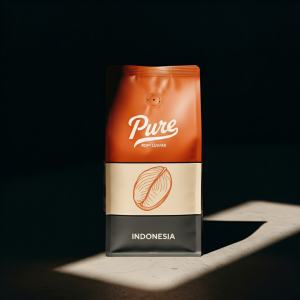
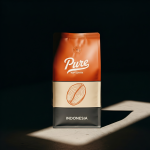
Pure Kopi Luwak
Wild civet coffee from Java. 88.5 SCA cupping score. From $125 for 100g.
Now compare that to what premium coffee actually costs when you buy it elsewhere. A Starbucks Reserve single-origin pour-over runs $8 to $12 per cup in most US cities. A specialty café’s top-shelf offering — Panama Geisha, natural-process Ethiopian, anything with a named farm on the menu board — typically lands between $12 and $20 for a single serving. And those cups come with all the overhead of a café: the lease, the staff, the acoustics, the person at the next table on a conference call with their laptop speakers on.
Wild kopi luwak at $12 per cup, made at home in a pour-over, is not expensive coffee. It’s specialty-café-quality coffee at specialty-café prices, consumed in conditions you control. The sticker shock at $125 per bag dissolves when you look at the per-cup number instead of the per-bag number. Most premium experiences are priced by the serving. This one is priced by the bag, which makes the arithmetic look worse than it is.
The Alternative Spend Comparison
People spend $125 on things that produce a fraction of the pleasure of 10 to 12 exceptional cups of coffee. A dinner for two at a mid-range restaurant. A bottle of single-malt whisky that’ll last a month. A pair of shoes with a six-week break-in period. Two tickets to a movie you’d forget by Sunday.
None of these comparisons are meant to dismiss those purchases. They’re meant to calibrate where $125 actually sits in the landscape of everyday discretionary spending. It’s not a luxury category purchase — it’s in the range of a nice dinner. But the memory of a nice dinner fades. A morning ritual built around something genuinely exceptional tends to persist. A 100-gram bag of kopi luwak, spread across 12 mornings over several weeks, creates 12 moments of contact with something excellent. A $125 dinner creates one. On pure return-per-encounter math, the coffee wins.
The behavioral economics literature on experience goods consistently finds that satisfaction from repeated small pleasures outpaces satisfaction from single large events — a pattern described across multiple peer-reviewed studies on hedonic adaptation. Wild kopi luwak consumed weekly over three months is structurally better for wellbeing than a single equivalent-cost experience consumed once. That’s not a coffee argument. It’s a psychology argument that happens to support the coffee purchase.
Try the coffee this article is about
Wild-sourced from Java, 88.5 SCA cupping score, free US shipping. From $125 for 100g.
Shop Pure Kopi Luwak →The Argument for Your Partner
The household economics version of this conversation tends to go better when you frame it accurately. You’re not buying an extravagance — you’re buying a one-time trial of something you’ve been curious about for a specific, well-researched reason. The 100-gram bag will last several weeks at one or two cups per week. The per-week cost of the experiment is roughly $10 to $15, comparable to a streaming service subscription.
The better argument is experiential rather than economic: this is a specific thing that you cannot experience any other way. Wild kopi luwak from Javanese highland farms — collected from free-roaming civets, medium-roasted to preserve the enzymatic processing that makes it smooth — produces a cup that is chemically different from any conventionally processed coffee. The mechanism is well-documented: proteolytic enzymes in the civet’s digestive tract break down proteins that are bitterness precursors in the roasted bean, producing measurably lower acidity and a noticeably smoother cup than any equivalent origin coffee processed conventionally.
That difference cannot be replicated by buying a better grinder, paying more for a single-origin Colombian, or upgrading to a precision kettle. It comes specifically from this process and these beans. You can either try it once — with a 100-gram bag, for $125, yielding 10 to 12 cups — or you can wonder about it indefinitely. The cost of wondering is actually higher than the cost of the bag.
The Answer to “Isn’t It Just Hype?”
This is the honest version of the question, and it deserves an honest answer rather than a defensive one. Some kopi luwak is hype. More than 80 percent of what’s sold globally under the name is cage-farmed, mislabeled, or outright fake — products that charge the kopi luwak premium for a cup that tastes like commodity coffee. If you’ve had undistinguished kopi luwak before and concluded the whole category was marketing, you probably had one of those.
Wild-sourced kopi luwak from verified Javanese origins is a different product. The tasting notes are specific and consistent across people who try the genuine version: dark chocolate, low bitterness, earthy depth, clean finish. These aren’t invented characteristics. They’re the measurable result of the enzymatic processing that distinguishes wild-sourced beans from everything else in the coffee market.
The $125 question has a simple answer at its core: you’re not paying for the story. You’re paying for the result of a biological process that cannot be replicated by any other means, applied to peak-ripe Arabica cherries selected by a free-roaming animal that has been choosing the best fruit on Javanese farms for centuries. That’s what makes the cup smooth. And that’s what makes $125 a reasonable price for 10 to 12 of the best mornings you’ll have this season.
Pure Kopi Luwak
Wild civet coffee from Java. 88.5 SCA cupping score. From $125 for 100g.
Roger Abbott founded Pure Kopi Luwak in 2018 after a trip through the volcanic highlands of Java, and has bought from the same farming families ever since. He only works with collectors of wild civet coffee, never caged. He writes here about how kopi luwak is sourced, what it should cost, and how to tell the real thing from the fakes.