In August 2025, a 20-kilogram lot of washed Geisha coffee from Hacienda La Esmeralda in Boquete, Panama, sold at auction for $30,204 per kilogram — roughly $13,705 per pound, a world record for any commercially sold coffee. The winning bidder paid more than $600,000 for the lot. By the time the beans shipped and were roasted, each cup extracted at the recommended 15-gram ratio would have cost a committed brewer somewhere north of $275.
This is the extreme end of specialty coffee’s price spectrum. But price and “best” are not the same question, and conflating them is how most “best coffee in the world” lists end up useless — either ranked entirely by auction price (a marketing function, not a quality one) or by the personal preferences of whoever is writing the list. The question of what the best whole bean coffee in the world actually is requires defining what “best” means before ranking anything.
Three Ways to Define Best — And Why Two of Them Fall Apart
Define “best” as most expensive: Panama Geisha wins most years, with exceptional lots from Hacienda La Esmeralda or El Burro regularly setting records. Black Ivory Coffee from Thailand — beans passed through Asian elephants and recovered from their manure — holds the retail price record at approximately $1,500 per pound. These are extraordinary coffees. They are also primarily expensive because they are difficult to produce, not because the cup is dramatically superior to anything available at a tenth of the price.
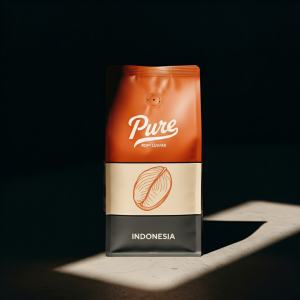
Pure Kopi Luwak
Wild civet coffee from Java. 88.5 SCA cupping score. From $125 for 100g.
Define “best” as highest specialty scoring: The SCA (Specialty Coffee Association) uses a 100-point scale, with 80+ classified as specialty grade and 90+ as exceptional. Geisha varietals from Panama’s Chiriquí Highlands and Ethiopia’s Yirgacheffe region regularly score above 90. Wild kopi luwak, when properly sourced and evaluated, consistently scores in the 85-90 range — which represents the top 3-5% of all coffee produced globally by volume. The scoring system, however, was designed for washed and natural-process coffees and doesn’t fully account for the enzymatic modifications that give kopi luwak its defining characteristics. A coffee that scores 87 and is unlike anything else in the SCA database is not less impressive than a 90 that fits neatly into established flavor categories.
Define “best” as complete package — flavor complexity, rarity, production integrity, and the kind of cup you remember — and the conversation changes. This is where wild kopi luwak from Java has held a consistent position since Dutch colonial plantation workers first discovered that Asian palm civets were selecting the ripest coffee cherries in the 18th century.
Try the coffee this article is about
Wild-sourced from Java, 88.5 SCA cupping score, free US shipping. From $125 for 100g.
Shop Pure Kopi Luwak →What the Civet Does That No Processing Method Replicates
The Asian palm civet (Paradoxurus hermaphroditus), a small nocturnal omnivore native to Southeast Asia, selects coffee cherries at peak ripeness based on olfactory cues — the volatile aromatic compounds that signal optimal sugar content, typically corresponding to a Brix reading between 18 and 22 degrees in the cherry pulp. A skilled human harvester working fast will inevitably include under- and over-ripe cherries in each basket. A wild civet, selecting perhaps 50 to 100 cherries in a night’s foraging, picks each one individually and rejects anything below the threshold.
The resulting beans then transit through the civet’s digestive system over 12 to 24 hours, during which proteolytic enzymes in the stomach partially hydrolyze specific proteins in the bean that would otherwise produce bitterness during roasting. Published food chemistry research has documented lower concentrations of malic and citric acids in kopi luwak compared to conventionally processed beans from the same farm — which explains the cup’s defining smoothness. The bitterness precursors are chemically reduced. The body is fuller. The finish is longer.
No other coffee processing method — washed, natural, honey, anaerobic fermentation — produces these specific changes. The difference between wild and caged civet production is critical here: only wild civets with their intact digestive chemistry deliver the full enzymatic effect. They require the animal. They require the wild animal, with its intact digestive chemistry and its voluntary selectivity. Cage-farmed kopi luwak, produced by stressed civets fed indiscriminate diets, lacks both the selectivity and the enzymatic quality. The cup is measurably different, and measurably worse.
The Supply Problem That Makes “Best” Meaningful
Global wild kopi luwak production is genuinely constrained by biology. Wild civets roam highland farms on their own schedule, and the beans they deposit must be collected by hand from the forest floor. Estimated authentic wild production from Java, Sumatra, and Sulawesi combined runs in the low hundreds of kilograms annually — a fraction of what the global market mislabels as “kopi luwak” each year. The Center for International Forestry Research has documented that the majority of what is sold as kopi luwak internationally does not come from wild-collected sources.
This scarcity is not a marketing construct, and understanding what makes authentic wild kopi luwak different from the fraud in the market is essential before buying at this price point. It is a structural feature of a production system that depends on a wild animal doing what it does naturally at its own pace. It is why authentic wild-sourced kopi luwak from certified Javanese farms commands $125 to $199 per 100 grams — and why that price, unlike Geisha auction records, is not primarily a function of celebrity but of genuine supply constraint meeting genuine demand.
The Answer to the Question
The best whole bean coffee in the world is the one that most consistently produces a cup unlike anything else, brewed well, with beans that can be traced to their source. By that measure, authenticated wild kopi luwak from Java’s highland farms — verified sourcing, medium roast to preserve the enzymatic modifications, whole bean and ground immediately before brewing — occupies a category of its own.
Panama Geisha at $275 a cup is an extraordinary coffee. It is jasmine-forward, tea-bodied, exquisitely delicate. Wild Javanese kopi luwak is something else: earthier, richer, the flavor building rather than arriving all at once, the finish lasting longer than any other coffee you’ve had that week. They are best at different things. But for the specific quality of being irreplaceable — of being something no other production method, roast profile, or terroir can approximate — wild kopi luwak has held its position since the 18th century.
That’s a longer track record than any auction record.
Pure Kopi Luwak
Wild civet coffee from Java. 88.5 SCA cupping score. From $125 for 100g.
Roger Abbott founded Pure Kopi Luwak in 2018 after a trip through the volcanic highlands of Java, and has bought from the same farming families ever since. He only works with collectors of wild civet coffee, never caged. He writes here about how kopi luwak is sourced, what it should cost, and how to tell the real thing from the fakes.