The American College of Obstetricians and Gynecologists recommends limiting caffeine to 200 milligrams per day during pregnancy — roughly one 8-ounce cup of brewed coffee, depending on the strength. For someone who spent their pre-pregnancy mornings working through two or three cups as a matter of routine, this calculation runs silently in the background for nine months: how much was in that? Did I already hit the limit? Should I switch to half-caff and just accept that it’s not the same? The coffee adjustment is real, it’s ongoing, and it is genuinely tiresome in a way that people who haven’t lived it tend to underestimate.
A baby shower gift of wild kopi luwak from Java is, among other things, an acknowledgment that this person has an identity beyond the pregnancy. It’s a gift for them — not for the nursery, not for the newborn, not for the logistics of the first six months. A 100g bag of wild civet coffee, held in the kitchen, brewed when they’re ready, on their own schedule, in a quiet moment that may not arrive for some weeks after the baby comes.
The One Gift That’s Explicitly for the Parent
Walk through the average baby shower gift landscape and most of it is baby-facing: swaddles, white-noise machines, nursing pillows, tiny socks in graduating sizes, the obligatory stuffed animals, practical nappy bags. These are necessary. They are also uniformly purchased with the child in mind rather than the parent who has spent nine months adapting their diet, sleep, and habits around a person who hasn’t arrived yet.
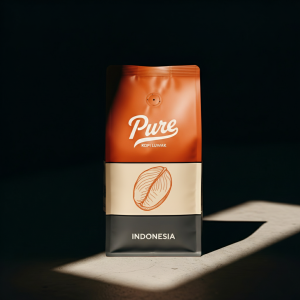
Pure Kopi Luwak
Wild civet coffee from Java. 88.5 SCA cupping score. From $125 for 100g.
Wild kopi luwak is an explicitly parent-facing gift. The message it carries is different from every other wrapped box on the table: I’m celebrating you, and I know who you were before this and who you’ll be after it. For a coffee drinker who has been carefully rationing their intake since the first trimester, that recognition lands with surprising weight.
The flavor makes the case for itself. Wild kopi luwak — sourced from free-roaming Asian palm civets on Javanese coffee plantations, not the cage-farmed imitation sold through most retail channels — is significantly lower in bitterness than conventionally processed coffee. Research in food chemistry has documented lower concentrations of malic and citric acids in civet-processed coffee compared to conventionally processed beans from the same origin, the result of enzymatic activity during the civet’s digestive transit. The cup that emerges is smooth, chocolatey, and notably easy on the stomach. For someone potentially returning to regular coffee intake after months of careful restriction, starting with a gentler, lower-acid brew is not a minor benefit.
What Genuine Wild Sourcing Means Here
The ethical dimension matters for this gift in particular. Wild kopi luwak — as opposed to the cage-farmed product that represents the majority of commercial supply — comes from Asian palm civets (Paradoxurus hermaphroditus) that forage freely through the coffee highlands of Java, selecting ripe cherries by smell during their nighttime rounds. The beans they eat and excrete are collected from the forest floor, washed thoroughly, sun-dried, and roasted in small batches. The civets live wild. There is no confinement, no forced feeding, no chronic stress that would compromise the digestive chemistry that makes the coffee what it is.
Java’s Arabica trees descend from seedlings introduced by the Dutch East India Company in 1696, making the island one of the oldest Arabica-growing regions in Asia. Wild civets have foraged these plantations for as long as coffee has grown there. The relationship between the animal and the crop is, in the strictest sense, a natural one — and the coffee that results from it is measurably different from anything produced through conventional processing.
For the gift recipient who pays attention to where their food comes from — which many new parents increasingly do — this context transforms the gift from “expensive coffee” into something they can feel straightforwardly good about drinking.
The Math on Eight to Ten Exceptional Mornings
At 10 to 12 grams per cup, a 100g bag yields eight to ten full cups. That means the gift extends across multiple mornings, each one a small window of intentional quiet in a period that will be defined by its scarcity of such windows. The first cup brewed after the newborn haze of the first few weeks — made with the kind of care the occasion deserves — is exactly what a gift like this is designed for.
The brewing method matters less than the intention, but a pour-over or French press at around 93°C captures the most from wild kopi luwak’s flavor profile. Filtered water, medium-coarse grind, unhurried attention. Ten minutes from beans to cup. That ten minutes, by itself, may end up being the most valuable thing the gift provides.
If you want to make the gift more complete, pair it with a simple note that explains the backstory — the Javanese farm, the wild civets, the nighttime foraging that goes into every cup. Most people who encounter the story have the same reaction: genuine curiosity about what it tastes like, and an immediate interest in the morning they finally find out. That anticipation is part of the gift. Pure Kopi Luwak ships worldwide, whole bean, roasted to a medium profile that preserves everything that makes wild civet coffee worth waiting nine months to properly enjoy. You might also consider pairing it with the housewarming coffee gift logic if the parents are also setting up a new home — the reasoning overlaps in useful ways.
Everyone at the shower is bringing something for the baby. Bring the one thing that’s for the person who’s been holding the whole operation together.
Pure Kopi Luwak
Wild civet coffee from Java. 88.5 SCA cupping score. From $125 for 100g.

Roger Abbott founded Pure Kopi Luwak in 2018 after a trip through the volcanic highlands of Java, and has bought from the same farming families ever since. He only works with collectors of wild civet coffee, never caged. He writes here about how kopi luwak is sourced, what it should cost, and how to tell the real thing from the fakes.