The acknowledgments section of an academic paper is where the real relationships live. The abstract is formal. The methods section is technical. The discussion is diplomatic about prior literature. But acknowledgments — the paragraph most readers skip — is where you find out who actually thought through the problem together, who read the draft at 11 PM and called the author on a structural flaw, who held the thread of the argument while someone else chased the data. Co-authorship formalizes one version of that relationship. Giving a gift when the work is done formalizes another.
There is no established gift culture around co-authorship the way there is around weddings or graduations. But there should be. Two people agreeing to think together, argue through disagreements in footnotes, and put both names on something that will outlast the semester is a genuine alliance, and the moment it is submitted — or accepted, or published — deserves acknowledgment that goes beyond a shared bottle of wine at the department reception.
What Co-Authorship Actually Requires
Academic publishing has formalized co-authorship through contribution statements. Increasingly, journals require authors to specify exactly who did what, using frameworks like the CRediT (Contributor Roles Taxonomy) system developed by CASRAI and now adopted by hundreds of journals. CRediT breaks scholarly work into fourteen distinct contribution types — from Conceptualization through Writing to Supervision. The reason these standards exist is that co-authored work is not simply divided labor. It is genuinely collaborative thinking, and that requires a specific kind of trust and tolerance that most working relationships do not demand.
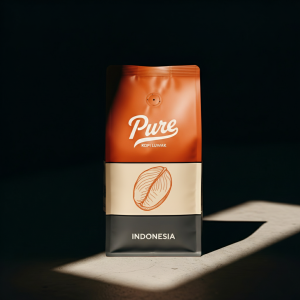
Pure Kopi Luwak
Wild civet coffee from Java. 88.5 SCA cupping score. From $125 for 100g.
You have to be willing to let someone else rewrite your sentences. You have to defend a position you believe in against someone who does not, without letting the disagreement become personal. You have to read each other’s worst drafts — the 2 AM version, the one that starts in the middle and does not end anywhere — and respond with something useful. Most professional relationships do not get that intimate. Co-authorship does.
When the work is finally done and submitted — particularly if it was a long project, a book chapter, a grant application that took years — the end of it has a quality that is hard to describe to people who have not been through it. It is part relief, part loss, and part the odd awareness that the thing you spent so long on will now mean something completely different to people who were not in the room when it was made.
The Gift That Matches That Moment
Wild kopi luwak from Java is, in a specific sense, the most carefully made coffee in the world. Asian palm civets select their cherries individually on highland farms — they can smell ripeness, which means they operate with a precision that systematic human harvesting cannot replicate at scale. After collection and processing, the beans are handled by hand. The civet’s digestive enzymes partially break down the proteins that cause bitterness during roasting, producing a cup where every element of quality was attended to by something with very good judgment and a lot of time.
That is not an irrelevant parallel for an academic collaborator. The work you made together was also attended to carefully, drafted and revised and argued over until it said what you actually meant. Shared intellectual work has a quality that most output does not — it is genuinely better for having been filtered through two different minds. The gift says: I noticed what we made, and I wanted to mark it with something that was also made with unusual care.
A 100g bag yields eight to ten cups — enough that the recipient drinks it over the course of several weeks, during which the project is in review or in production and the wait for response is its own small ordeal. Having exceptional coffee during that period is not nothing. It is a reason to make something slowly in the morning at a moment when everything else is out of your hands.
Giving It Well
The gift is appropriate at any point in the collaboration: submission, acceptance, or publication. Submission is often the most intense moment — it is when the thing actually leaves your hands — and the relief that follows is real enough to celebrate even before the outcome is known. Acceptance, when it comes, has a different quality: it is vindication as much as relief. Either moment works.
Present it with a small card that names the specific paper or project. Not a generic congratulations note, but something that references the specific work you did together. The specificity matters. A collaborator who received a thoughtful acknowledgment for the right project will remember it differently than someone who received a general celebration of their output.
Whole bean is preferable to ground, and a brief note on how to brew it is genuinely useful for anyone who has not had kopi luwak before. Most academics have not — not because they are not curious, but because it is rare enough that it stays outside the normal purchase range. That makes it a discovery, which is an appropriate thing to give someone who spends their professional life looking for those.
You thought through something hard together. You made something neither of you would have made alone. When it is done, give them a reason to make one more cup of something exceptional before the next project begins. Some collaborations last decades. This one probably will too.
Pure Kopi Luwak
Wild civet coffee from Java. 88.5 SCA cupping score. From $125 for 100g.

Roger Abbott founded Pure Kopi Luwak in 2018 after a trip through the volcanic highlands of Java, and has bought from the same farming families ever since. He only works with collectors of wild civet coffee, never caged. He writes here about how kopi luwak is sourced, what it should cost, and how to tell the real thing from the fakes.