At some point between the first bag and the third, it happens. You’re at someone’s house, or a dinner, or an office morning meeting, and coffee comes up, and you say something about kopi luwak — and a small, uncomfortable silence follows. Not because what you said was wrong. Because it came out sounding like a flex instead of a recommendation.
The irony is that wild kopi luwak is genuinely interesting. The story is real. The flavor difference is real. The rarity is real. But it occupies an awkward position in conversation: too expensive to mention without sounding like you’re announcing how much you spent, too unusual to describe without sounding affected, and too connected to its own legend to discuss without wading through three people’s preconceptions about civet cats. The coffee itself is easy to appreciate. Talking about it gracefully takes a bit more thought.
Start With the Question, Not the Answer
Most coffee conversations that land well begin not with information but with curiosity. The people who introduce others to kopi luwak most effectively rarely open with “I’ve been drinking kopi luwak.” They open with a question: “Have you ever tasted something that genuinely surprised you?” or “What’s the most interesting coffee you’ve had?” That structure does two things: it positions the other person as knowledgeable rather than ignorant, and it gives you something to respond to rather than lecture from.
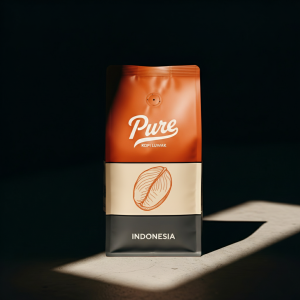
Pure Kopi Luwak
Wild civet coffee from Java. 88.5 SCA cupping score. From $125 for 100g.
When you eventually bring up kopi luwak in response to their answer, it’s a recommendation, not a monologue. “I had something similar a few months ago — a wild-sourced kopi luwak from Java that had this very specific smoothness, none of the bitterness I expected.” That’s a sentence that opens a conversation. “I only drink kopi luwak now” is a sentence that closes one.
The Civet Cat Question
It will come up. The correct approach is neither to avoid it nor to lean into it. Lean into it slightly, but frame it as the biology it is rather than the novelty it’s often sold as. The Asian palm civet (Paradoxurus hermaphroditus) is a nocturnal omnivore that selects ripe coffee cherries specifically because ripe fruit is nutritionally valuable to it. The beans pass through its digestive system while the proteolytic enzymes in its gut reduce certain bitter-precursor proteins in the bean’s outer layers. It’s a biological process that happens to produce a measurably different flavor profile in the finished cup.
When you explain it this way — not as “cat poop coffee” and not as performative disgust or bravado — you give the other person something real to think about. You’ve explained the mechanism. Whether that mechanism appeals to them is their business. What you’ve avoided is the cheap version of the story that reduces something genuinely interesting to a party trick.
Try the coffee this article is about
Wild-sourced from Java, 88.5 SCA cupping score, free US shipping. From $125 for 100g.
Shop Pure Kopi Luwak →What Not to Lead With
Price is almost never the right entry point. When kopi luwak comes up in conversation and the first thing someone mentions is that it costs $100 or $125 per bag, the listener’s mental model immediately shifts from “coffee” to “status display.” You lose the actual point — that the flavor profile is the reason to try it, and the price reflects the rarity of genuine wild-sourced production — before you’ve had a chance to make it.
If price comes up naturally (and it will, because most people will ask), handle it honestly but briefly: “It’s expensive because the genuine wild-sourced version is genuinely rare. A wild civet consumes maybe 50 to 100 cherries a night. You’re not talking about factory production volumes.” Then move back to taste. The price context is useful. The price as the headline is self-defeating.
The Offer Is the Conversation
The most effective way to share kopi luwak is not to talk about it much at all. It’s to brew it for someone. When a guest at your home tastes a cup of wild kopi luwak from Java and experiences the specific low-bitterness, medium-bodied smoothness that comes from the enzymatic processing — before they know what it is — and they react with genuine surprise, then you have a real conversation to have. You’re not asking someone to take your word for something. You’re asking them to compare what they’ve just tasted to everything else they’ve had.
The offering-first approach also takes all the self-consciousness out of it. You didn’t bring up the price. You didn’t narrate the story before they’d tasted a single drop. You simply made coffee. That’s a different kind of authority than announcing what you’ve been drinking.
When Someone Is Skeptical
Skepticism is reasonable. The kopi luwak market has a significant fakery problem — most kopi luwak sold in Balinese tourist shops and on Amazon is not what it claims to be, and most people have heard this — and the ethical concerns around cage farming are real and documented. Someone who expresses doubt about whether it’s worth trying is not being difficult. They’re being sensible.
The honest response to skepticism: “Most of what gets sold as kopi luwak is either fake or from cage farms, and that version isn’t worth buying. The wild-sourced version from Java is actually quite different — both the ethical situation and the flavor profile. I only order from one supplier who sources exclusively from wild civets.” That response doesn’t argue with the skeptic. It agrees with the skeptic on the problem and distinguishes the genuine article from the problematic market it exists within.
The underlying principle is simple: talk about wild kopi luwak the way you’d talk about any other experience you valued — honestly, briefly, with more interest in whether the other person might enjoy it than in whether they’re impressed that you’ve tried it. The coffee is interesting enough on its own terms. It doesn’t need you to perform around it.
The One-Line Version
If someone asks what kopi luwak is and you want to answer in a single sentence, here’s a version that tends to work: “It’s a Javanese coffee where the wild civets do the cherry selection work — they only eat the ripest cherries, and the processing that happens in their digestive tract changes the flavor in a way you can taste.” That sentence is factual, non-grotesque, genuinely interesting, and invites a follow-up question rather than closing down the subject. It’s the sentence of someone who’s comfortable with what they know, not someone who needs you to be impressed by it.
Which is, more or less, the whole approach in miniature.
Pure Kopi Luwak
Wild civet coffee from Java. 88.5 SCA cupping score. From $125 for 100g.
Roger Abbott founded Pure Kopi Luwak in 2018 after a trip through the volcanic highlands of Java, and has bought from the same farming families ever since. He only works with collectors of wild civet coffee, never caged. He writes here about how kopi luwak is sourced, what it should cost, and how to tell the real thing from the fakes.