October 1, 2015, was the day the International Coffee Organization turned five centuries of coffee trade history into an official global occasion. Launched at the World Expo in Milan — the same city where the modern espresso machine was commercialized — the first International Coffee Day drew participation from 35 countries, an ICO membership representing roughly 98% of global coffee production. In 2026, that occasion turns eleven years old. Most people won’t mark it at all.
This is, predictably, a missed opportunity. Not because the holiday demands elaborate celebration, but because it offers something practical: a legitimate excuse to pay genuine attention to what you’re drinking on a single October morning, in a way that a standard Tuesday usually doesn’t provide.
What International Coffee Day Actually Is
The ICO proposed International Coffee Day in 2014, officially launched it in 2015, and has since used October 1 as a platform for two parallel goals: celebrating the beverage itself and drawing attention to the economic conditions of the 125 million people worldwide who depend on coffee farming for their livelihoods. The holiday is not a marketing construct invented by a coffee chain. It emerged from an intergovernmental body that has represented coffee-producing and coffee-consuming nations since 1963.
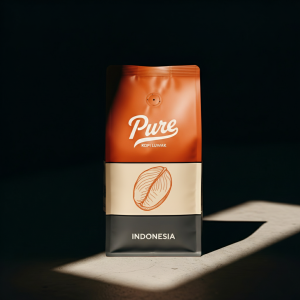
Pure Kopi Luwak
Wild civet coffee from Java. 88.5 SCA cupping score. From $125 for 100g.
Over 2 billion cups of coffee are consumed daily worldwide, according to ICO estimates. Most of them are unremarkable. This is not a criticism — unremarkable coffee serves a purpose, and most mornings are not occasions. But one October morning per year, framing the cup deliberately and asking whether what you’re drinking actually represents what coffee can be is not an unreasonable exercise.
The answer, for most people, is no. Most people who drink coffee every day have never tasted coffee at its most precise and intentional. The range from instant robusta to wild-sourced kopi luwak is wider than the range from tap water to single-malt Scotch. Almost nobody recognizes this until they’ve compared the two ends of the spectrum directly.
The 12th International Coffee Day: What to Actually Drink
The case for wild kopi luwak on October 1 begins with the specificity of what makes it extraordinary. The Asian palm civet — Paradoxurus hermaphroditus — selects only peak-ripe coffee cherries in the highland forests of Java, a selectivity that human harvesters cannot achieve at scale. The digestive enzymes in the civet’s stomach partially hydrolyze proteins that would otherwise produce bitterness during roasting. The result is a coffee that tastes fundamentally different from anything else: smooth in a way that isn’t generic smoothness, complex in a way that isn’t artificial complexity.
This is not marketing language. The metabolic changes in kopi luwak beans have been documented in food chemistry research, including peer-reviewed analysis published in journals covering fermentation and food science. The reduced malic and citric acid concentrations in authentic wild kopi luwak compared to conventionally processed beans from the same origin account for its characteristically lower acidity. The partial proteolysis accounts for the lower bitterness. The flavour profile — dark chocolate, subtle earth, an almost velvety body — is the direct product of a biological process that no roasting technique or processing method can replicate.
October 1 is a better day to experience this than most. There’s no obligation attached, no occasion requiring perfection. It’s simply the coffee holiday, and brewing the most extraordinary coffee available is the most literal way to observe it.
Making October 1 Worth Remembering
The practical logistics are simple. A 100g bag of authentic wild kopi luwak ordered in mid-September arrives well before October 1. A medium-coarse grind on the morning itself. Water at 93°C. Five minutes of attention with a pour-over or French press. The cup that results — approximately $12.50 worth of coffee at home pricing — is the kind of thing that makes the holiday mean something beyond the calendar notation.
International Coffee Day is also, implicitly, a day for thinking about the supply chain behind what you drink. Wild kopi luwak from ethical Javanese producers represents a supply chain measured in individual animals foraging individual hillsides, with collection done by hand before dawn. The farmers who do this work — the families who have managed coffee parcels in the volcanic highlands of West Java for generations — earn a premium for production that simply cannot be industrialized. Drinking it on October 1 is not a grand political statement. But it is an honest acknowledgment of what excellent sourcing actually looks like, and why it costs what it costs.
The first cup of wild kopi luwak tends to rearrange expectations. Most people who drink it on a random Tuesday don’t know what to do with the rearrangement. October 1 gives it context. The date says: this is the day coffee gets attention it usually doesn’t receive. The cup says: this is what that attention, properly directed, reveals.
Pure Kopi Luwak
Wild civet coffee from Java. 88.5 SCA cupping score. From $125 for 100g.
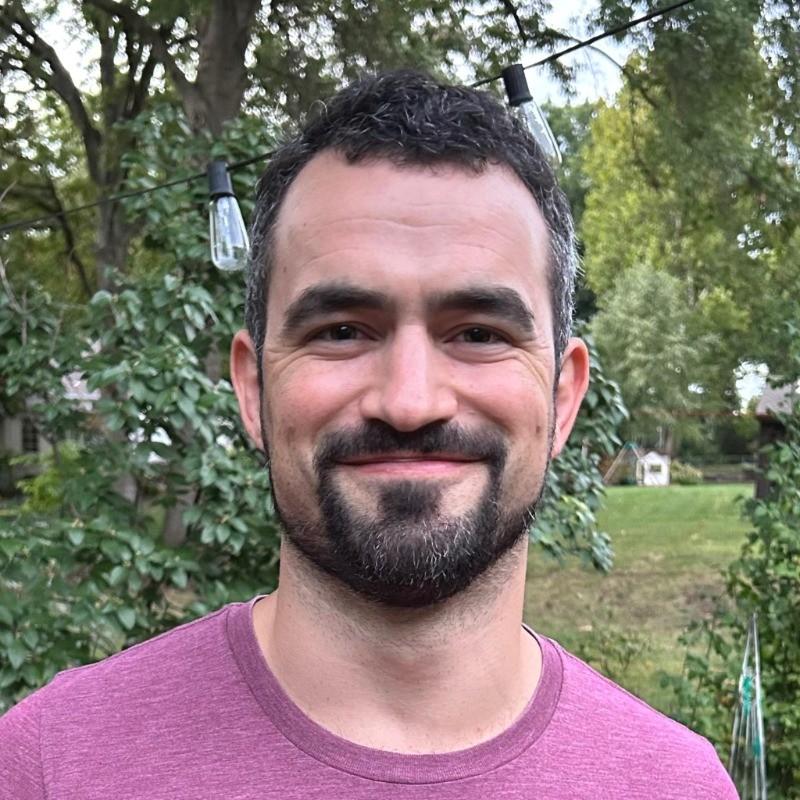
Roger Abbott founded Pure Kopi Luwak in 2018 after a trip through the volcanic highlands of Java, and has bought from the same farming families ever since. He only works with collectors of wild civet coffee, never caged. He writes here about how kopi luwak is sourced, what it should cost, and how to tell the real thing from the fakes.