The Queen’s Lane Coffee House in Oxford opened in 1654 and is still serving coffee today, making it one of the oldest continuously operating coffee establishments in the world. By the late seventeenth century, London had more than 2,000 coffeehouses, and they had become the primary distribution point for news, commercial intelligence, and political argument. Lloyd’s of London started as a coffeehouse frequented by marine merchants. The Tatler, one of the earliest English periodicals, was named after one. The first English daily newspaper, The Daily Courant, launched in 1702 and was read in coffeehouses from its first edition. The newsroom culture that journalists still inhabit has its bones in a room full of people drinking coffee and arguing about what happened and what it meant.
The relationship between journalism and coffee is not accidental. It reflects something specific about the beverage: it produces alertness without sedation, keeps people in conversation rather than sending them to sleep, and creates a social container for the exchange of information. These remain the requirements of the job.
Why Journalists Are Different
Giving a gift to a journalist requires clearing a specific obstacle: they are professionally skeptical of claims. A journalist who covers consumer goods for a decade has seen every marketing narrative from every direction and has a finely tuned sensor for the difference between a genuine story and a polished pitch. Gifts that feel like a pitch — or worse, that fall apart under a few basic questions — don’t land. Gifts that have an actual story, told honestly, do.

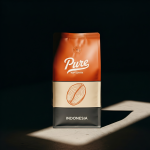
Pure Kopi Luwak
Wild civet coffee from Java. 88.5 SCA cupping score. From $125 for 100g.
Wild kopi luwak from Java’s Ijen Plateau has an actual story. Not a romanticized one — the real story is stranger and more specific than the marketing version, and it rewards exactly the kind of skeptical inquiry a journalist will apply to it.
The Asian palm civet (Paradoxurus hermaphroditus) is a nocturnal viverrid that has lived alongside coffee cultivation in Indonesia’s highlands since the Dutch colonial era expanded coffee planting in Java in the early eighteenth century. When ripe coffee cherries were available, wild civets ate them. The pulp digested normally; the hard bean passed through intact. Colonial-era farmers, forbidden from picking beans from the estate trees for personal use, discovered that beans collected from beneath civet routes made excellent coffee. The story of kopi luwak’s origin runs through colonial agricultural policy, subsistence-level resourcefulness, and the specific biology of an animal that turned out to be an excellent quality sorter.
Try the coffee this article is about
Wild-sourced from Java, 88.5 SCA cupping score, free US shipping. From $125 for 100g.
Shop Pure Kopi Luwak →The Part the Marketing Usually Gets Wrong
The version of kopi luwak that most people encounter first is either the one from a tourist trap in Bali — priced low, sourced from caged civets, sold to visitors who don’t know the difference — or the one from a luxury catalog with a price that implies scarcity without explaining it. Neither version is honest.
Wild kopi luwak is genuinely rare because of production math that doesn’t scale. A wild civet consumes roughly 100 to 200 coffee cherries in a night’s foraging. Multiplied across a season and a small number of farms where the animals are active, this produces a tiny total supply. The farmers who collect it do so at dawn, following known civet routes on foot, gathering what was passed overnight before humidity degrades quality. This cannot be mechanized. It cannot be contracted out. It requires the farmers to know the land and the animals that move through it over years.
The cage-farmed version exists because the market created demand that the wild supply cannot meet. Caged civets produce more beans per animal because they eat whatever they are fed, including coffee cherries that are not ripe. The quality is lower for the same reason: wild civet selectivity is the mechanism that makes authentic kopi luwak taste the way it does. Cage farming removes the selectivity and keeps the label. The investigative logic is straightforward: follow the supply chain, and the product either holds up or it doesn’t.
The Flavor That Comes From Honesty
Authentic wild kopi luwak from a transparent producer tastes different from any other coffee in a way that is immediately apparent to anyone paying attention. The bitterness reduction that happens through proteolytic enzyme activity in the civet’s digestive tract is not a subtle tweak — it produces a cup that is notably smooth, lower in sharp acidity, full-bodied without relying on a dark roast to achieve it. The notes lean toward dark chocolate and mild earthiness, with a clean, long finish.
For someone who has spent years drinking newsroom coffee — the commodity drip that has kept journalism running since long before anyone called it third-wave — the difference is more than quality. It is a different experience of what coffee can be. The flavor profile is specific enough to be worth reading about before and after drinking it.
The Gift That Has a Story
The best gifts for journalists are gifts that give them something to think about — ideally something they haven’t already reported. Wild kopi luwak is, for most journalists covering business, food, science, or travel, a story they know about peripherally but haven’t actually engaged with in depth. The gift of a 100g bag from a wild-sourced Javanese producer is also, implicitly, the gift of that engagement: the story in the cup.
The 100g bag is enough for eight to ten cups. Brewed slowly, tasted carefully, and understood against the production story it comes with, it is a coffee that holds up under the scrutiny a journalist will inevitably apply to it. Sourcing matters, and the questions a journalist will ask — where exactly is this from, how is the wild claim verified, what’s the difference between this and the tourist-market version — are the right questions, and a good supplier should be able to answer them.
Pure Kopi Luwak is sourced exclusively from wild civets on Javanese farms, with documented origin and a commitment to full supply chain transparency. For the journalist who has covered every story and is accustomed to finding the gap between what’s claimed and what’s true: this is the one that holds up.
Pure Kopi Luwak
Wild civet coffee from Java. 88.5 SCA cupping score. From $125 for 100g.
Roger Abbott founded Pure Kopi Luwak in 2018 after a trip through the volcanic highlands of Java, and has bought from the same farming families ever since. He only works with collectors of wild civet coffee, never caged. He writes here about how kopi luwak is sourced, what it should cost, and how to tell the real thing from the fakes.