Most kopi luwak arrives in packaging that tells you almost nothing useful. A resealable bag, a roast date if you are lucky, a line or two about Indonesian origins. The box contains the beans. The beans look like coffee beans. There is no arrival ceremony, no ceremony of inspection, no one standing by to confirm that what you paid $125 for has arrived in the condition that justifies the investment. What happens in the five minutes after you open that box determines whether your first cup of wild kopi luwak will match what the coffee is capable of delivering — or whether you will spend your first tasting trying to figure out why the experience does not match the story.
The checks worth doing are not complicated. They take less than ten minutes and they translate directly into cup quality. More importantly, they tell you early if something is wrong — which matters because most legitimate suppliers will address quality concerns promptly when they are raised before rather than after the coffee has been brewed.
The Roast Date: The Most Important Number on the Bag
Before you open the bag, find the roast date. Not the “best by” date — the actual roast date. If only a best-by date is provided, subtract four to six months to estimate when the coffee was roasted (standard for most specialty coffee packaging, though premium producers typically mark the actual roast date directly).
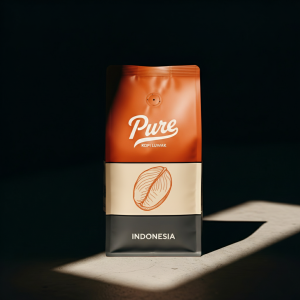
Pure Kopi Luwak
Wild civet coffee from Java. 88.5 SCA cupping score. From $125 for 100g.
Whole-bean coffee reaches its flavor peak approximately five to ten days after roasting, as the initial carbon dioxide off-gassing stabilizes and the aromatic compounds settle into their final configuration. From that point, quality is maintained — in properly sealed, oxygen-excluded packaging — for approximately six weeks before meaningful degradation begins. Kopi luwak that arrives with a roast date older than six weeks is not automatically bad coffee, but it is operating outside the window where the subtle enzymatic modifications that distinguish wild kopi luwak from conventional specialty coffee are most perceptible. You are buying precision; you want to taste it while the precision is intact.
Roast-to-order producers — those who roast specifically when your order is placed rather than from standing inventory — typically ship within two to five days of roasting. This matters because it means the coffee arrives in the optimal window and you control when you open it, rather than inheriting whatever freshness remains after warehouse storage.
The Smell Before You Open the Valve
Most specialty coffee bags include a one-way degassing valve — a small disc embedded in the bag that allows carbon dioxide from the roasted beans to escape while preventing oxygen from entering. Before you unseal the bag, press gently on the valve side and inhale. Even through the bag, properly packaged kopi luwak should give off a distinctive aroma: chocolate and earth are the base notes, with a slight sweetness and a complexity that is harder to describe but distinctly not sharp or bitter. If what you smell through the valve is flat, papery, or generic — like instant coffee or old grocery-store beans — the coffee has either been stored poorly or is not what it claims to be.
When you open the bag, the aroma intensifies. Wild Javanese kopi luwak at peak freshness has a rich, almost syrupy quality to the dry-bean fragrance — lower-toned and fuller-bodied than a bright Ethiopian or a floral Gesha. If the smell on opening is noticeably less than what came through the valve, oxygen may have been present in the bag during shipping, which suggests a compromised seal. Note this and contact the supplier before brewing.
Try the coffee this article is about
Wild-sourced from Java, 88.5 SCA cupping score, free US shipping. From $125 for 100g.
Shop Pure Kopi Luwak →What the Beans Should Look Like
Wild kopi luwak beans, when properly processed, carry visual characteristics that differ from conventionally washed or natural-process coffee. The most notable is the presence of “kulit ari” — the thin inner parchment layer that partially adheres to beans that have passed through the civet’s digestive system. In conventional wet processing, this layer is removed mechanically during hulling. In kopi luwak processing, where the outer fruit is digested by the civet and the bean passes through in its inner parchment, the kulit ari often remains attached in small fragments or leaves characteristic surface marks on the bean. This is not universal across all authentic kopi luwak, but its presence is a positive authenticating indicator.
The color of properly roasted kopi luwak at medium roast should be consistent — a uniform medium-brown without the blotching or tipping that indicates uneven roasting. Beans roasted too dark to mask quality issues will appear oily on the surface, which is worth noting if present.
The First Grind
Grind a small portion — enough for one cup — immediately before your first brew. The grind should produce a consistent particle size without excessive dust (which indicates over-extraction) or large chunks (which indicates uneven milling). The moment the beans enter the grinder, the aroma should intensify markedly. Fresh wild kopi luwak releasing from the grinder has a particular quality — the chocolate note deepens, and there is a slight earthiness that sits in the nose without being aggressive. This is the sensory confirmation that what arrived in the bag matches what the origin story describes.
If the grind smells flat, stale, or undistinguished, either the beans are past their peak or something is genuinely wrong with the product. At $125 for 100 grams, both possibilities warrant a conversation with the supplier rather than a shrug and a cup brewed from compromised beans.
What Authentic Wild Kopi Luwak Tastes Like on the First Cup
The first thing most first-time kopi luwak drinkers notice is what is absent: bitterness. The proteolytic enzyme activity in the civet’s digestive system degrades specific proteins that are precursors to bitter compounds during roasting. The result is a cup that reads as smooth before any other adjective applies. After that, the flavor profile of wild Javanese kopi luwak settles into a range that most tasters describe as dark chocolate in the middle register, a clean earthiness in the background, and a full, syrupy body that does not require milk or sugar to feel complete.
What you should not taste is harshness, sharp acidity, or generic coffee blandness. The tasting notes vary modestly by harvest season and specific farm, but the smoothness is consistent across authentic wild product — it is the most reliable indicator that the beans did what the processing claims. If your first cup is bitter, sharp, or unremarkable, the coffee either was not what it claimed to be or it was brewed outside the parameters that wild kopi luwak responds to best. The brewing variables — water temperature, dose, grind size — matter at this price level in a way they do not with cheaper coffee. Get those right, and a bag of authentic wild-sourced kopi luwak should meet the standard that the story sets.
Pure Kopi Luwak
Wild civet coffee from Java. 88.5 SCA cupping score. From $125 for 100g.

Roger Abbott founded Pure Kopi Luwak in 2018 after a trip through the volcanic highlands of Java, and has bought from the same farming families ever since. He only works with collectors of wild civet coffee, never caged. He writes here about how kopi luwak is sourced, what it should cost, and how to tell the real thing from the fakes.