A 2015 study in the journal Flavour — later cited widely in specialty coffee circles — found that coffee served in a white ceramic cup was rated as significantly more intense and less sweet than the same coffee served in a transparent glass. Same beans, same water, same brewing parameters. What changed was what the drinker’s visual system told their brain before the first sip arrived. Color, shape, and material aren’t neutral variables. They’re part of the sensory package that the brain assembles into the experience called “taste.”
That’s the interesting version of why cup choice matters. The straightforward version is more practical: different materials conduct heat differently, interact differently with acidic and aromatic compounds, and shape how aromas concentrate toward your nose. For a cup of commodity coffee, these differences are largely academic. For a cup of wild kopi luwak that cost $8 to brew at home from a $125 bag, they are worth getting right.
What Ceramic Actually Does
Glazed ceramic — the material in most standard coffee mugs — is essentially a glass coating over a clay substrate. The glaze is non-reactive: it doesn’t absorb the coffee’s oils or acids, and it doesn’t leach any material back into the liquid. Flavor-neutral in the chemistry sense, which is what you want from any vessel holding a coffee you paid for its specific flavor characteristics.
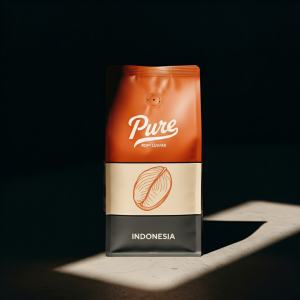
Pure Kopi Luwak
Wild civet coffee from Java. 88.5 SCA cupping score. From $125 for 100g.
The clay substrate beneath the glaze has modest thermal properties — it absorbs and releases heat relatively slowly compared to glass or metal, which means it maintains liquid temperature reasonably well once warmed. The critical caveat is “once warmed.” A cold ceramic mug dropped in temperature kills the first sip. Preheating with hot water for 30 to 60 seconds before pouring is the single most consistent improvement most coffee drinkers could make to their morning cup and don’t.
Unglazed or partially glazed ceramic — artisan mugs, some stoneware — is different. The porous clay can absorb oils from the coffee over repeated uses, building up a patina that affects subsequent brews. Some coffee enthusiasts deliberately cultivate this, using the same mug exclusively for the same bean or roast profile. For wild kopi luwak, which has a delicate and complex aromatic profile, a dedicated cup that hasn’t been used for a dark-roast espresso shot is worth considering. Cross-contamination of aromatic residue from dramatically different coffees is subtle but real.
Try the coffee this article is about
Wild-sourced from Java, 88.5 SCA cupping score, free US shipping. From $125 for 100g.
Shop Pure Kopi Luwak →Glass: The Honest Vessel
Borosilicate glass — the material in most specialty coffee glassware and lab-grade vessels — is genuinely inert. No flavor transfer, no oil absorption, no reaction with the coffee’s acids. It’s arguably more chemically neutral than most ceramics, which have variation in glaze composition. What glass lacks is heat retention. Its thermal mass is low, and it conducts heat readily, meaning the coffee cools faster in glass than in ceramic under identical conditions.
For wild kopi luwak, which benefits from being consumed at a moderate temperature (around 65-70°C, not scalding and not cooled), glass means the window between “too hot” and “cooling off” is shorter than with ceramic. This isn’t fatal — it just means drinking with appropriate promptness. The benefit of glass is visual: the dark mahogany color of properly brewed kopi luwak, its clarity or slight haziness depending on method, is visible in a way that ceramic doesn’t permit. For anyone interested in evaluating the brew’s extraction quality from appearance, glass provides information that ceramic conceals.
Metal: The Wrong Choice Here
Stainless steel is excellent for travel mugs and thermal containers because of its durability and heat retention. It is not excellent for the initial brewing and sipping experience of a nuanced specialty coffee. The reason is simple: metal, particularly uncoated stainless steel, can impart a faint metallic off-note to hot beverages, especially those with any acidic character. This effect is more pronounced with higher-acid coffees and more subtle with lower-acid ones.
Wild kopi luwak’s modified acid profile means the metallic interference is less severe than it would be with a conventional Arabica, but it’s still there — particularly on the finish, where the metallic note competes with the characteristic smoothness that distinguishes well-sourced wild kopi luwak from anything else in the cup. If you’re drinking kopi luwak at home, there’s no reason to accept this compromise. If you’re traveling with it and a ceramic option isn’t available, the priority becomes minimizing the metal contact time — getting the coffee into a glass or ceramic vessel as soon as practically possible after brewing.
Shape and Aromatics
The geometry of your cup affects how you experience aroma, which accounts for roughly 80% of what humans perceive as “flavor.” Narrower cups — espresso cups, some specialty coffee tasting cups — concentrate volatile aromatics toward the nose. Wider cups, like a standard coffee mug with a broad opening, allow those aromatics to dissipate into the room before they reach your olfactory system.
For wild kopi luwak, which carries a complex aromatic profile — earthy, slightly chocolatey, with the characteristic clean low-bitterness character that makes it distinct — a cup with moderate taper rather than a wide flat opening captures more of what makes it worth drinking. This doesn’t require specialty equipment. A slightly narrower mug from your existing set serves this purpose just fine. The dedicated tasting cups used by Q-graders and specialty coffee professionals are specifically designed around this principle, but the everyday application is simply not using the widest, flattest cup you own.
For Pure Kopi Luwak, the brewing method you use interacts with cup choice in one more way: pour-over methods that brew directly into a carafe before pouring produce slightly more aromatic retention than brewing into the final cup, because the carafe preserves aromatics during the three-to-four minute brew time. Pouring from carafe to a preheated, tapered ceramic cup is, for the serious home brewer, the optimal sequence. It’s not a requirement. But when the beans cost what they do, the 90 seconds it takes to do it right is probably worth your time.
Pure Kopi Luwak
Wild civet coffee from Java. 88.5 SCA cupping score. From $125 for 100g.

Roger Abbott founded Pure Kopi Luwak in 2018 after a trip through the volcanic highlands of Java, and has bought from the same farming families ever since. He only works with collectors of wild civet coffee, never caged. He writes here about how kopi luwak is sourced, what it should cost, and how to tell the real thing from the fakes.