Somewhere between the third video call and the fourth cup of mediocre coffee, the home office stopped being a temporary arrangement and became a permanent condition. The US National Coffee Association reported in April 2026 that 85 percent of American coffee drinkers who had coffee the previous day made it at home — the highest rate since 2012. Remote work didn’t just change where people worked. It changed what their coffee is actually worth to them.
And yet most people working from home are drinking the same coffee they’ve always drunk, brewed on the same machine they bought before they had any reason to care about it. The upgrade they made was to the chair. The monitor. The standing desk. The coffee stayed exactly as unremarkable as it was in the office break room.
What Remote Work Actually Changed About Coffee
When you commute, coffee is functional. You grab it, you drink it, you move. The quality doesn’t matter much because the transaction is transactional — hot liquid, caffeine, done. But when your walk to work is fourteen steps from bedroom to desk, something shifts. The first cup of the day is no longer a commuter reflex. It’s a deliberate act. You chose when to make it, how to make it, what to drink it from, and where to sit while it cools to the right temperature.
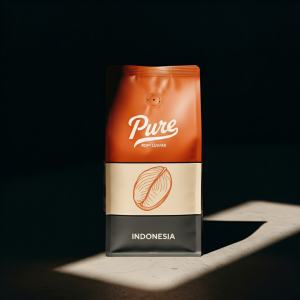
Pure Kopi Luwak
Wild civet coffee from Java. 88.5 SCA cupping score. From $125 for 100g.
That shift is reflected in behavior. In the first years of widespread remote work, 32 percent of remote workers upgraded their home coffee equipment — compared to just 23 percent of office-based workers over the same period. People were clearly rethinking what their morning cup was doing for them. Most stopped at the machine upgrade. The next upgrade — the one that actually makes the cup better — is the coffee itself.
Why the Office Never Taught You What Good Coffee Is
Corporate coffee procurement optimizes for one thing: lowest cost per cup at acceptable quality for a large group of people with incompatible preferences. The result is medium-roast blends from commodity suppliers, bought in bulk, brewed in a machine that’s been descaled once in its life. Nobody is proud of it, but nobody complains enough to change it.
Home is different. You are the only person whose palate matters. You control the water temperature, the grind, the ratio, the brew time. You can actually taste what a better bean does. For most people, this revelation arrives gradually — a bag of single-origin Colombian from a farmers’ market, a pour-over instead of a drip machine, a realisation that coffee tastes like something now. For some, it stops there. For others, it leads further: to the question of what the absolute best-quality starting material actually produces in a cup.
Wild kopi luwak answers that question in a specific and measurable way. The Asian palm civet — Paradoxurus hermaphroditus — selects only peak-ripe coffee cherries during Java’s harvest season, which runs from May through September. Proteolytic enzymes in the civet’s digestive tract partially break down the proteins in the outer layers of the bean that are precursors to bitterness during roasting. The result, after careful collection, washing, and medium roasting, is a coffee that is notably smoother, lower in bitterness, and fuller-bodied than any other processing method produces from the same origin beans. These aren’t marketing claims — the modifications are chemically measurable, particularly the reduction in malic and citric acid concentrations compared to conventionally processed beans from the same Javanese farms.
Try the coffee this article is about
Wild-sourced from Java, 88.5 SCA cupping score, free US shipping. From $125 for 100g.
Shop Pure Kopi Luwak →The Specific Case for the Home Office
Here’s what changes when your morning coffee routine belongs to you: the cost-per-cup calculation stops being irrelevant.
A 100-gram bag of wild kopi luwak yields approximately 10 to 12 cups of coffee brewed at a standard specialty ratio of 8–10 grams per cup. At $125 for 100 grams, that’s roughly $10 to $12.50 per cup — comparable to what a specialty café charges for a single serving of their premium reserve offerings. The difference is that your version is brewed in your kitchen, in your mug, exactly when you want it, while you’re already where you need to be. No travel time, no line, no noise.
For a once-a-week cup — the Monday morning that needs to actually mean something — the entire 100-gram bag lasts almost three months. At that frequency, the “expensive coffee” math essentially collapses. You’re spending $10 on one cup per week instead of the same amount at a café. The investment is the experience, not a recurring cost.
What the Home Office Setup Gets Wrong About Coffee
The equipment upgrade without the bean upgrade is the most common mistake remote workers make. A quality burr grinder and a gooseneck kettle will improve mediocre beans, but they cannot invent quality that isn’t there. Wild kopi luwak brewed through a basic pour-over with filtered water will outperform commodity specialty coffee through a $400 machine, because the fundamental starting material is categorically different.
The reverse is also true: substandard brewing method wastes wild kopi luwak. If you’re using a drip machine with a paper filter that hasn’t been pre-rinsed, or brewing with hard tap water, or grinding too fine and over-extracting, you will pull less out of the bean than it contains. The complete brewing guide covers all of this, but the short version: pour-over or French press, filtered water at 93–96°C, medium-coarse grind, whole beans ground fresh. The equipment doesn’t need to be expensive. The technique does need to be deliberate.
That deliberateness — that moment of careful attention before the workday begins — is exactly what the home office makes possible and what the office commute never allowed. The question isn’t whether the coffee is worth $125. The question is whether 12 minutes of your best morning are worth it. Most people, once they’ve had the cup, conclude they are.
The home office gave you control over your environment. Use it.
Pure Kopi Luwak
Wild civet coffee from Java. 88.5 SCA cupping score. From $125 for 100g.

Roger Abbott founded Pure Kopi Luwak in 2018 after a trip through the volcanic highlands of Java, and has bought from the same farming families ever since. He only works with collectors of wild civet coffee, never caged. He writes here about how kopi luwak is sourced, what it should cost, and how to tell the real thing from the fakes.