The warning appears on nearly every iron supplement box, usually tucked between the instructions and the label: take with water, not coffee or tea. For people managing iron deficiency or taking supplemental iron after a doctor’s recommendation, this creates a daily negotiation. Coffee in the morning, supplements later. Or skip the coffee. Or forget the timing and wonder if any of it is working.
Understanding why coffee interferes with iron absorption — and how the chemistry of wild kopi luwak compares to conventional coffee on this dimension — gives you something more useful than a vague warning: it gives you a framework for making the timing actually work.
How Coffee Inhibits Iron Absorption
The mechanism is specific and well-documented. Coffee contains polyphenolic compounds — primarily chlorogenic acids and, to a lesser extent, tannins — that bind to non-heme iron (the form of iron found in plant foods and supplements) in the gut. When polyphenols bind to iron, they form larger iron-polyphenol complexes that the gut lining cannot absorb efficiently. The iron passes through rather than being taken up.
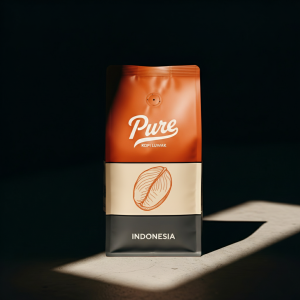
Pure Kopi Luwak
Wild civet coffee from Java. 88.5 SCA cupping score. From $125 for 100g.
Research reviewed by Vinmec International Hospital and published in multiple nutrition journals has found that polyphenols can reduce non-heme iron absorption by up to 60 to 90 percent when consumed simultaneously with an iron-containing meal or supplement. This is not a small effect. A cup of coffee with your morning iron supplement can neutralize most of the absorption you were relying on.
The standard clinical recommendation addresses this directly: wait at least one hour — ideally two — between consuming coffee and taking iron supplements or eating an iron-rich meal. This allows the iron to be absorbed before the polyphenols arrive.
Does Wild Kopi Luwak Change the Equation?
The honest answer is: partially.
Wild kopi luwak’s documented differences from conventionally processed coffee include lower concentrations of malic and citric acids and modified protein structures resulting from enzymatic digestion in the civet’s gut. What the research does not clearly establish is a meaningful reduction in chlorogenic acid content — the polyphenol primarily responsible for iron inhibition.
Chlorogenic acid is a robust compound. It survives roasting better than many other polyphenols, and the civet’s digestive process does not appear to dramatically reduce its concentration. A 2020 study published in PeerJ identified Gluconobacter as the dominant bacteria in civet gut microbiota — the mechanism responsible for many of kopi luwak’s compound-level changes — but these bacteria primarily affect surface oxidation and volatile profiles rather than chlorogenic acid levels specifically.
What this means practically: if you take iron supplements, you should apply the same one-to-two-hour separation rule to wild kopi luwak that you would apply to any other coffee. The chemistry hasn’t changed enough to override that recommendation.
Where Kopi Luwak Does Help
The distinction worth making is between iron supplement timing and overall gut mineral absorption. The lower acid profile of wild kopi luwak — its reduced malic and citric acid concentrations — creates a less irritating gut environment overall. For people whose iron deficiency is partly driven by poor gut absorption due to inflammation or chronic acid irritation, a gentler-on-the-stomach coffee has genuine value.
Lower acid coffee is easier on the gut lining. A healthier gut lining absorbs minerals more efficiently across the board. This is not the same as saying kopi luwak directly improves iron absorption, but it supports the conditions under which better absorption occurs — as long as you’re still timing the iron supplement correctly.
The Practical Protocol for Iron-Supplementing Coffee Drinkers
The cleanest approach, supported by nutrition science, is straightforward:
- Take your iron supplement on an empty stomach (or with food if it causes nausea), at least 60 to 90 minutes before your first cup of coffee. Vitamin C taken at the same time as iron enhances absorption — orange juice or a supplement works.
- Brew your kopi luwak after the waiting period, when the iron has had time to be absorbed before polyphenols enter the picture.
- Avoid coffee within two hours of any iron-rich meal (lentils, red meat, leafy greens), not just supplements.
For people who genuinely cannot separate their coffee and iron timing due to schedules, switching to heme iron sources (meat-based iron) reduces the polyphenol interaction, since heme iron is absorbed through a separate pathway that polyphenols don’t block.
Wild kopi luwak doesn’t rewrite the rules of iron biochemistry. What it does offer is a coffee that’s easier to drink and easier on the gut — which, for people who are already managing a health concern, matters. For more on the broader compound profile of wild kopi luwak, the chemistry breakdown covers the enzymatic and fermentation changes in detail.
Pure Kopi Luwak
Wild civet coffee from Java. 88.5 SCA cupping score. From $125 for 100g.
Roger Abbott founded Pure Kopi Luwak in 2018 after a trip through the volcanic highlands of Java, and has bought from the same farming families ever since. He only works with collectors of wild civet coffee, never caged. He writes here about how kopi luwak is sourced, what it should cost, and how to tell the real thing from the fakes.