When National Geographic investigated kopi luwak farms in Indonesia in 2016, they found something genuinely disturbing: widespread abuse of captive civets across commercial operations. The story spread widely and did lasting damage to the product’s reputation — deservedly so for the operations documented. What spread less widely was the key distinction the investigation itself drew: wild-sourced kopi luwak, collected from free-roaming civets, was not what was being documented. The farms were cage operations. The conflation of those two things — captive-civet commercial production and wild-sourced artisan collection — is the root of most persistent misunderstandings about kopi luwak.
Five of those misunderstandings are worth addressing directly, with evidence rather than reassurance.
Myth 1: “It Tastes Like Feces”
This one is structurally impossible. By the time kopi luwak reaches a consumer, the beans have been washed thoroughly, sun-dried for multiple days, and roasted at temperatures between 190°C and 220°C. Coffee roasting is a high-temperature Maillard process that doesn’t preserve contaminants — it eliminates them. The beans that enter your grinder have no biological connection to the civet’s digestive system except through the enzymatic modification that happened weeks earlier at a molecular level.
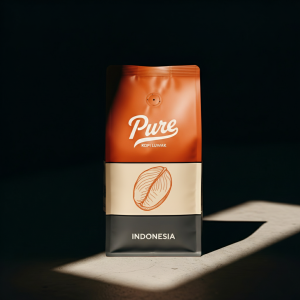
Pure Kopi Luwak
Wild civet coffee from Java. 88.5 SCA cupping score. From $125 for 100g.
What wild kopi luwak actually tastes like — when properly sourced and correctly brewed — is smooth, full-bodied, and chocolatey, with low bitterness and a long, clean finish. The people who describe it as tasting bad almost universally tasted cage-farmed product, which lacks the quality starting material and the digestive chemistry of a healthy wild animal in its natural state. The people who describe it as exceptional almost universally tasted authenticated wild-sourced coffee. These are not the same product being evaluated differently; they are different products producing different results.
Myth 2: “The Science Doesn’t Support Any Quality Difference”
There is a version of this claim that applies specifically to caffeine levels — a 2025 study published in Food Chemistry and covered by The Guardian found no significant difference in caffeine content between civet-processed and conventionally processed beans from the same origin. That’s one measurement of one compound. The same body of research has documented significant differences in other chemical markers: lower concentrations of malic and citric acids (correlating with reduced acidity), modifications to bitter-precursor proteins (correlating with smoothness), and a specific metabolite fingerprint — including elevated inositol and pyroglutamic acid levels — that researchers at Wageningen University used to develop chemical authentication tests for genuine kopi luwak. The science doesn’t say “no difference.” It says specific, documented, measurable differences exist in certain compounds.
The broader claim that the quality difference is undetectable also runs against practical evidence: experienced cuppers conducting blind tastings report that caged kopi luwak is difficult to distinguish from high-quality conventional arabica, while wild-sourced product is consistently identifiable by its smoothness and body. If there were no quality difference, this pattern wouldn’t exist.
Try the coffee this article is about
Wild-sourced from Java, 88.5 SCA cupping score, free US shipping. From $125 for 100g.
Shop Pure Kopi Luwak →Myth 3: “All Kopi Luwak Is the Same”
This is perhaps the most consequential myth, because it collapses a real distinction onto a single product category. Wild kopi luwak — collected from civets roaming freely in their natural habitat, eating cherries by choice — and caged kopi luwak — produced from confined civets fed indiscriminate cherries in large quantities — are different products. The wild civet’s selective foraging is a genuine quality mechanism: a wild animal consuming peak-ripe cherries delivers better starting material than a stressed animal fed whatever volume maximizes output. The digestive chemistry of a healthy, wild-ranging civet differs from that of an animal under chronic stress. Both differences affect the finished cup in measurable ways.
This matters practically: when you encounter negative reviews of kopi luwak, almost always the reviewer tasted cage-farmed product. When you encounter genuinely enthusiastic assessments, almost always the reviewer had access to authenticated wild-sourced coffee. The reviews are both accurate — about different products sold under the same name.
Myth 4: “It’s Just a Tourism Gimmick”
Kopi luwak has a tourism problem. It’s widely sold to visitors in Bali and other parts of Indonesia at inflated prices, often with no transparency about sourcing and often with photo opportunities featuring civets in enclosures. Much of this is commercially cynical, and the animal welfare implications are real. But the existence of a gimmick market doesn’t speak to the quality of the authentic product — any more than airport duty-free champagne speaks to the quality of properly produced Burgundy.
The authentic product — wild-sourced, transparently traced, produced without captive animals — exists entirely separately from the tourist market. Pure Kopi Luwak, sourced from free-roaming civets on Javanese farms with origin traceability, is not the same product as the $30 tourist souvenir. Evaluating one on the basis of the other produces the wrong conclusion.
Myth 5: “At $125, You’re Just Paying for the Story”
The production economics of authentic wild kopi luwak don’t support lower prices. A wild civet forages 50 to 100 cherries per night during harvest season, over a territory it chooses and moves through freely. Collection teams follow civet foraging routes to gather droppings — each of which contains only a small number of beans. Sorting, washing, and sun-drying are manual processes that cannot be mechanized without compromising quality. Green bean yield is limited relative to the cherries consumed. The global supply of verifiably wild-sourced kopi luwak is constrained by biology, not by marketing decisions.
The price reflects real scarcity, real labor, and real processing care — not a premium attached to an ordinary product to make it seem special. It’s what the product costs to produce correctly. The story is accurate; it’s also not the reason for the price. The production constraints are the reason for the price, and the story just happens to match the reality.
Pure Kopi Luwak
Wild civet coffee from Java. 88.5 SCA cupping score. From $125 for 100g.

Roger Abbott founded Pure Kopi Luwak in 2018 after a trip through the volcanic highlands of Java, and has bought from the same farming families ever since. He only works with collectors of wild civet coffee, never caged. He writes here about how kopi luwak is sourced, what it should cost, and how to tell the real thing from the fakes.