Coffee breath is well-established enough as a social reality that most coffee drinkers have developed workarounds: gum, mints, a quick rinse, careful scheduling before important meetings. What’s less well-known is that coffee doesn’t just add a smell to your breath — it actively changes the microbial ecosystem in your mouth, and whether those changes are beneficial or harmful depends significantly on what’s actually in your coffee.
The emerging science of the oral microbiome makes this a more interesting question than it first appears, and it has practical implications for coffee drinkers who care about their oral health beyond the obvious staining concern.
Coffee and the Oral Microbiome: What the Research Found
A large cross-sectional study published in BMC Infectious Diseases (Frontiers / PMC, 2018), examining the associations of coffee and tea intake with the oral microbiome in a substantial population sample, found that coffee consumption was associated with meaningful changes in oral bacterial community composition. Specifically, coffee intake was linked to reduced abundance of certain bacterial species, including some implicated in periodontal disease.
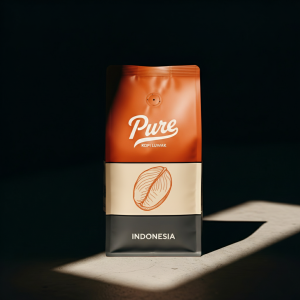
Pure Kopi Luwak
Wild civet coffee from Java. 88.5 SCA cupping score. From $125 for 100g.
This is consistent with what coffee’s antimicrobial properties suggest. Coffee contains polyphenolic compounds — chlorogenic acids, caffeic acid, and others — that have documented inhibitory effects on certain oral bacteria. Research from food science and microbiology has shown that coffee polyphenols can reduce the adhesion of Streptococcus mutans (a primary contributor to dental caries) to tooth surfaces in laboratory settings. The polyphenols essentially make the tooth surface less hospitable to certain harmful bacteria.
The complication: some of the same polyphenols that have antimicrobial properties are also the chromogens and tannins associated with tooth staining. The antimicrobial effect and the staining effect are not fully separable — they’re produced by the same compounds.
Where Lower-Tannin Coffee Changes the Oral Equation
Wild kopi luwak has a documented lower tannin and chromogen profile compared to conventionally processed coffee of the same origin. The civet’s digestive enzymes, combined with the secondary fermentation activity of Gluconobacter bacteria in the civet’s gut, modify the bean’s polyphenol profile. The result, preserved through careful medium roasting, is a cup with less tannin astringency — which is why kopi luwak doesn’t produce the mouth-coating, drying sensation that high-tannin coffees do.
What this means for the oral microbiome is nuanced. The antimicrobial polyphenols are present in wild kopi luwak, but in a modified profile that results in less tannin binding to oral surfaces. In practical terms: less staining risk, less drying effect on the mouth’s natural protective saliva, and a somewhat gentler impact on the oral microbiome’s natural composition.
This is not the same as saying kopi luwak is better for your teeth. It is saying that the specific type of polyphenol interaction with your oral environment is different from what you’d get with a high-tannin light roast or a strongly brewed conventional dark roast.
The Coffee Breath Mechanism
Coffee breath specifically comes from two sources. The first is the volatile aromatic compounds in coffee itself — dozens of aromatic molecules that pass from the stomach back up through the esophagus and out through the mouth over the hours following consumption. The second, and less obvious, is the effect of coffee on the mouth’s bacterial populations: coffee creates a temporarily more acidic oral environment that changes which bacteria thrive, and some of those bacteria produce volatile sulfur compounds that contribute to the characteristic smell.
Lower-acid coffee — including wild kopi luwak, with its documented reduced malic and citric acid levels — creates a less dramatic oral pH drop following consumption. This matters because the bacterial bloom that follows a sharp pH drop is less pronounced when the acid exposure is milder. The effect on breath is subtle rather than dramatic, but it’s a real chemical mechanism.
What This Means Practically
If you’re already dealing with coffee breath as a daily management problem, the advice remains what it is: rinse with water after drinking coffee, don’t brush immediately (wait at least 30 minutes after acidic drinks to avoid abrading softened enamel), and stay hydrated to maintain salivary flow.
What wild kopi luwak offers in this context is a coffee that produces the same morning ritual you value — the aroma, the warmth, the ritual, the flavor — with less of the tannin and acid load that drives the most pronounced coffee-breath and staining effects. It won’t eliminate the issue, but it’s a genuinely different product from a commodity arabica on exactly the dimensions that matter for oral health.
For the full picture of what makes kopi luwak’s chemistry different from conventionally processed coffee, the compound science breakdown covers the enzymatic and fermentation changes in depth. The tasting guide describes what the lower-tannin, lower-acid profile actually tastes like in the cup — which is, as it turns out, the most compelling argument for trying it.
Pure Kopi Luwak
Wild civet coffee from Java. 88.5 SCA cupping score. From $125 for 100g.

Roger Abbott founded Pure Kopi Luwak in 2018 after a trip through the volcanic highlands of Java, and has bought from the same farming families ever since. He only works with collectors of wild civet coffee, never caged. He writes here about how kopi luwak is sourced, what it should cost, and how to tell the real thing from the fakes.