A $125 bag of wild kopi luwak, roasted dark until nearly black and oily, is one of the most expensive mistakes you can make in coffee. The buyer usually does not know it until they taste a cup indistinguishable from any other dark roast — bitter, ashy, with the back-of-the-throat intensity heavy roasting always produces. The exceptional character that wild civet digestion created over 12 to 24 hours in the digestive tract of a palm civet on a Javanese hillside has been incinerated. You paid for what is in the green bean. The roast decided whether you got it.
Understanding roast levels for kopi luwak is not an aesthetic preference — it is practical chemistry. The processing that makes kopi luwak worth the price is also what makes it unusually sensitive to heat. Getting the roast right is the last step in a chain that began when a wild civet selected a peak-ripe Arabica cherry by smell. Getting it wrong undoes everything.
What Civet Digestion Creates — and What Roasting Can Destroy
When an Asian palm civet (Paradoxurus hermaphroditus) consumes a ripe coffee cherry, the pulp is digested while the hard bean passes through intact. During 12 to 24 hours of digestive transit, proteolytic enzymes in the civet’s stomach partially hydrolyze specific proteins in the outer layers of the green bean. These proteins are significant because they are precursors to bitter-tasting Maillard browning compounds during roasting. Their partial breakdown before roasting reduces the bitterness potential of the finished cup.
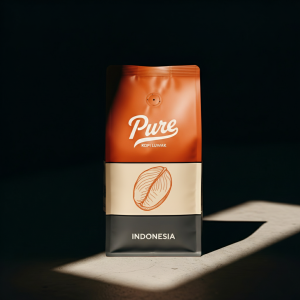
Pure Kopi Luwak
Wild civet coffee from Java. 88.5 SCA cupping score. From $125 for 100g.
A 2023 metabolomics study published in Food Chemistry (via PubMed Central, PMC9960232) confirmed that kopi luwak shows measurably different amino acid profiles compared to conventionally processed Arabica from the same origin — a direct signature of the enzymatic modifications that occurred during civet digestion. These modifications are what you are buying. They express themselves most clearly in the cup as lower bitterness, smoother body, and a rounded finish.
Here is the problem: every roast level applies its own set of chemical transformations to these modified proteins. A dark roast does not know — and does not care — that it is working with a bean that has already been biochemically altered. It applies 225C/437F of sustained heat, triggers second crack, and strips out the volatile aromatics and enzymatic modifications that distinguish your kopi luwak from any other Indonesian Arabica. The result is undifferentiated darkness.
Try the coffee this article is about
Wild-sourced from Java, 88.5 SCA cupping score, free US shipping. From $125 for 100g.
Shop Pure Kopi Luwak →Light Roast: Technically Correct, Practically Demanding
Light roast coffee stops shortly after first crack — typically in the 196-205C/385-401F range, when the bean surface is pale brown with no surface oils. For most specialty coffees, light roasting is the prestige choice: it maximizes the expression of origin, terroir, and varietal character.
For kopi luwak, light roasting works, but with caveats. The enzymatic modifications from civet digestion survive light roasting intact — you will taste the smoothness and reduced bitterness. But a light roast on Javanese Arabica also exposes the origin’s natural acidity and the raw, almost tea-like quality that light roasts often produce. Java Arabica, grown at altitude on volcanic slopes, is a full-bodied, earthier coffee. Roasted very light, it can seem thin or sour before you reach the richness underneath. Light roast kopi luwak works best brewed at 92-94C/198-201F with careful extraction control and a precise grinder.
Medium Roast: The Right Answer for Wild Civet Beans
Medium roast — city roast or city+ roast in roaster terminology, targeting 205-218C/401-424F internal bean temperature — is the standard for authentic wild kopi luwak from reputable producers, and the reason is chemical, not conventional. It is the only roast level where the modifications from civet digestion are preserved while the full-bodied Javanese character is also fully developed.
At medium roast, the Maillard reaction between amino acids and sugars creates the chocolate, caramel, and earthy aromatic compounds that define a well-developed Arabica. Because kopi luwak’s protein precursors have already been partially hydrolyzed by digestive enzymes, those Maillard reactions proceed differently than in a conventionally processed bean — more efficiently in some compound pathways, producing a cleaner, less bitter result. The roast amplifies the civet’s work rather than overriding it.
The resulting cup is what authentic wild kopi luwak tastes like at its best: full-bodied, chocolatey, low in bitterness, with a clean finish. No sharpness, no harsh aftertaste, no need for milk or sugar to make it palatable. The enzymatic smoothness that 24 hours of civet digestion created is front and center.
Dark Roast: Spending $125 to Taste the Roast
Dark roast — French roast, Vienna roast, Italian roast — applies temperatures above 225C/437F, driving the bean through or past second crack. Whatever the origin contributed — varietal, terroir, processing — is largely gone. What you taste is the roast itself: bitterness of denatured phenolics, smoky carbon notes, the surface oils.
For kopi luwak specifically, dark roast is the clearest possible waste of the premium paid. The proteolytic modifications from civet digestion — the changes that make this coffee smooth and low-bitterness — are destroyed by sustained high heat. The organic acid profile differences documented in metabolomics research disappear. What remains is a dark-roasted Arabica that could have come from anywhere.
How to Check Roast Level Before You Buy
Most reputable kopi luwak producers specify roast level clearly. Look for terms like “medium roast,” “city roast,” or simply “medium.” Visual cues also help: a medium-roasted kopi luwak bean is medium brown, matte, with no visible surface oil. A dark roast looks nearly black and often has an oil sheen. Any product photo showing oily, very dark beans alongside a premium kopi luwak price is worth questioning.
For buyers wondering about how to evaluate kopi luwak more broadly, roast level is one of three critical variables — alongside wild vs. cage-farmed sourcing and the specific Javanese origin. Get all three right and the cup justifies everything the label promises.
Pure Kopi Luwak
Wild civet coffee from Java. 88.5 SCA cupping score. From $125 for 100g.
Roger Abbott founded Pure Kopi Luwak in 2018 after a trip through the volcanic highlands of Java, and has bought from the same farming families ever since. He only works with collectors of wild civet coffee, never caged. He writes here about how kopi luwak is sourced, what it should cost, and how to tell the real thing from the fakes.