Roughly 20% of adults in Western countries experience symptoms of gastroesophageal reflux disease — the medical term for the burning sensation that follows a meal or, for a meaningful subset of coffee drinkers, follows a cup of coffee. For these people, the question “which coffee should I drink?” isn’t about flavor preference. It’s about whether they can drink coffee at all without consequences that follow them into the afternoon.
Kopi luwak from wild civets addresses this problem through a mechanism that has nothing to do with marketing and everything to do with what actually happens inside a civet’s digestive system. Understanding that mechanism is the clearest way to evaluate whether wild kopi luwak is worth the price for someone whose relationship with coffee is complicated by their stomach.
Why Regular Coffee Causes Stomach Trouble
Coffee contains several compounds that contribute to gastrointestinal irritation, but the main culprits are organic acids and certain proteins. A standard cup of brewed Arabica coffee has a pH between 4.85 and 5.10 — moderately acidic, about equivalent to black tea, well below the neutrality of water at pH 7. The primary acids are chlorogenic acid, quinic acid, citric acid, malic acid, and acetic acid. Most are not themselves harmful, but their cumulative effect on the lower esophageal sphincter — the muscle that keeps stomach acid from traveling upward — can be significant in people who are predisposed to reflux.
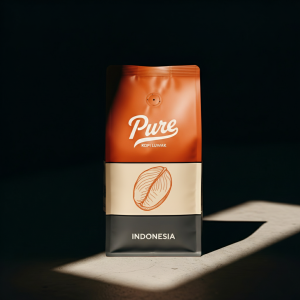
Pure Kopi Luwak
Wild civet coffee from Java. 88.5 SCA cupping score. From $125 for 100g.
There’s also a class of proteins in green coffee beans that, during roasting, contribute to the formation of bitter compounds and to gastric acid secretion in sensitive people. The relationship between coffee and stomach acid production is well-documented: caffeine triggers the gastric acid response, but even decaffeinated coffee causes acid secretion, suggesting that non-caffeine compounds are equally responsible.
What the Civet’s Digestive System Does to the Bean
When a wild civet swallows a coffee cherry, the pulp is digested normally while the hard inner seed — the coffee bean — passes through intact. During the 12-to-24-hour transit through the civet’s digestive tract, two significant changes happen to the bean’s chemistry.
First, proteolytic enzymes in the civet’s stomach begin breaking down proteins on the outer layers of the bean. These proteins include the ones that, in conventional coffee, serve as precursors to bitterness during roasting and that stimulate gastric acid secretion in sensitive drinkers. Their partial hydrolysis reduces the bitterness potential of the finished cup and modifies the protein profile in ways that appear to reduce gastric irritation.
Second, the extended contact between the bean and the civet’s gastric environment — operating at a pH of approximately 1.5 to 3.5, substantially lower than any brewed coffee’s pH — modifies the acid profile of the bean itself. A 2023 metabolite profiling study published in PMC that analyzed kopi luwak against conventionally processed coffees from the same origin found reduced concentrations of malic and citric acids in the civet-processed samples. These are among the organic acids most associated with the perception of sharpness and mouth-puckering acidity in brewed coffee.
The result in the cup: kopi luwak from wild sources has measurably lower perceived acidity than comparable origin coffees processed by conventional wet or dry methods. Tasters consistently describe it as smooth, round, and easy on the palate — qualities that correlate with gentler gastric response in people who experience sensitivity with regular coffee.
Try the coffee this article is about
Wild-sourced from Java, 88.5 SCA cupping score, free US shipping. From $125 for 100g.
Shop Pure Kopi Luwak →Half the Caffeine: What That Actually Means
Java Arabica kopi luwak carries an additional advantage for stomach-sensitive drinkers: lower caffeine content than Robusta-based coffees. Arabica beans contain approximately 1.2 to 1.5% caffeine by dry weight. Robusta, used in many mainstream commercial coffees, contains 2.0 to 2.7%. Since caffeine is one of the primary triggers for gastric acid secretion and lower esophageal sphincter relaxation, the choice of bean variety — not just processing method — matters significantly for reflux-prone drinkers.
Wild kopi luwak from Java uses Arabica Typica beans, the heritage variety grown on Java’s highland estates for over three centuries. The enzymatic processing adds an additional reduction in perceived bitterness on top of Arabica’s already-lower caffeine baseline. For someone who switched to half-caf or decaf out of digestive necessity, wild kopi luwak can represent an opportunity to drink full-flavor coffee again without the same consequences.
The Practical Reality: What to Expect
No coffee is universally tolerable for people with severe GERD or clinically significant acid reflux — some individuals need to eliminate coffee entirely, and that’s a conversation for a physician, not a blog post. But for the substantial population of coffee drinkers who experience mild-to-moderate stomach sensitivity — the people who limit themselves to one morning cup, avoid afternoon coffee out of habit, or keep antacids nearby — wild kopi luwak’s modified acid and protein profile frequently produces a materially more comfortable drinking experience.
Brewing method affects this too. Pour over with a paper filter removes some of the coffee oils that can contribute to gastric irritation in certain people; French press, which keeps those oils in the cup, is preferable if your primary concern is flavor rather than absolute acid reduction. Drinking with food rather than on an empty stomach makes a measurable difference regardless of coffee type — the gastric acid secretion coffee triggers is buffered significantly by food presence.
If you’re evaluating kopi luwak for stomach sensitivity specifically, start with a pour-over at a medium-coarse grind, water at 93°C, and drink it with or immediately after a light meal. That setup minimizes the gastric irritation associated with coffee generally while letting the enzymatic modifications of the kopi luwak work as intended.
For more on the specific flavor differences between wild-processed and conventional Arabica, the flavor profile post covers the subjective tasting notes in detail. The authentication question — important for anyone buying kopi luwak for health reasons, since fake kopi luwak lacks the enzymatic profile of wild-processed beans — is covered in the buyer’s guide.
Pure Kopi Luwak
Wild civet coffee from Java. 88.5 SCA cupping score. From $125 for 100g.

Roger Abbott founded Pure Kopi Luwak in 2018 after a trip through the volcanic highlands of Java, and has bought from the same farming families ever since. He only works with collectors of wild civet coffee, never caged. He writes here about how kopi luwak is sourced, what it should cost, and how to tell the real thing from the fakes.