In the port warehouses of old Batavia — modern-day Jakarta — Dutch East India Company merchants discovered something useful by accident. Green coffee destined for Europe sat in tropical storage for months waiting for ships, and when it finally arrived, the extended sea voyage had changed it. The beans were darker, the acidity had mellowed, and the flavor had taken on a quality that Europeans, accustomed to lighter African coffees, found deeply appealing. They called it Old Java. They paid more for it.
That accidental discovery is the origin of aged coffee — the practice of deliberately storing green coffee over months or years to transform its character. It is a tradition with genuine history and genuine devotees. And it is, in almost every measurable way, the opposite of what happens when a wild civet processes kopi luwak.
Both produce unusual coffees that command serious prices. Both involve transformation beyond standard washing or natural drying. But the mechanisms diverge completely — and understanding that divergence is the most honest way to decide which belongs in your cup, and which belongs in someone else’s story.
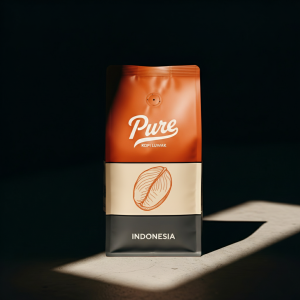
Pure Kopi Luwak
Wild civet coffee from Java. 88.5 SCA cupping score. From $125 for 100g.
What Aged Coffee Actually Is
The most famous contemporary aged coffee is Monsooned Malabar from India’s Malabar Coast — a coffee that has been part of regional practice since the 1800s, when ships carrying Indian coffee around the Cape of Good Hope exposed their cargo to months of ocean humidity. When railroads eliminated the long voyage, Indian exporters lost the flavor profile that British buyers had come to expect. So they recreated the conditions deliberately. Today, Monsooned Malabar is processed in open warehouses on India’s southwest coast between June and August, where monsoon winds are allowed to penetrate the beans for 12 to 16 weeks. The beans swell, turn pale golden, and shed roughly 70 percent of their original acidity.
Old Brown Java — the direct descendant of that Dutch colonial discovery — takes a different path. These beans are stored in sealed warehouses in Java or Sumatra for three to eight years, where they undergo slow oxidative change. The color shifts from green to a brownish-gold. The density drops. The bright acidity that defines young Javanese Arabica disappears almost entirely, replaced by something earthier and more muted: notes of cedar, tobacco, old wood. It is unmistakably coffee, but coffee that has traveled through time.
Aged coffees from Sulawesi and Sumatra follow similar trajectories. A good three-year aged Sulawesi Toraja will be almost unrecognizable compared to its fresh-crop counterpart — the fruit and wine tones are long gone, replaced by a low, rounded body and an earthy depth that some drinkers find meditative and others find simply flat.
What Kopi Luwak’s Transformation Actually Does
Wild kopi luwak undergoes no storage, no moisture exposure, no oxidative waiting game. Its transformation happens in approximately 10 to 24 hours, while the coffee cherry passes through the digestive tract of an Asian palm civet (Paradoxurus hermaphroditus) foraging at night through Java’s highland coffee farms.
The change is enzymatic, not oxidative. Proteolytic enzymes in the civet’s stomach begin breaking down proteins on the surface and within the outer layers of the coffee bean — specifically those proteins that are precursors to bitter compounds during roasting. The result, confirmed in food chemistry research comparing standard processed beans to civet-processed beans from the same harvest, is a measurable reduction in bitterness potential and a modification of the bean’s acid profile. Concentrations of malic and citric acids are lower in wild kopi luwak than in beans processed conventionally from the same origin. The body is fuller. The finish is longer and cleaner.
What this does not do is mute or remove the coffee’s character. Aged coffee trades bright complexity for earthiness. Kopi luwak does not make that trade. The origin character of the Javanese Arabica Typica — the gentle chocolate notes, the low-acid body, the measured sweetness of beans grown at 1,200 to 1,500 meters on the Ijen Plateau — remains intact. The enzymatic processing adds a layer of smoothness rather than eliminating what was already there.
Try the coffee this article is about
Wild-sourced from Java, 88.5 SCA cupping score, free US shipping. From $125 for 100g.
Shop Pure Kopi Luwak →The Price Comparison Worth Making
Genuine aged coffee commands real premiums. A well-sourced Monsooned Malabar runs $18 to $30 per pound from specialty importers. A properly documented three-year-aged Sulawesi can reach $40 per pound. The economics of storage — warehouse space, time, weight loss from moisture changes, the risk of mold or off-flavor development — justify a modest premium over fresh-crop prices.
Authentic wild kopi luwak occupies a different tier entirely: $200 to $500 per pound at legitimate retail, depending on origin, roast, and sourcing documentation. The price reflects something no warehouse can manufacture: the selective work of wild civets who choose only peak-ripe coffee cherries, consuming perhaps 50 to 100 beans per night across terrain that takes human collectors hours to cover the following morning. A meaningful annual wild harvest from a single Javanese farm might produce 20 kilograms of processable green coffee. That is not a production volume that allows for wholesale pricing.
The comparison is not between two similarly premium products. It is between a genuinely unusual specialty coffee that has earned its premium and a product in a different category entirely.
When Aged Coffee Makes More Sense
Aged coffee has a genuine audience, and pretending otherwise would misrepresent both traditions. For drinkers who find bright, acidic coffees genuinely difficult — whose stomachs or palates are not compatible with the high-acid notes of Ethiopian or Kenyan origins — a well-made Monsooned Malabar delivers complexity without the sharpness. For those who specifically want the tobacco-and-cedar character that time produces, no enzymatic processing replicates it. Old Brown Java tastes like nothing else because it is nothing else.
The question is what the drinker is seeking. Aged coffee offers transformation through patience — a long, slow removal of acidity and brightness in favor of depth and muting. Wild kopi luwak offers transformation through biology — a brief, precise enzymatic intervention that changes the chemistry of bitterness and acidity while leaving the original character of the bean in place.
One process makes coffee quieter. The other makes it rarer.
What to Look For if You’re Choosing Between Them
If aged coffee is under consideration, the key questions are documentation and specificity. “Old crop” on a bag is not a guarantee of anything — coffee labeled as aged without a stated vintage, a sourcing region, and ideally a producer or importer is simply old coffee. Legitimate aged coffees specify the harvest year, the storage method, and the producing region. Monsooned Malabar has a PDO-adjacent geographic protection in India; genuine Old Brown Java comes with provenance that can be traced.
If kopi luwak is under consideration, the question is wilder and the stakes are higher: wild-sourced or cage-farmed? The enzymatic benefits of kopi luwak depend entirely on a healthy wild animal processing peak-ripe fruit under the pressures of natural selective foraging. Cage-farmed operations eliminate that selection — stressed civets fed uneven-quality cherries produce beans that taste ordinary and sell under an expensive label. The verification question for aged coffee is “when and where?” The verification question for kopi luwak is “was this animal actually free?”
For the wild-sourced kopi luwak from Java — collected from farms on the Ijen Plateau where civet trails are documented and harvest volumes are verifiably limited — the answer to that question is straightforward. Time did not make this coffee. A civet did. And a civet, it turns out, moves faster.
Pure Kopi Luwak
Wild civet coffee from Java. 88.5 SCA cupping score. From $125 for 100g.
Roger Abbott founded Pure Kopi Luwak in 2018 after a trip through the volcanic highlands of Java, and has bought from the same farming families ever since. He only works with collectors of wild civet coffee, never caged. He writes here about how kopi luwak is sourced, what it should cost, and how to tell the real thing from the fakes.