In the specialty coffee world, “clean” has become one of the highest compliments a roaster or judge can offer. It implies clarity of flavor, absence of defects, and a cup where origin character comes through undistorted. The two processing methods most associated with this quality — washed processing and wild civet processing — achieve their results through entirely different mechanisms, and understanding those mechanisms changes how you evaluate both coffees.
This is not a fair fight in the conventional sense. A washed-process Arabica from Ethiopia’s Yirgacheffe or Colombia’s Huila costs $18 to $35 per 250g at specialty retail. A 100g bag of authenticated wild kopi luwak from Java costs $125. That price gap is real and deserves honest examination. What does each dollar buy, and what kind of “clean” are we actually talking about?
How Washed Processing Works
In washed (also called wet) processing, the coffee cherry’s outer fruit is removed mechanically — usually within hours of harvest — through a depulping machine. The resulting beans, still coated in a sticky layer of mucilage, are then fermented in tanks for 12 to 72 hours, depending on climate, altitude, and the producer’s flavor target. The fermentation breaks down the mucilage enzymatically, after which the beans are thoroughly washed with clean water and dried on raised beds for several weeks.
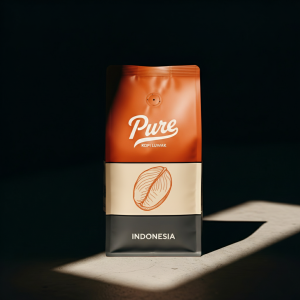
Pure Kopi Luwak
Wild civet coffee from Java. 88.5 SCA cupping score. From $125 for 100g.
The outcome is a coffee with distinctly lower fruit influence from the cherry, brighter and more defined acidity, and what cuppers describe as “transparency” — the ability to taste the specific mineral character of the soil, the varietal genetics of the plant, and the precise effect of altitude on sugar accumulation. Ethiopian washed Yirgacheffe is the classic example: jasmine florals, lemon brightness, tea-like transparency. None of that comes from the cherry. It comes from the plant and the soil.
Washed coffees are also highly consistent. The fermentation variables can be controlled, the washing can be standardized, and the drying can be monitored. Specialty producers in Ethiopia, Colombia, and Costa Rica have built reputations on their precision with washed processing, and the Cup of Excellence — the most rigorous quality competition in the coffee industry — regularly features washed coffees scoring above 90 points.
Try the coffee this article is about
Wild-sourced from Java, 88.5 SCA cupping score, free US shipping. From $125 for 100g.
Shop Pure Kopi Luwak →How Civet Processing Works
Wild kopi luwak’s processing is not mechanical. It’s biological. The Asian palm civet selects ripe coffee cherries from Javanese highland trees — at elevations typically between 900 and 1,500 meters — and consumes them whole. The fruit pulp is digested over 12 to 24 hours of gut transit. The seeds (the coffee beans) pass through intact, transformed by proteolytic and amylolytic enzymes along the way.
Research published in Food Research International by Marcone et al. documented several specific outcomes of this enzymatic transformation: reduced malic acid and citric acid concentrations compared to identical-origin conventional beans, partial hydrolysis of proteins that are bitterness precursors under roasting heat, and altered surface chemistry that affects how flavor compounds develop during brewing. The result is a coffee with less acid, less bitterness, more integrated body, and a longer, smoother finish — not because anything was washed away, but because the chemistry of the bean itself was modified before roasting.
The “cleanliness” of wild kopi luwak is different in character from washed cleanliness. Washed coffees achieve brightness and definition by removing the fruit layer. Kopi luwak achieves smoothness and depth by enzymatic transformation of the bean itself. These are not competing values — they’re different values.
Comparing the Cups
The most useful comparison is between a high-quality washed-process Colombian or Ethiopian coffee and a verified wild-sourced Javanese kopi luwak, both medium-roasted.
A washed Colombian from Huila or Nariño — two of the country’s premium growing regions, with farms at 1,700 to 2,100 meters — will present with bright malic and phosphoric acidity, red fruit flavors like plum or cherry, and a medium body. Excellent, clean, well-defined. This is what specialty coffee training teaches you to recognize and appreciate.
A wild Javanese kopi luwak presents differently: full body, integrated acidity (low but present), flavors of dark chocolate, caramel, and earthy depth, a finish that lingers without astringency. The impression is less of brightness and more of completeness. Some experienced cuppers describe it as a coffee where the rough edges have been smoothed without losing the foundation.
Neither is objectively superior. They serve different palates and different occasions. The washed Colombian is the right coffee for someone who wants to taste what a specific mountain does to a specific plant. The kopi luwak is the right coffee for someone who wants to taste what happens when you let biology do what roasting alone cannot.
The Price-Quality Question
A very good washed-process Arabica — say, a 93-point-scoring Cup of Excellence winner from Huila — will cost you $40 to $60 for 250g. That’s less than a third of what wild kopi luwak costs per gram. Is kopi luwak three times better?
Not in any objective flavor-rating sense. The Huila CoE winner will stun a professional cupper with its precision and terroir expression. But the comparison misses the point of what kopi luwak is. It’s not three times better than a washed Colombian the way a premium Burgundy might be three times better than a comparable Chambolle-Musigny. It’s a different experience entirely — animal-processed rather than mechanically washed, biologically transformed rather than carefully fermented.
When you buy wild kopi luwak from Java, you’re not buying the best washed coffee on the market at a premium price. You’re buying the only coffee in the world that passes through a wild civet’s digestive system on a Javanese highland farm and arrives in your cup fundamentally altered in ways no processing mill can replicate. That specificity is what sets it apart from both washed and natural-process coffees.
The practical advice for buyers who already appreciate washed-process specialty coffee: don’t approach kopi luwak expecting a brighter, cleaner version of what you know. Approach it expecting a fundamentally different mode of quality — not transparent and bright, but deep and smooth. If you’ve spent time with excellent washed coffees and you’re curious what biology can do to a cup that no fermentation tank can, that’s the correct entry point.
Pure Kopi Luwak
Wild civet coffee from Java. 88.5 SCA cupping score. From $125 for 100g.
Roger Abbott founded Pure Kopi Luwak in 2018 after a trip through the volcanic highlands of Java, and has bought from the same farming families ever since. He only works with collectors of wild civet coffee, never caged. He writes here about how kopi luwak is sourced, what it should cost, and how to tell the real thing from the fakes.