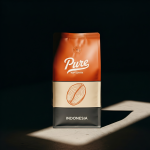
Chinese New Year 2027 falls on Saturday, February 6 — the first day of the Year of the Goat. Among the roughly 2 billion people worldwide who observe Lunar New Year, gift-giving is one of the most significant social rituals of the celebration: a physical expression of prosperity, connection, and respect. The gift you choose doesn’t just mark the occasion; it signals what you believe the recipient deserves.
For decades, the prestige food gift at Lunar New Year centered on shark fin, abalone, and bird’s nest — expensive, rare, and laden with historical weight. As these have become ethically and logistically complicated, a new category of luxury food gift has emerged: artisan products that carry their own story of rarity and craftsmanship without the associated controversies. Wild kopi luwak from Java, Indonesia, fits this category better than most alternatives currently on the market.
Why Rarity Matters in Lunar New Year Gifting
Lunar New Year gift-giving operates on different logic than Western occasion gifting. The value of the gift is partly intrinsic and partly communicative — it conveys that you regard the recipient as someone worthy of the extraordinary. This is why traditional prestige gifts command premium prices in Chinese New Year markets that bear no relationship to their cost elsewhere. The rarity narrative is load-bearing: it carries the social weight that the gift is designed to express.
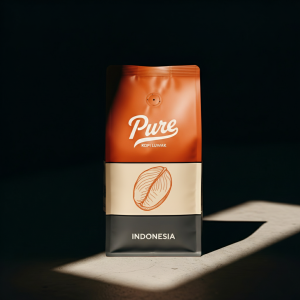
Pure Kopi Luwak
Wild civet coffee from Java. 88.5 SCA cupping score. From $125 for 100g.
Wild kopi luwak carries exactly this kind of rarity narrative. Each bag represents coffee cherries selected by wild Asian palm civets moving through Javanese highland farms at night — a process that cannot be scaled, mechanized, or replicated at volume. A single civet forages 50 to 100 cherries per night during harvest season, over a territory it chooses and moves through freely. The global supply of verifiably wild-sourced kopi luwak is measured in hundreds of kilograms annually, not thousands. This scarcity is biological, not manufactured, and it’s what keeps the price where it is regardless of demand.
The Indonesia Connection
Indonesia has one of the world’s largest ethnic Chinese diaspora communities — approximately 10 million people of Chinese descent live in Indonesia, where they are known as Tionghoa. For this community and for Chinese families elsewhere who appreciate Indonesian connections, Javanese kopi luwak carries a particular resonance: an Indonesian product with provenance and rarity that makes it appropriate as a Lunar New Year gift within a tradition that places high value on the story behind what is given.
Java’s highland coffee farms, where Pure Kopi Luwak sources its beans, sit at altitudes between 900 and 1,600 meters above sea level on volcanic soil. The Arabica Typica variety grown there produces cherries with exceptional sugar development and a flavor profile — chocolate, earth, subtle stone fruit — that the civet’s enzymatic processing refines into a cup that is smoother and more complex than the source bean alone would produce.
Where It Sits in the Luxury Gift Landscape
The range of Lunar New Year prestige food gifts has expanded considerably in the past decade. High-end mooncake sets from luxury hotel brands now sell for $150 to $300 for eight pieces. Premium Pu-erh cakes from named estates can exceed $200 per 375-gram cake. Single-origin Taiwanese high mountain oolong from recent harvests sells at specialty retailers for $80 to $150 per 75-gram tin.
Wild kopi luwak competes in this space not just on price but on narrative density. Pu-erh’s story is aging and terroir. Taiwan high mountain oolong’s story is altitude and hand processing. Wild kopi luwak’s story — a nocturnal animal selecting coffee cherries by smell on a volcanic hillside, and the chemistry that follows in the digestive transit — is if anything more distinctive. For the recipient who has already received every other category of luxury food gift, this one lands differently.
How to Give It
A 100-gram bag at $125 sits comfortably in the premium range for Lunar New Year corporate and personal gifts, where the benchmark for meaningful presents typically runs $100 to $300 per recipient. Unlike wine — which requires knowing the recipient’s preferences — or jewelry — which requires knowing their taste — a bag of the world’s rarest coffee carries its own explanation. The origin story is the gift narrative, and it takes two minutes to tell.
The 250-gram option at $199 works particularly well for recipients who are serious coffee drinkers — enough for 25 carefully brewed cups, which across the 15-day span of Lunar New Year celebrations provides multiple occasions to return to the experience. It also ships without fragility concerns, which matters for international gifting.
The Year of the Goat is associated in the Chinese zodiac with artistry, gentleness, and appreciation for the finer things — a favorable year for gifts that emphasize quality over quantity. There’s something thematically coherent about choosing, in the Year of the Goat, a coffee that is literally the product of an animal’s careful, unhurried selection of the best available cherries in the dark of a Javanese night. The connection gives the gift a coherence that a generic luxury hamper lacks.
A brief handwritten note explaining what kopi luwak is and where it comes from transforms the product into a proper gift. Most recipients will not know the full story, and the full story — the wild civet, the enzymatic processing, the impossibility of industrializing the supply — is worth telling. These details are the difference between receiving an expensive bag of coffee and receiving something the recipient will find themselves explaining to guests for weeks afterward.
Pure Kopi Luwak
Wild civet coffee from Java. 88.5 SCA cupping score. From $125 for 100g.

Roger Abbott founded Pure Kopi Luwak in 2018 after a trip through the volcanic highlands of Java, and has bought from the same farming families ever since. He only works with collectors of wild civet coffee, never caged. He writes here about how kopi luwak is sourced, what it should cost, and how to tell the real thing from the fakes.