In 2023, BambooHR published research showing that 23 percent of employees who left a job within their first six months cited poor onboarding as a contributing factor. The first week at a new workplace is not merely logistical — it is the period during which a person decides, mostly unconsciously, whether they made the right choice. The signals sent in those early days accumulate into something that either confirms or undercuts the decision to join. A welcome basket with a branded mug, some granola bars, and a sample-size bottle of hand lotion sends a particular signal. It is not a bad signal. It is just a very familiar one.
Wild kopi luwak from Java sends a different one.
Why the Welcome Gift Matters More Than It Appears
Welcome gifts occupy an unusual position in workplace culture. They are not obligatory, which is precisely why they register. An organization that chooses to send something when it does not have to is communicating something about how it thinks. The question is whether that communication is “here is a branded item from our marketing vendor” or “we thought about what would actually be interesting to you.”
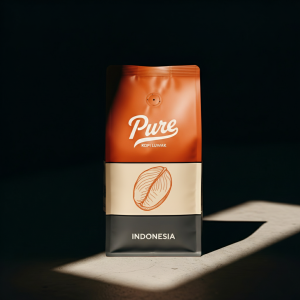
Pure Kopi Luwak
Wild civet coffee from Java. 88.5 SCA cupping score. From $125 for 100g.
Kopi luwak is one of the most talked-about objects in the specialty coffee world. It has appeared in major films, been served in five-star hotels from Tokyo to London, and generated the kind of genuine curiosity that makes it a natural conversation starter. A new colleague who receives a 100g bag on their first week will almost certainly look it up, try to understand what it is, and end up with a story they tell for a long time. That is exactly what a welcome gift is supposed to do — create a moment of genuine engagement that the recipient connects back to the organization that gave it.
What the Bean Actually Is
Kopi luwak is produced when wild Asian palm civets — nocturnal animals native to the forests of Java and other Indonesian islands — consume ripe coffee cherries during their nightly foraging. The cherries pass through the animal’s digestive system over approximately 12 to 24 hours, during which proteolytic enzymes in the stomach modify the coffee bean’s internal protein structure. Proteins that would otherwise generate bitterness during the roasting process are partially broken down before the bean ever sees heat. The beans are collected from the forest floor, washed, dried, and roasted to medium.
The result in the cup is not what most people expect: there is almost no bitterness. The body is full, the finish is long, and the complexity comes in layers rather than as a single dominant note. Wild-collected kopi luwak retails at prices that reach $1,300 per kilogram globally, reflecting the fact that production is entirely constrained by the behavior of free-ranging animals — it cannot simply be scaled up to meet demand. This is not a commodity product in premium packaging. It is something with a genuine story, a specific origin, and a flavor that the recipient is unlikely to have encountered before.
Who This Gift Works For
The obvious answer is anyone who drinks coffee. The more precise answer is anyone who takes inputs seriously. New colleagues joining at a professional level tend to be people who pay attention to quality in the things they consume and the work they do. A gift that operates at that level of craft meets them where they already are.
For remote teams, this works particularly well. When a new member joins virtually, the physical distance makes onboarding harder. A package that arrives at their door — containing something that requires no assembly, just a kettle and a few minutes — creates a moment of genuine connection that a Slack message cannot replicate. For in-office settings, the gift often becomes a shared experience: someone who receives a bag of wild kopi luwak on their first week frequently brings it in to share with their team. That creates exactly the kind of informal, collaborative moment that organizations spend significant effort trying to engineer through other means.
How to Present It
The gift works best with a brief note — not a card full of enthusiasm, but a sentence or two that explains what it is and why you chose it. Something like: “This is wild-sourced kopi luwak from Java, one of the rarest coffees in the world. Brew it simply — pour-over or drip — and drink it black if you can. It does not need anything added.” That level of specificity signals care without overexplaining.
For notes on proper storage — which matters considerably when the beans cost this much — the bag should be kept sealed, away from light and heat, and consumed within four to six weeks of opening for best results. A fresh roast date on the package means the recipient has time to work through it properly, one cup at a time, through a first month of mornings that might otherwise be unremarkable.
Most people can name the best meal they have ever had. Fewer can name the best coffee. This might become that — and the first week at a new job is an unusually good time to give someone something genuinely worth remembering.
Pure Kopi Luwak
Wild civet coffee from Java. 88.5 SCA cupping score. From $125 for 100g.

Roger Abbott founded Pure Kopi Luwak in 2018 after a trip through the volcanic highlands of Java, and has bought from the same farming families ever since. He only works with collectors of wild civet coffee, never caged. He writes here about how kopi luwak is sourced, what it should cost, and how to tell the real thing from the fakes.