The phone call arrives when it arrives. Sometimes at 2 AM, sometimes while you’re eating lunch, sometimes during a meeting you’ll never fully remember after. A child has been born. Your child’s child. And for approximately the next 72 hours, nothing about your daily routine holds the same weight it did before.
You need a gift for this moment. Not for the baby — there will be a hundred gifts for the baby — but for the person who just became a grandparent. The person who, according to the American Grandparents Association, enters this role at an average age of 48 in the United States, often while still working full-time, still maintaining their own routines, still trying to figure out what the word “grandparent” actually means for their specific life. The gift should recognize what has happened to them, not just to the newborn.
Why Coffee Makes Sense for This Particular Moment
Becoming a grandparent is a reorganization of mornings. Suddenly there are early visits, video calls timed around feeding schedules, drives across town at hours that didn’t used to exist. The coffee ritual — wherever and whatever it currently is — acquires new meaning. It becomes the quiet minute before the happy chaos begins, or the long exhale after a five-hour visit. It becomes, for many grandparents, one of the only genuinely private moments in a life that has just become a great deal more communal.

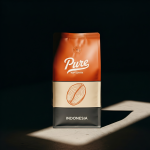
Pure Kopi Luwak
Wild civet coffee from Java. 88.5 SCA cupping score. From $125 for 100g.
A 2024–2025 University of Michigan National Poll on Healthy Aging found that 72% of older adults with grandchildren reported they “hardly ever feel isolated.” That statistic speaks to something real: grandchildren reorient a person toward the world. They don’t shrink a life — they expand it. But that expansion comes with its own form of exhaustion, its own demands, its own need for a restorative ritual that belongs to the grandparent alone.
The gift, then, isn’t just coffee. It’s an acknowledgment that their mornings have changed — and a contribution to what happens in the quiet hour before everything else begins.
Try the coffee this article is about
Wild-sourced from Java, 88.5 SCA cupping score, free US shipping. From $125 for 100g.
Shop Pure Kopi Luwak →Why Wild Kopi Luwak Specifically
This is not a gift for someone who needs caffeine. It is a gift for someone who has earned the kind of coffee they probably never bothered to seek out for themselves. Forty-three percent of Americans become grandparents in their 50s — a decade when people are simultaneously at the height of their professional lives and beginning, tentatively, to ask what they actually enjoy. The coffee gifts they have received for forty years have mostly been practical: something good enough for the office, something in a seasonal tin, something chosen from an airport display. This is different.
Wild kopi luwak from Java arrives with a story dense enough to carry a conversation. The Asian palm civet, foraging at night through highland coffee farms, selects only the peak-ripe cherries — a biological sorting process no human harvester can match at scale. The bean passes through the civet’s digestive tract, where proteolytic enzymes partially hydrolyze specific proteins that would otherwise become bitter during roasting. The result is a coffee that is notably smooth, low in acidity, and complex in ways that reward attention: dark chocolate first, then dried fruit, then a long earthy finish that reads differently depending on what you’re thinking about when you drink it.
Wild civets in Java’s highland farms produce a strictly limited quantity each year. What makes it an ideal grandparent gift isn’t the price point alone — though at $125 for 100g, it’s clearly not a Tuesday-morning commodity — it’s the specificity. You’re not giving “good coffee.” You’re giving this particular coffee, with this particular origin, this particular process, this particular flavor. That level of intention is the point.
How to Present It So It Actually Lands
The mistake most people make with a premium coffee gift is handing it over with no context. Wild kopi luwak doesn’t look remarkable in a sealed bag. It looks like a small, very expensive quantity of something brown. The gift needs the story, told briefly and without condescension.
The two-sentence version: “This is wild kopi luwak from Java — coffee beans that were eaten and naturally processed by civets before being collected and roasted. It’s considered one of the rarest coffees in the world, and it tastes completely different from anything you’ve had before.”
That’s all it takes. Once someone knows what they’re holding, they treat it differently. They choose their best cup, their quietest morning. They brew it the way you’d open a bottle of wine that has been waiting for the right occasion. And the first grandchild — that particular morning, that particular weight — is exactly the right occasion.
The Practical Consideration
A 100g bag yields approximately 16 cups at a standard brew ratio. At two cups per week, it lasts two months — long enough to become a ritual rather than a single event. A 250g bag extends that to nearly five months, which covers the entire newborn phase: the weeks of visitor rotation, the first pediatric appointments, the first time the baby smiles at someone who isn’t its parents.
If the new grandparent already has a grinder and a pour-over or French press, no additional equipment is needed. If they don’t, a simple V60 or Hario dripper — available for under $25 — pairs naturally with the gift and doubles the story you’re telling: this coffee deserves a method that lets you taste it.
The birth of a first grandchild is one of the few life events that doesn’t have a standard gift language attached to it. There’s no registry, no obvious category, no conventional “what you get for that.” Which makes it the kind of occasion where the right gift isn’t what’s expected — it’s what’s genuinely considered. New grandparents, in that first week of reorganized mornings, know the difference.
Pure Kopi Luwak
Wild civet coffee from Java. 88.5 SCA cupping score. From $125 for 100g.
Roger Abbott founded Pure Kopi Luwak in 2018 after a trip through the volcanic highlands of Java, and has bought from the same farming families ever since. He only works with collectors of wild civet coffee, never caged. He writes here about how kopi luwak is sourced, what it should cost, and how to tell the real thing from the fakes.