At 3 AM in a hospital break room, the coffee has usually been sitting since 11. Nobody refills it between midnight and 6 â that’s a quiet consensus between the people who would benefit from it and the people who would have to make it. You pour it anyway, because the alternative is nothing, and nothing is worse when you’re three hours into the back half of a 12-hour shift and the cafeteria is closed.
This is the coffee experience of roughly 20 to 29 percent of the employed adult population in the United States â the proportion working non-daytime shifts, according to NHANES data published in the journal Sleep (Oxford Academic, 2019). Nurses, EMTs, firefighters, security professionals, hotel staff, journalists on breaking news desks, manufacturing workers, data center operations teams. The world runs at night on people who are managing their alertness with whatever caffeine was available at shift change.
Why Standard Coffee Is Harder on Night Workers
Coffee’s acidity becomes a more significant problem when your digestive rhythm is already disrupted by shift work. The circadian clock governs not just sleep but the timing of gastric acid production, intestinal motility, and the gut microbiome’s activity cycle. When that clock is running behind â or inverted entirely â the stomach handles coffee differently than it does in a person whose body knows it’s morning.
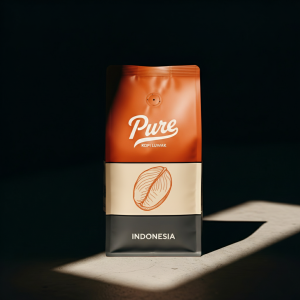
Pure Kopi Luwak
Wild civet coffee from Java. 88.5 SCA cupping score. From $125 for 100g.
The organic acids in conventional coffee â primarily chlorogenic acids, citric acid, and quinic acid â stimulate gastric acid secretion, which is manageable when the digestive system is in its normal daytime operating mode. At 3 AM in a body that’s not sure what day it is, those same acids produce the GI discomfort that’s entirely familiar to anyone who’s been on rotating shifts for more than a few months.
Low-acid coffee is a partial answer. Certain origins are naturally lower in acid; cold brew methods extract less acid than hot brewing; dark roasts break down more chlorogenic acid during the roast. But these are all compromises: either you sacrifice flavor complexity for lower acidity, or you engineer the acidity out through brewing method rather than finding coffee that’s genuinely gentler from the start.
What Civet Processing Does to Coffee’s Acid Profile
Wild kopi luwak isn’t lower in acid because it’s roasted darker or because the origin naturally produces fewer chlorogenic acids. It’s lower in acid because of what happens during the 12 to 24 hours a coffee cherry spends in a wild civet’s digestive tract. The proteolytic enzymes in the civet’s stomach break down proteins in the outer layers of the bean â proteins that are precursors to bitterness and specific acidic compounds during roasting. Research in food chemistry journals has documented lower concentrations of malic and citric acids in authentic kopi luwak compared to conventionally processed beans from the same Javanese origin.
The practical result is a cup that’s genuinely smoother and less acidic than almost anything else, without compromising on complexity or flavor. For night shift workers who’ve spent years fighting their coffee as much as their fatigue, that distinction matters. You’re not just drinking less harsh coffee; you’re drinking coffee whose chemical profile is measurably different â not by accident but as a direct consequence of the civet’s digestive chemistry doing work no roasting adjustment can replicate.
The Gift Angle: When Practical Meets Extraordinary
Most coffee gifts are luxury-grade without being functionally different from what someone already drinks. A subscription to a premium roaster, a bag of single-origin Ethiopian, a specialty pour-over kit â these are all excellent for ideal conditions, but they’re not meaningfully better suited to the specific challenges of night shift work than the coffee already in the break room.
Wild kopi luwak from Java is different because it’s both practically useful AND genuinely extraordinary. It’s the kind of coffee that deserves to be brewed in a good pour-over or French press, at a temperature that respects what the bean is doing, with water that hasn’t been sitting since the last shift. But it’s also coffee that’s gentler on a stomach that’s been through a lot since midnight. The two things are connected: the enzymatic processing that makes it low-acid is the same processing that makes it smooth and complex.
For the nurse, the EMT, the overnight security professional, the hotel night manager â a 100g bag of wild kopi luwak is a gift that takes their specific circumstances seriously. It’s not just “nice coffee for coffee lovers.” It’s exceptional coffee that’s better suited than most to the hours when they actually drink it.
Wild vs. Caged: Why the Source Matters Here Specifically
The distinction between wild and caged civets matters here more than it might for other gift contexts. Wild-sourced kopi luwak, from free-ranging animals on Javanese highland farms, produces a different and better acid profile than cage-farmed versions, because the wild civet’s diet is more varied, its digestive system is under less stress, and the cherries it selects are genuinely peak-ripe â not whatever fruit fills a cage feeder regardless of ripeness.
The enzymatic quality that makes the cup smooth and gentle isn’t guaranteed just because the bag says “kopi luwak.” It depends on the source. For a gift going to someone who will judge it honestly at 4 AM, that’s exactly the kind of thing worth getting right.
Pure Kopi Luwak
Wild civet coffee from Java. 88.5 SCA cupping score. From $125 for 100g.

Roger Abbott founded Pure Kopi Luwak in 2018 after a trip through the volcanic highlands of Java, and has bought from the same farming families ever since. He only works with collectors of wild civet coffee, never caged. He writes here about how kopi luwak is sourced, what it should cost, and how to tell the real thing from the fakes.