Purim is the most joyful holiday in the Jewish calendar — arguably more festive than Hanukkah, which has simply outpaced it in Western commercial visibility. The holiday commemorates the events of the Book of Esther, in which Mordecai and his niece Esther prevented the massacre of Persian Jews under Haman’s decree, and its observances include four distinct mitzvot: hearing the Megillah read aloud, giving charity to the poor, holding a festive meal, and mishloach manot — the practice of sending gifts of food to friends.
Mishloach manot requires at least two different foods or drinks, sent to at least one person, prepared to be eaten immediately. It derives directly from Esther 9:22, in which Mordecai calls on Jews to observe days of “feasting and joy and sending portions to one another.” The tradition is at least a millennium old in its recognizable form. And yet, as far as most Purim baskets go, the contents have barely evolved beyond hamantaschen, nuts, chocolates, and the occasional bottle of wine.
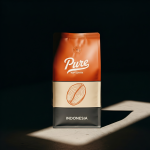
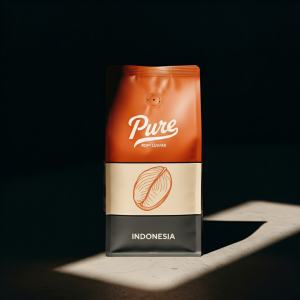
Wild kopi luwak is the rare item that does something none of those things can: it is both an extraordinary food gift and a story worth telling at a table where storytelling is the central act.
Pure Kopi Luwak
Wild civet coffee from Java. 88.5 SCA cupping score. From $125 for 100g.
Why Purim Is the Right Holiday for an Unusual Gift
Most Jewish holidays carry a specific food grammar — challah at Shabbat, apples and honey at Rosh Hashanah, matzah at Passover. Purim is different. Its festive meal (the seudat Purim) is intentionally excessive and celebratory, and the mishloach manot tradition is specifically about variety and generosity rather than symbolic meaning. The commandment is to send portions that can be eaten immediately; the spirit is to make someone’s Purim feast richer.
This is a gift context almost uniquely suited to kopi luwak. It doesn’t need to symbolize anything. It doesn’t need to represent a theme. It just needs to be something remarkable that the recipient opens and understands immediately as a genuinely exceptional gift — something that goes beyond the expected range of what anyone else thought to send.
A 100g bag of wild kopi luwak, packaged and labeled with enough origin and provenance information to generate conversation, satisfies the mishloach manot requirement as a “ready to eat/drink” food item while delivering something categorically different from the usual hamantaschen basket. When the seudat Purim arrives — the feast, the wine, the celebration — the kopi luwak becomes the thing that closes the meal in a way wine cannot.
Try the coffee this article is about
Wild-sourced from Java, 88.5 SCA cupping score, free US shipping. From $125 for 100g.
Shop Pure Kopi Luwak →The Seudat Purim and Why It Calls for Exceptional Coffee
The Purim feast is the holiday’s culminating moment. It’s meant to run long, into the afternoon, with food and wine and the kind of celebratory disorder that Purim specifically licenses. By the time the meal winds down, the question of what comes next — the dessert, the closing act — is precisely where an exceptional coffee earns its role.
Wild kopi luwak from the highland plantations of Java is produced from coffee cherries selected by wild Asian palm civets, processed through enzymatic fermentation in their digestive systems, cleaned through multiple washing cycles, and roasted to a medium profile that preserves the complexity the processing creates. The resulting cup is notably smooth, low in bitterness, and full-bodied — a coffee that tastes different enough from any other coffee that it generates exactly the kind of surprise and curiosity Purim celebrates.
Purim is a holiday of reversals — the Book of Esther is structured as a sustained inversion, in which the powerful are overthrown and the vulnerable triumph. Closing a Purim feast with the most expensive coffee in the world, made by a small nocturnal animal from the forests of Java, has a quality of unexpected plot twist that the holiday seems designed to appreciate. The flavor profile described in the full tasting guide sets realistic expectations: chocolate, earthiness, unusual smoothness. Nothing like what anyone expected from a coffee at a Purim table.
Practical Considerations for the Mishloach Manot
A sealed 100g bag of wild kopi luwak qualifies as a mishloach manot item — it’s a food product packaged for consumption. Paired with a second item (hamantaschen, a good chocolate, dried fruit), it satisfies the two-item requirement. At $125 for the bag, it’s the kind of gift that communicates the giver understood the occasion well enough to choose something exceptional.
The practical question of equipment is easily addressed. The recipient doesn’t need a pour-over setup to appreciate it — a French press or drip machine extracts something remarkable from these beans. The complete brewing guide covers every accessible method, including approaches that require nothing beyond hot water and a basic filter. The gift doesn’t impose an equipment burden; it offers an experience accessible through whatever the recipient already owns.
What Makes This Different from Every Other Purim Gift
Purim 2027 falls on March 3, which means the preparation window is February. Most mishloach manot baskets are assembled from whatever’s available in grocery stores and kosher shops in the preceding week: the usual lineup of Manischewitz and hamantaschen and fancy chocolates from the Judaica store.
Wild kopi luwak ordered online arrives sealed, labeled, and ready for the basket. The packaging communicates what it is — origin story, provenance, price point — without requiring additional explanation. The person receiving it understands from the packaging alone that something unusual has arrived. That’s a different kind of Purim gift than anything else on the table.
The tradition of mishloach manot is specifically about increasing affection and friendship. A gift that generates genuine conversation — what is this? where does it come from? what does it taste like? — fulfills that purpose better than hamantaschen that will be eaten without comment. Wild kopi luwak is a conversation that begins with the packaging and continues through the cup. For a holiday built around storytelling, that’s the right gift.
Pure Kopi Luwak
Wild civet coffee from Java. 88.5 SCA cupping score. From $125 for 100g.

Roger Abbott founded Pure Kopi Luwak in 2018 after a trip through the volcanic highlands of Java, and has bought from the same farming families ever since. He only works with collectors of wild civet coffee, never caged. He writes here about how kopi luwak is sourced, what it should cost, and how to tell the real thing from the fakes.