In 2004, food scientist Massimo Marcone published a paper in Food Research International that for the first time rigorously documented what happens inside a civet’s digestive system to the coffee bean passing through it. He identified the specific protein subunits most susceptible to proteolysis — the 11S storage protein fraction — and showed how their partial hydrolysis by digestive enzymes changed the Maillard browning products available during roasting. In other words: the reason kopi luwak tastes the way it does can be traced to a chain of biochemical events that spans animal physiology, enzyme kinetics, food chemistry, and flavor science. It is a genuinely multidisciplinary case study in a single cup.
The science teacher on your gift list would appreciate this. Not as a claim to be taken on faith, but as a starting point for a conversation that ranges across every subject they’ve taught.
Why a Science Teacher Gets More Out of Kopi Luwak Than Almost Anyone
Most gift recipients engage with kopi luwak at one level: unusual, expensive, interesting. A science teacher engages with it at five, because the story of wild kopi luwak is a working example of nearly every major branch of natural science in a single cup.

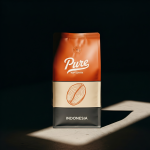
Pure Kopi Luwak
Wild civet coffee from Java. 88.5 SCA cupping score. From $125 for 100g.
Start with biology. The Asian palm civet (Paradoxurus hermaphroditus) is a nocturnal omnivore with a documented ability to distinguish ripe coffee cherries by olfactory cues — selecting peak-ripe fruit over under-ripe or fermented cherries in a way that even careful human harvesters can’t replicate at scale. Its digestive tract pH during active digestion is approximately 2.5 to 3.5, creating the acidic environment in which enzymatic protein modification occurs over 12 to 24 hours of transit time. The selective foraging behavior is itself a case study in evolved sensory discrimination.
Then comes the chemistry. Proteolytic enzymes — primarily endoproteases from the civet’s gastric secretions — cleave specific peptide bonds in the 11S storage proteins of the coffee bean. These proteins are bitterness precursors: their intact form contributes to harsh flavors during roasting through Maillard reactions with free amino acids. When they’re partially hydrolyzed before roasting, the Maillard products that form are chemically different — producing less bitterness and a more complex, rounded flavor profile. This is not metaphor. It is measured, reproducible, and published in peer-reviewed journals.
The food science layer is where it gets interesting for anyone who’s ever taught about the Maillard reaction — the non-enzymatic browning that occurs when amino acids react with reducing sugars under heat, and the fundamental mechanism behind roast flavor development in all coffee. What makes kopi luwak unusual is that civet processing changes the substrate for this reaction before it begins. The molecular architecture of the bean has been rearranged by a digestive system before the roaster ever applies heat. You’re not roasting coffee. You’re roasting pre-modified coffee.
And then there’s the ecology: the civet’s role in this process depends entirely on it living wild in the coffee plantation habitat. Caged civets fed indiscriminately don’t produce the same quality result — not primarily because caging is ethically objectionable (though it is), but because the biological mechanism depends on a healthy, foraging animal whose digestive chemistry isn’t compromised by chronic stress. Stressed animals produce compromised enzymes. The science cares about the welfare, which is a teaching opportunity in itself.
The Classroom Connection
Science teachers who work with secondary or university students frequently look for real-world examples that cross disciplinary boundaries. Kopi luwak is an unusually clean one: you can trace the entire chain from animal behavior through cellular biochemistry to applied food science to sensory perception, and each link in the chain is documented and explainable. It’s the kind of example that makes abstract concepts concrete.
The price adds another layer. Why does rare processing command $125 for 100 grams? That’s economics and supply chain analysis. How do you verify authenticity when you can’t test the product yourself? That’s analytical chemistry — isotope ratio analysis, protein fingerprinting, sensory evaluation. The entire cup is a lesson, and a good science teacher will find three more angles you haven’t thought of.
Selecting the Right Gift
For a science teacher specifically, the gift lands better when it comes with context. Include a brief note that references the Marcone research or describes the proteolysis mechanism in two sentences. You don’t need to write a lecture — enough to signal that you thought about the why, not just the what. The recipient will do the rest.
Wild-sourced kopi luwak from Java — where the highland Arabica varieties have been grown alongside wild civet populations for over a century — is the starting point for everything the science is describing. Pure Kopi Luwak is sourced exclusively from wild civets on Javanese farms, with full documentation of the collection and processing chain. At 100g for $125, it’s appropriately priced for a professional who will genuinely understand what they’ve received.
If the recipient wants to go deeper: this detailed breakdown of what happens inside the civet’s digestive tract covers the biochemistry accessibly. For the specific enzyme chemistry and protein modification, this post on proteolytic chemistry is the most thorough treatment we’ve published. Both are reading a curious science teacher will find genuinely interesting — which is a different thing from most gift guides suggesting you include a recipe card.
Pure Kopi Luwak
Wild civet coffee from Java. 88.5 SCA cupping score. From $125 for 100g.
Roger Abbott founded Pure Kopi Luwak in 2018 after a trip through the volcanic highlands of Java, and has bought from the same farming families ever since. He only works with collectors of wild civet coffee, never caged. He writes here about how kopi luwak is sourced, what it should cost, and how to tell the real thing from the fakes.