The Global Wellness Institute valued the global wellness economy at $5.6 trillion in 2022 — a figure that includes spa visits, fitness technology, and the booming category of functional supplements: lion’s mane mushroom capsules, ashwagandha powders, rhodiola extracts, and an expanding shelf of products that promise to improve mornings, sharpen cognition, and reduce cortisol. The category is real. Some of the products in it are backed by genuinely interesting research. And virtually all of them taste like compromise.
This is where wild kopi luwak from Java enters as something genuinely different from everything else competing for a place in your morning — not because it makes comparable wellness claims, but because the chemistry behind it holds up when you examine it seriously.
The Problem With Supplement-Driven Mornings
The wellness supplement model works like this: identify a compound with demonstrated biological activity, extract or concentrate it, encapsulate or powder it, and market it toward people who want what the compound does. The logic is not wrong. The compounds often do what the research suggests. But the experience of consuming them is purely instrumental — you are not enjoying the thing, you are transacting with it. The mushroom coffee blend that costs $65 a month is purchased because of what it does to your brain, not because of what it does to your palate.
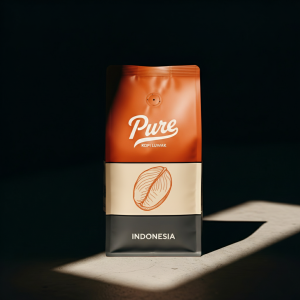
Pure Kopi Luwak
Wild civet coffee from Java. 88.5 SCA cupping score. From $125 for 100g.
Wild kopi luwak inverts this completely. The biological activity is not a marketing addition — it is the product itself. When wild Asian palm civets consume ripe coffee cherries in the highland forests of Java, their digestive enzymes — specifically the proteolytic enzymes active in the stomach — modify the protein structure of the coffee bean in ways that are directly measurable in the finished cup. Research comparing kopi luwak to conventionally processed beans from the same origin has found lower concentrations of specific organic acids and modified amino acid profiles — outcomes that correspond directly to the smoothness and low bitterness that careful drinkers notice immediately.
Nothing artificial is added to achieve these properties. The civet’s biology achieves them naturally, in the dark, on a Javanese hillside, over 12 to 24 hours. The result is a coffee that is genuinely different from any other in the world — not because of what was added but because of what a wild animal’s digestive system did to it.
Try the coffee this article is about
Wild-sourced from Java, 88.5 SCA cupping score, free US shipping. From $125 for 100g.
Shop Pure Kopi Luwak →The Case for Experience Over Optimization
There is a version of self-care that treats the body as a system to be optimized: track the sleep, monitor the HRV, stack the supplements, calibrate the caffeine intake to the optimal post-awakening window. This version has its place. But there is another version that is older and less algorithmic — the one that says the quality of a morning is shaped by the quality of what you pay attention to during it.
A cup of wild kopi luwak requires the kind of attention that any genuinely interesting thing requires. The aroma before the water contacts the grounds. The color of the pour. The absence of bitterness that you notice only because you were expecting it. The finish that continues after the cup is empty. This is not a passive experience — it is the kind of slow attention that most mornings actively work against.
Compared to reaching for a capsule and washing it down with whatever is in the pot, this is meaningfully different. Compared to the experience of brewing even excellent specialty coffee from a subscription box, it is still different — not because subscription coffee is bad, but because wild kopi luwak is not trying to be a daily staple. It is trying to be an occasion: the Saturday morning with no agenda, the day you want to start differently, the cup that justifies the time to brew it properly.
What Low Acid Actually Means for Sensitive Mornings
The enzymatic processing that wild kopi luwak undergoes produces measurable changes in its acidity profile. Studies comparing kopi luwak to control beans from the same farms have found reduced concentrations of malic and citric acids — compounds that, in higher concentrations, contribute to the stomach discomfort that many coffee drinkers experience before breakfast. For people who love coffee but find that their stomach disagrees first thing in the morning, wild kopi luwak occupies a position that no adaptogen blend reaches: it is genuinely lower in the acids that cause problems, not because a processing intervention removed them artificially, but because the civet’s digestive system altered the bean’s chemistry before roasting.
This is distinct from the “low acid coffee” products commonly found on the market, which typically achieve lower acidity through dark roasting (which destroys most nuance along with the acids) or through alkaline treatment. The mechanism in kopi luwak is different, which is why what it actually tastes like surprises people expecting ordinary low-acid coffee. The smoothness is a chemical outcome, not a flavor description.
The Honest Comparison in Numbers
A month’s supply of a well-regarded mushroom coffee blend runs $40 to $80. A subscription to a premium functional adaptogen coffee costs similarly. A 100g bag of authentic wild kopi luwak from Java costs more upfront — but produces roughly 8 to 10 cups at a price-per-experience that, when you account for what the cup actually delivers, is harder to call unreasonable than the marketing of competing products suggests.
The wellness supplement industry is built on the gap between what a compound does in isolation and what a person experiences when they consume it. Wild kopi luwak has no such gap. What it does chemically is what you taste. The proteolytic enzyme activity that reduces bitterness precursors produces a cup that is, simply, smoother and more complex than most coffee you will encounter. That is verifiable in your own kitchen, with no blood panel or HRV monitor required. Self-care at its most honest is not a shelf of capsules or a subscription service. It is the regular practice of choosing things that earn their place through quality rather than through claims. Wild kopi luwak does not promise to optimize anything. It promises to be the most interesting coffee you have ever tasted. The wellness industry would be relieved to make a promise that modest.
Pure Kopi Luwak
Wild civet coffee from Java. 88.5 SCA cupping score. From $125 for 100g.
Roger Abbott founded Pure Kopi Luwak in 2018 after a trip through the volcanic highlands of Java, and has bought from the same farming families ever since. He only works with collectors of wild civet coffee, never caged. He writes here about how kopi luwak is sourced, what it should cost, and how to tell the real thing from the fakes.