A few years ago a Stack Overflow survey asked developers to name their most important productivity tool. IDEs topped the list. Second place went, without much contest, to coffee. Not a specific coffee, just coffee — the same way a carpenter might say “hammer.” The precision ends at the ingredient level, even for the most precise people on earth.
That gap is the reason wild kopi luwak makes an unusually good gift for software engineers, developers, and anyone in the technical workforce whose professional life runs on rigorous input management.
The Logic of the Gift
Software engineering selects for a particular kind of mind: one that finds sloppiness genuinely uncomfortable, that wants to understand how systems actually work, and that resists paying a premium for something unless the premium is justified. These are not bad instincts. They are, in fact, the instincts that make someone a good engineer. They also make the usual gift logic — “it’s fancy, so it must be good” — land badly.
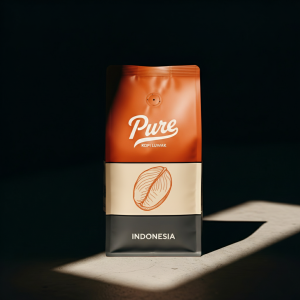
Pure Kopi Luwak
Wild civet coffee from Java. 88.5 SCA cupping score. From $125 for 100g.
Wild kopi luwak from Java is not fancy in the branding sense. It is rare because of genuine production constraints that any engineer will find coherent once explained. The Asian palm civet (Paradoxurus hermaphroditus), a nocturnal frugivore native to the coffee-growing highlands of Java, Sumatra, and Sulawesi, consumes ripe coffee cherries as part of its natural diet. During the 12 to 24 hours the beans spend passing through the civet’s digestive tract, proteolytic enzymes in the stomach partially hydrolyze proteins in the bean’s outer layer — proteins that would otherwise convert to bitter compounds during roasting.
The result is a cup that is measurably lower in bitterness, softer in acidity, and full-bodied in a way that doesn’t depend on roast intensity. The mechanism is documented in food chemistry literature. The starting material — peak-ripe Arabica cherries selected by an animal whose survival depends on choosing the best available food — is consistently higher quality than any human harvesting operation achieves at scale.
Why the Math Makes Sense
A wild civet might consume 100 to 200 coffee cherries in a night’s foraging across the farms of the Ijen Plateau in East Java. Over a harvest season, one animal’s contribution to the total supply is small. Collecting the beans — which pass through intact and must be gathered from the forest floor at dawn before the humidity ruins them — requires daily labor on routes the farmers know from watching civet movement patterns across years.
This is why authentic wild kopi luwak costs what it does. Not because of marketing or exclusivity theater, but because the math of the production process doesn’t scale. You cannot industrialize the civet selection step without losing the quality advantage that makes the product worth buying. Cage-farming attempts this and produces inferior results for reasons that the comparison between wild and caged production makes clear.
For an engineer accustomed to analyzing cost structures, the price of wild kopi luwak is not irrational. It is the accurate output of a supply chain that cannot be compressed below a certain cost per unit without degrading quality. The justification is engineering logic, not luxury signaling.
What It Actually Tastes Like
The flavor profile of well-sourced wild Java kopi luwak is defined partly by absence. The bitterness that most coffee drinkers have habituated to — and that most premium coffees still carry — is reduced to the point where it registers as background texture rather than foreground character. The acidity is present but soft. The body is full without heaviness.
What comes through more clearly, in the absence of those distractions, are the underlying aromatic compounds of the cherry: dark chocolate, mild earthiness, and a long, clean finish. For someone who already drinks good coffee, the difference is immediately apparent. It is not “better coffee” in the sense of “more of what you already like.” It is a categorically different sensory experience built on the same base.
The Stack Overflow 2023 Developer Survey found that coffee is the most consumed beverage among software developers — a statistic that surprises no one who has worked in a tech office. Most of them have probably tried Ethiopian naturals, gone through a pour-over phase, and formed opinions about grind size. Very few have tried anything that does what enzymatic civet processing does. The tasting notes shift in ways that need to be experienced to be properly understood.
How to Give It Well
The gift lands better when the story comes with it. Not because the coffee needs explanation to taste good, but because a technical audience will want to know why it works the way it does. The civet selection mechanism, the protein hydrolysis chemistry, the Ijen Plateau origin, the wild versus caged distinction — these are genuinely interesting things to understand, and they make the cup mean something beyond its flavor.
The 100g bag is the standard entry point: enough coffee for eight to ten cups, brewed slowly and with attention. The 250g bag makes more sense for someone who brews daily and wants a full run with the bean. Either way, the point is not to replace their daily driver but to give them a variable they haven’t run yet.
Pure Kopi Luwak is sourced exclusively from wild civets on Javanese farms, with documented origin and full transparency on the wild collection process. For the engineer who has optimized everything else and is still drinking something that was selected by a human in a hurry, this is the upgrade they didn’t know to look for.
Pure Kopi Luwak
Wild civet coffee from Java. 88.5 SCA cupping score. From $125 for 100g.

Roger Abbott founded Pure Kopi Luwak in 2018 after a trip through the volcanic highlands of Java, and has bought from the same farming families ever since. He only works with collectors of wild civet coffee, never caged. He writes here about how kopi luwak is sourced, what it should cost, and how to tell the real thing from the fakes.