The global specialty coffee market generated $111.5 billion in 2025, according to Grand View Research, projected to reach $251 billion by 2033. At some point along that growth curve, the serious specialty coffee drinker arrives at a question that doesn’t have a specialty coffee answer: having worked through Ethiopian Yirgacheffe, Kenyan AA, Panama Gesha, and Jamaican Blue Mountain, is there anything that represents a qualitative step beyond the specialty category itself, or does the conversation just cycle through the same set of origins indefinitely?
There is something on the other side of that question. It has been there for a long time. Most specialty coffee culture has spent considerable energy being dismissive of it, based largely on a version of the product that genuinely isn’t worth drinking.
The Specialty Coffee Arc
The typical path of serious specialty coffee discovery runs through three recognizable stages. The first is terroir recognition: the realization that Ethiopian Yirgacheffe’s blueberry and jasmine notes are real and origin-specific, not a roaster’s marketing construction. The second is processing discovery: the understanding that a natural-processed Burundi and a washed version from the same farm taste fundamentally different, and that the method of fermentation and drying shapes the cup as much as the altitude where the cherry grew. The third is variety exploration: understanding why Gesha produces jasmine-tea flavors that Bourbon and Typica don’t, and what the large-bean Pacamara variety does differently in the extraction.
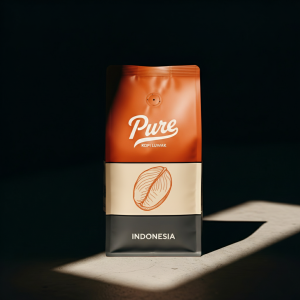
Pure Kopi Luwak
Wild civet coffee from Java. 88.5 SCA cupping score. From $125 for 100g.
At each stage, the drinker develops more precise vocabulary and a more specific sense of what to seek. And then, eventually, a ceiling appears — not because specialty coffee lacks depth, but because its flavor diversity is bounded by what terroir, variety, and processing can achieve within conventional production. More expensive beans from better farms produce diminishing differences after a certain point. The improvements become smaller; the gap between a $25/bag specialty coffee and a $40/bag specialty coffee becomes harder to justify without a particularly careful brewing setup.
Try the coffee this article is about
Wild-sourced from Java, 88.5 SCA cupping score, free US shipping. From $125 for 100g.
Shop Pure Kopi Luwak →What Enzymatic Processing Adds That Terroir and Variety Can’t
Wild kopi luwak isn’t a different variety, or a different terroir, or a different processing method in the way that washed, natural, honey, and anaerobic-fermented coffees are different from each other. It’s a different mechanism entirely. The Asian palm civet’s digestive enzymes partially break down proteins in the coffee bean that would otherwise contribute to bitterness during roasting. The 12-to-24-hour transit through the civet’s digestive system also modifies the acid profile of the bean — specifically reducing malic and citric acid concentrations, as documented in food chemistry research — in ways that correlate directly with the smoothness and reduced sharpness that tasters consistently note in authentic wild-sourced product.
For a specialty coffee drinker who has developed sensitivity to acidity levels, to the way bitterness masks complexity, and to the specific weight of body in a cup, these modifications produce an immediately recognizable result. Wild kopi luwak occupies a category that other coffees don’t — smooth in a way that doesn’t require a lighter roast or specialized extraction to achieve, complex in a way that the enzymatic modification itself deepens rather than dilutes.
The Qualification That Changes Everything
The critical word in everything above is “wild-sourced.” Cage-farmed kopi luwak — the majority of commercial production — is not the product being described. A stressed civet fed indiscriminate cherries in a small enclosure doesn’t produce the same digestive chemistry as a wild animal roaming its natural habitat and selecting peak-ripe fruit by smell. Blind tasting studies have found cage-farmed kopi luwak difficult to distinguish from high-quality conventional arabica. Wild kopi luwak, properly sourced, is not. The distinction is biological, not a marketing construction.
The Java origin matters too. Java’s Arabica Typica — the variety from which most genuine Javanese kopi luwak is made — produces a bean that is already clean, nuanced, and complex before the civet processes it. This is a different starting point than Sumatran kopi luwak, which often carries the earthiness associated with Sumatra’s wet-hulling tradition. For the specialty coffee drinker accustomed to transparency and clarity in the cup, Javanese wild kopi luwak is the version that most directly demonstrates what enzymatic processing adds beyond what conventional methods achieve.
How to Approach Your First Bag
Pure Kopi Luwak comes in 100-gram bags — enough for 10 carefully weighed 10-gram cups. For a specialty coffee drinker accustomed to comparing 250-gram bags, this is a different scale of engagement. The approach that works best for a first experience: a single focused tasting session brewed as a pour over with filtered water at 93°C, drunk without milk, with time between sips to notice how the cup develops as it cools. Then subsequent cups as part of a normal morning, in ordinary conditions rather than ceremonial ones.
The most useful comparison for specialty coffee drinkers is not against other kopi luwak — it’s against the best cup of anything. Wild kopi luwak brewed correctly doesn’t slot neatly into a ranking with other coffees. It tends to stand apart, which is either the most interesting thing a specialty coffee drinker can hear, or the most irritating, depending on their tolerance for exceptionalism claims.
The only resolution is to taste it. At $125 for 100 grams against the backdrop of a genuinely constrained supply, the question of whether a different mechanism of flavor modification justifies the premium is empirical. The chemistry is documented; the scarcity is real; the experience either delivers or it doesn’t. Most specialty coffee drinkers who taste authenticated wild kopi luwak once find themselves placing a second order. That’s probably the most honest data point available.
Pure Kopi Luwak
Wild civet coffee from Java. 88.5 SCA cupping score. From $125 for 100g.
Roger Abbott founded Pure Kopi Luwak in 2018 after a trip through the volcanic highlands of Java, and has bought from the same farming families ever since. He only works with collectors of wild civet coffee, never caged. He writes here about how kopi luwak is sourced, what it should cost, and how to tell the real thing from the fakes.