The traditional gift for a tenth wedding anniversary is tin. This has been true since Victorian England codified the practice, and it has confused gift-givers ever since. Tin is chosen because it represents a marriage that has proven itself — strong, flexible, and resistant to corrosion. In theory, that’s poetic. In practice, you end up staring at a decorative tin box in a gift shop wondering how to explain to your spouse that a decade of shared life has been honored with something they could have bought at a hardware store.
The modern alternative is aluminum, which the internet helpfully suggests you mark with kitchen appliances. Neither interpretation is particularly satisfying.
This is the moment to consider a different kind of answer entirely.
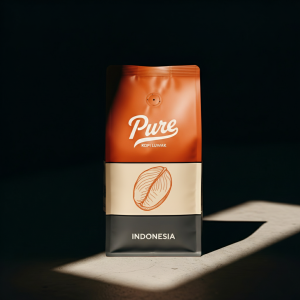
Pure Kopi Luwak
Wild-sourced. Organic. Arabica. From $125.
What a Tenth Anniversary Actually Asks For
Ten years is a strange and underacknowledged milestone. The first anniversary has the freshness of novelty; the twenty-fifth carries the weight of silver; the fiftieth is a testament to endurance. But the tenth sits in between — past the honeymoon period, past the early trials, into something more settled and, honestly, more interesting. Two people have now built something real. Habits, rituals, inside jokes, a specific way of making coffee in the morning that neither of you would have predicted on year one.
The tenth anniversary calls for a gift that acknowledges that complexity. Not just expensive. Not just practical. Something with a story behind it.
The Coffee That Needs a Story to Land
Kopi luwak begins with a wild Asian palm civet (Paradoxurus hermaphroditus) moving through the coffee farms of the Ijen Plateau in East Java — an area that sits at elevations above 900 meters, where the volcanic soil and consistent rainfall create some of the best conditions for Arabica coffee in the world. The civet selects only peak-ripe coffee cherries, eating them as part of its natural diet. The beans pass through its digestive system intact, undergoing enzymatic transformation in the process — specifically, proteolytic enzymes partially break down certain proteins in the bean that are precursors to bitterness during roasting.
The result is a coffee that tastes genuinely different from anything else: lower bitterness, modified acidity, full body, and a smoothness documented in food chemistry research comparing kopi luwak to conventionally processed beans from the same origin. The difference is not marketing — it is measurable.
But it is also a story. And shared experiences with a story attached are the most durable kind of gift.
The Gift That Becomes a Morning
There is a practical argument for giving someone a 100g bag of wild kopi luwak for a tenth anniversary: it creates an occasion within an occasion. Instead of the gift sitting on a shelf, it disappears across ten careful mornings — brewed with intention, tasted together, discussed over the first cup of the day when the house is still quiet.
At roughly ten to twelve cups per 100g bag, you are giving ten mornings of something unusual. Ten small rituals. Ten conversations that start with “what do you think?” and end up somewhere else entirely.
A pour-over setup pairs particularly well with kopi luwak — the clarity of extraction lets the enzymatic complexity come through without interference. But any brew method works. The point is not the equipment; it is the slowness the coffee demands.
Why This Works Better Than Tin
A tin gift carries an implicit message: I looked up what the tradition says and followed the instruction. A bag of wild kopi luwak carries a different message: I thought about something that does not exist in most people’s lives, and I thought it should exist in yours.
The price point is honest — $125 is well within the range most people consider appropriate for a tenth anniversary gift. Not extravagant in a way that creates awkwardness. Exactly as much as a fine dinner, or a bottle of wine from a good year, or a piece of jewelry that will be glanced at and rarely thought about again.
The difference is that kopi luwak gets consumed. It does not accumulate. It turns into ten mornings that two people spent doing something slightly unusual together, in a decade built out of thousands of ordinary mornings made meaningful by proximity.
What to Look For When Buying
Kopi luwak has a counterfeiting problem worth understanding. Cage-farmed kopi luwak — produced from civets kept in intensive conditions and fed indiscriminate cherries — comprises the majority of what is sold under the name worldwide. It lacks the quality of wild-sourced beans because the civet’s selective foraging behavior is absent. Verifying authenticity before purchasing is important.
Wild-sourced kopi luwak is collected from the forest floor beneath the paths that wild civets travel naturally. It is traceable to specific farms or regions. Producers who can tell you exactly where their beans come from — down to the island, the elevation, the variety of Arabica being grown — are the ones worth buying from.
Java Arabica, collected from wild civets on the slopes of the Ijen Plateau, is the benchmark. The volcanic terroir and the civet’s precise cherry selection combine to produce the version of kopi luwak the category was always supposed to deliver.
The Tenth Year Deserves a Better Tradition
The Victorians chose tin because they were codifying a hierarchy of durability — a practical metaphor for a marriage that had made it through its first difficult stretch. It made sense in 1850, when a household’s material goods were understood as a measure of its stability.
In 2026, the tenth anniversary calls for something different. Not a material object that endures, but an experience that the two of you will actually have — rare, specific, worth talking about, and gone by the eleventh year as a memory rather than a piece of furniture. That is a better metaphor for a marriage than tin has ever been.
Pure Kopi Luwak
Wild-sourced. Organic. Arabica. From $125.

Roger Abbott is the founder of Pure Kopi Luwak. He has spent over a decade sourcing wild kopi luwak directly from farmers and collectors in the highlands of Java, Indonesia — working exclusively with wild civets, never caged. He writes about specialty coffee, Indonesian origins, and the science behind what makes kopi luwak taste the way it does.
