The 35th birthday is the first milestone where the coffee gift argument becomes genuinely interesting. At 21, they will drink anything. At 50, there is an entire ritual around acknowledging the number itself. But at 35, you are buying for someone who has spent the better part of a decade developing real taste — who came of age during the third-wave coffee revolution, who owns a grinder, who can name the difference between a washed Ethiopian and a natural-process Yirgacheffe, and who is finished accepting gifts that feel like someone searched “coffee gift ideas” and clicked the first result.
This is the birthday where novelty stops working and quality starts mattering. It is also where a $125 bag of wild-sourced kopi luwak from Java makes more sense than at any other age — because at 35, they have the palate to actually taste what makes it different.
What the 35-Year-Old Coffee Drinker Actually Knows
A 35-year-old coffee drinker in 2026 was 18 or 19 when specialty coffee’s third wave went mainstream in urban markets. They have been drinking single-origin for fifteen years. They watched filter coffee replace espresso as the serious drinker’s method of choice, then watched that conversation reverse. They have had pour-overs at serious coffee bars, read roaster notes describing “honeysuckle and red grape,” and formed opinions about whether those notes are real or invented. Some can identify a wet-hulled Sumatran by smell alone.
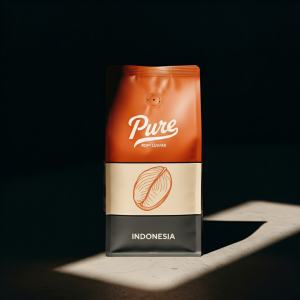
Pure Kopi Luwak
Wild civet coffee from Java. 88.5 SCA cupping score. From $125 for 100g.
This depth matters when choosing a gift because wild kopi luwak’s quality is most apparent in contrast. The characteristic smoothness — the result of proteolytic enzymes in the civet’s gut partially breaking down protein-based bitter precursors before roasting — is most striking to someone who knows how a medium-roasted Javanese Arabica normally behaves. To a casual coffee drinker, it reads as smooth coffee. To a 35-year-old who has cupped the same origin without the civet processing, the difference is immediately interesting and immediately explainable.
The Budget Logic at 35
Something shifts in the gift economy around 35. People at this age are typically established in careers, have moved past the phase of needing functional gifts, and are in the demographic where corporate gifting consultants recommend $75 to $150 per person for premium gifting occasions. Below that threshold, the gift reads as obligatory. Above it, you have entered the territory of gifts that get remembered.
A $125 bag of wild kopi luwak lands in that range precisely. It is expensive enough to signal genuine effort without requiring a speech to explain. Consumable, so it creates no clutter on the shelf of someone who already has everything they need. And it comes with a story — wild-sourced from Java, collected by civets who select only peak-ripe cherries before dawn, a process that cannot be industrialized — that works as a birthday-dinner conversation piece without demanding to be one.
Why Whole Bean Is the Only Option
For the 35-year-old with the coffee setup — and there will be a grinder, and a kettle — whole bean is the only version of this gift worth giving. Ground coffee loses volatile aromatic compounds within hours of grinding; a pre-ground bag of kopi luwak is paying $125 for half the experience. Whole bean ships better, holds quality longer, and gives the recipient the satisfaction of grinding it fresh for the first cup.
Grind size matters more here than with ordinary coffee — slightly coarser than you would use for the same roast level on regular Arabica, because the civet processing changes the bean’s cellular density. Include a note on this. It shows you did the research. Proper storage — sealed, away from heat and light, used within four to six weeks of opening — is worth mentioning too. The details signal care, and at 35, care is the difference between a gift and a gesture.
How to Frame It
The difference between giving kopi luwak as novelty versus giving it as the serious coffee gift it is comes entirely down to framing. “It’s made from animal droppings, surprise!” is a party trick. What you want to communicate is this: wild civets in the highlands of Java select only peak-ripe coffee cherries by scent — bypassing under-ripe and over-fermented fruit with a precision no human harvester reliably achieves at scale — and the enzymatic transformation during digestion produces the smoothest, least bitter Arabica cup you can make at home. The civet is a mechanism, not a punchline.
At 35, the person you are giving this to will go verify that claim. They will look up the proteolytic processing, read about the Typica variety on Java, maybe find a food chemistry paper on reduced acid concentrations in civet-processed beans. This is the best possible outcome from a gift: sustained curiosity about something real. Give them the story and let them find their own way into it.
Pure Kopi Luwak
Wild civet coffee from Java. 88.5 SCA cupping score. From $125 for 100g.

Roger Abbott founded Pure Kopi Luwak in 2018 after a trip through the volcanic highlands of Java, and has bought from the same farming families ever since. He only works with collectors of wild civet coffee, never caged. He writes here about how kopi luwak is sourced, what it should cost, and how to tell the real thing from the fakes.