The 2023-24 El Niño episode was one of the strongest on record. Sea surface temperature anomalies in the central equatorial Pacific held above 2°C for months, suppressing the monsoon circulation that brings seasonal rainfall to Southeast Asia. Indonesia’s wet season arrived late across multiple provinces, shortened in others, and delivered rainfall in irregular pulses instead of the sustained pattern that Arabica trees have evolved to respond to precisely.
On the slopes of Java’s eastern highlands — the Ijen Plateau in Bondowoso regency, and the forested flanks of Gunung Raung where serious Arabica cultivation happens at altitude — the effects were practical and immediate. Coffee trees flower in response to rain following a dry period: it’s a hormonal trigger, a biological switch tripped by the moisture signal after weeks of dry stress. When rains come irregularly, trees along the same hillside can flower weeks apart. The result is a cherry crop that ripens on a staggered schedule — some trees ready in June, others not until August — complicating selective harvesting and widening the quality range of fruit available at any given time.
This matters to kopi luwak buyers because a wild civet foraging through that landscape in July is working with what the season built. The best animals navigate to the best cherries regardless. But the quality of those best cherries — their sugar content, their flavor development, the complexity of what the civet’s enzymes will work with — begins with what the rain delivered in October.
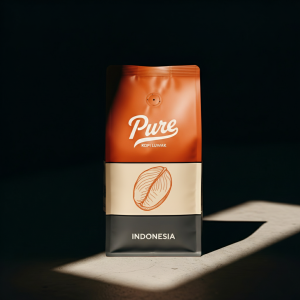
Pure Kopi Luwak
Wild civet coffee from Java. 88.5 SCA cupping score. From $125 for 100g.
Java’s Climate Calendar and the Coffee It Shapes
Java operates on a clear two-season pattern. The dry season runs approximately May through October; the wet season arrives between November and April. Coffee growing at elevation on the island follows this rhythm precisely, and understanding it is necessary for understanding what you’re buying.
Arabica trees at 900 to 1,500 meters — the elevation range where Java’s best Typica and Bourbon varieties thrive on basalt volcanic soils — experience a vegetative-to-reproductive transition triggered by the first significant rainfall after the dry season. This flowering flush typically occurs in October or November. The cherries that result from successful pollination develop over approximately nine months, reaching peak ripeness between June and August of the following year.
The cup you brew from a particular harvest was therefore determined in large part by events thirteen months earlier: whether the flowering-triggering rains arrived on schedule, whether the preceding dry season was dry enough and long enough to stress the trees into a synchronous flush, and whether the subsequent wet season delivered sufficient rainfall at the right intervals to support uniform cherry development without creating the conditions for disease pressure or waterlogging.
Try the coffee this article is about
Wild-sourced from Java, 88.5 SCA cupping score, free US shipping. From $125 for 100g.
Shop Pure Kopi Luwak →What Good Seasons Produce
In strong harvest years on Java, the dry season runs six to seven months with minimal interruption. The trees experience genuine dry stress — a physiological state that, paradoxically, prepares them for more abundant and synchronized flowering when rain finally arrives. A well-stressed tree produces a more concentrated flowering flush: most cherries on a given farm set within a narrow window, which means they ripen at roughly the same time and selective harvesting can be timed precisely.
The coffee that develops under these conditions measures higher Brix levels in the cherry pulp — more dissolved sugars, accumulated during a slow, cool development period at high altitude with the sharp diurnal temperature swings characteristic of Java’s volcanic highland topography. Temperature drops of 10 to 15°C from afternoon highs to overnight lows at these elevations slow cherry development significantly, extending the time the fruit hangs on the branch and allowing sugars and organic acids to accumulate gradually. Higher Brix at harvest correlates directly with more complex flavor development during fermentation and roasting: deeper caramel, brighter fruit, more of the chocolate depth that Java Arabica at elevation produces at its best.
For wild kopi luwak, the implication is direct. A civet selecting from a uniform crop of peak-ripe, high-Brix Arabica cherries is working with exceptional raw material. The enzymatic transformation it contributes — the reduction of bitterness precursors, the modification of the acid profile — operates on a starting material that’s already at its best.
The Volcanic Soil Factor
Java’s eastern highlands sit on geologically young volcanic substrate. The Ijen caldera complex and the Raung-Argopuro range are part of one of the world’s most active volcanic arcs, and the basalt and andesite soils derived from this geology are unusually mineral-rich — high in calcium, magnesium, potassium, and trace micronutrients that are directly incorporated into the coffee tree’s cellular structure and, ultimately, into the cherry pulp and bean.
The mineral profiles of coffees grown on active volcanic soils in Java, Sumatra, and Sulawesi are measurably different from those grown on sedimentary or alluvial soils. This is part of what the specialty coffee trade means by terroir: not a romantic notion, but a chemical reality that shows up in cup evaluation. Java Arabica grown at elevation on volcanic basalt has a specific earthiness and mineral quality that other Indonesian coffees don’t fully replicate — and that interacts with the civet’s enzymatic processing in ways that define the character of high-quality wild Javanese kopi luwak.
Why This Matters for the Buyer
Wild kopi luwak production from Java is small enough — global estimates of genuinely wild-sourced production run around 500 kilograms annually — that the quality of individual harvest years matters to the final cup. A good season on the Ijen Plateau, with synchronous flowering, uniform cherry development, and peak-Brix fruit available during the civet’s foraging season, produces beans that a wild civet processes into something exceptional. A difficult season, like those following the 2023-24 El Niño disruption, produces a more variable crop — still kopi luwak, still processed by wild animals in the correct way, but starting from a wider range of cherry quality.
This doesn’t argue against purchasing — the quality floor for properly sourced wild kopi luwak remains above what commercial coffee achieves even in below-average years. But it does argue for sourcing transparency. A producer who maintains direct relationships with specific Javanese farms, who can tell you which harvest season’s beans you’re drinking, and who tracks the growing conditions that shaped the crop is a producer with genuine quality control. One who cannot answer basic origin questions is relying on the label rather than the sourcing.
Pure Kopi Luwak sources exclusively from wild civets on farms in the volcanic highlands of West Java. For more on the harvesting calendar and what timing means for the beans you receive, see our guide on when kopi luwak is harvested and why Java’s harvest creates the scarcity that defines wild kopi luwak’s price.
Pure Kopi Luwak
Wild civet coffee from Java. 88.5 SCA cupping score. From $125 for 100g.

Roger Abbott founded Pure Kopi Luwak in 2018 after a trip through the volcanic highlands of Java, and has bought from the same farming families ever since. He only works with collectors of wild civet coffee, never caged. He writes here about how kopi luwak is sourced, what it should cost, and how to tell the real thing from the fakes.