Rwanda produced its first Cup of Excellence competition entry in 2008, two years after the Alliance for Coffee Excellence opened its program to the country. The decision was deliberate: post-genocide economic reconstruction required export income, and specialty coffee commanded multiples of commodity price. Within a decade, Rwandan Bourbon arabicas were earning scores of 90 and above, fetching prices at auction that coffee farmers in the country’s hillside smallholdings had never seen before. The “Best of Rwanda 2024” competition drew 297 entries, narrowed through multiple blind-tasting rounds to 40 finalists, with buyers arriving from Japan, Saudi Arabia, the United States, China, Greece, the United Kingdom, and Bulgaria.
Kopi luwak is, by contrast, not a competitive coffee. It doesn’t enter cupping competitions. It doesn’t earn points on a 100-point scale. It operates entirely outside the specialty coffee certification apparatus, and this is precisely what makes comparing it to Rwanda — one of the specialty world’s recent success stories — so useful for anyone trying to decide where to spend serious money on an exceptional cup.
What Rwanda Does Exceptionally Well
Rwanda’s Bourbon variety arabica, grown at altitudes between 1,400 and 2,000 meters around Lake Kivu and in the volcanic soils of the country’s northwest, produces some of the most transparent, high-intensity cups in Africa. The washed processing method that dominates Rwandan production — cherries depulped, fermented in water for 12 to 36 hours, then washed and dried on raised beds — removes any fruit influence and lets the bean’s inherent character speak without interference. The result is typically bright, clean, and precise: jasmine floral notes, cranberry and red currant acidity, brown sugar sweetness, a body that’s closer to black tea than syrup.
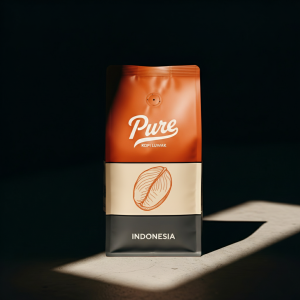
Pure Kopi Luwak
Wild civet coffee from Java. 88.5 SCA cupping score. From $125 for 100g.
These are genuinely notable qualities. Rwanda’s trajectory from post-conflict agricultural country to specialty coffee exporter in under two decades is one of the more impressive stories in the global coffee industry. For specialty coffee buyers who value brightness, clarity, and the traceability-obsessed ethics of third-wave sourcing, Rwanda regularly delivers top-scoring cups that can rival anything Ethiopia produces — at somewhat lower price points, because the reputation is newer.
What Rwanda cannot offer is a flavor profile shaped by biological transformation. Its excellence is the excellence of place: soil, altitude, microclimate, careful processing. Those variables produce a coffee that tastes unmistakably of its origin. But the bean that enters processing is, essentially, the same bean that exits it. Nothing unusual happens to it along the way.
Try the coffee this article is about
Wild-sourced from Java, 88.5 SCA cupping score, free US shipping. From $125 for 100g.
Shop Pure Kopi Luwak →What Wild Kopi Luwak Does That Rwanda Can’t
The wild Asian palm civet — Paradoxurus hermaphroditus — doesn’t care about flavor notes or auction scores. It eats peak-ripe coffee cherries from Java’s highland farms during harvest season because they’re sweet and calorically dense. The 12-to-24-hour passage through its digestive tract subjects the beans to a combination of proteolytic enzymes, gastric acid, and fermentation processes that alter their chemical structure in ways that washed or natural processing simply don’t replicate.
Specifically, proteolytic enzymes break down proteins in the outer layers of the bean — proteins that are precursors to bitterness during roasting. Research published in food chemistry journals has documented measurably lower concentrations of malic and citric acids in kopi luwak compared to conventionally processed beans from the same origin. Lower bitterness potential, modified acid profile, distinct enzymatic fermentation: the result in the cup is smooth in a way that has nothing to do with roast level and everything to do with what happened to the bean before roasting even began.
Wild kopi luwak from Javanese farms — the kind produced by civets selecting their own cherries in actual forest conditions rather than the farmed alternative where stressed civets are force-fed — retails between $1,100 and $1,250 per kilogram from verified wild-sourced suppliers. Pure Kopi Luwak, sourced from wild civets on Java, comes in at $125 for a 100-gram bag: the same price ballpark as a competition-winning Rwandan micro-lot from a specialty roaster, but a fundamentally different kind of premium.
The Flavor Comparison: Clean Brightness vs Textured Depth
Side by side, Rwandan washed arabica and wild Javanese kopi luwak are not trying to do the same thing. Rwanda is doing bright and precise, which makes it excellent for light-to-medium roast pour-overs where acidity and clarity are the point. Kopi luwak is doing smooth and complex, where the enzymatic modification creates a cup that’s notably lower in bitterness, fuller in body, and layered with chocolate and earthiness that read differently from the fruity transparency of East African washed coffees.
Drinkers who value a clean, fruit-forward cup — who find earthiness distracting or heaviness unpleasant — will tend to prefer Rwanda. Drinkers who dislike bitterness and acidity, who want a full-bodied cup that holds up to contemplative sipping without needing milk or sugar, will find wild kopi luwak more rewarding. These aren’t competing answers to the same question. They’re answers to different questions about what premium coffee is supposed to do.
The comparison that’s most telling: Rwanda’s best cups score 90-plus at cupping competitions against a 100-point scale. Wild kopi luwak’s value isn’t measured on a cupping scorecard at all. It’s measured in something the specialty coffee industry doesn’t have a metric for: genuine biological uniqueness that no processing innovation can replicate.
Which One Is Worth Buying?
For drinking daily or exploring regional variation: Rwanda’s top-tier lots offer ambitious brightness at prices that make them accessible for regular purchase. If what you want is the best washed African arabica you can find, Rwanda regularly delivers at the $40-80 per pound level for competition-adjacent lots — good value for the quality.
For a first-of-its-kind experience, or for giving as a gift: wild kopi luwak wins by default, because nothing else on the market delivers the same combination of rarity, story, and genuinely distinctive taste profile. The world’s most expensive coffees are a small category, and within it, wild kopi luwak occupies a position that clean competition coffee — however excellent — cannot reach: it is produced by an animal selecting its own cherries in a Javanese forest, and that fact alone puts it in a different conversation.
Buy Rwanda when you want exceptional brightness and you’re curious about what high-altitude East African washed coffee can do. Buy wild kopi luwak when the cup you’re making — or giving — needs to be genuinely unlike anything else.
Pure Kopi Luwak
Wild civet coffee from Java. 88.5 SCA cupping score. From $125 for 100g.
Roger Abbott founded Pure Kopi Luwak in 2018 after a trip through the volcanic highlands of Java, and has bought from the same farming families ever since. He only works with collectors of wild civet coffee, never caged. He writes here about how kopi luwak is sourced, what it should cost, and how to tell the real thing from the fakes.