The typical corporate welcome kit communicates something immediately upon arrival: we are an organization that purchases objects in volume. The branded notebook, the company-logo mug, the sticker sheet — each item carries the fingerprint of a procurement decision rather than anyone’s personal judgment. By the end of the new hire’s first month, the mug is in the break room cabinet where surplus mugs accumulate, and the notebook is being used to doodle through Tuesday’s all-hands.
Companies now invest between $75 and $150 per employee on enterprise onboarding welcome packages, according to 2025 corporate gifting data from providers including Sunday, which produces onboarding kits for companies like Deel and HubSpot. The investment case is real — research consistently finds that new hires form durable impressions of organizational culture within the first 90 days, and what arrives on or before day one is part of that impression. The execution gap — between what companies spend and what actually lands — is equally real.
What a Different Gift Communicates
A 100-gram bag of wild-sourced kopi luwak from Java, with a card explaining what it is and why you chose it, costs $125 — at the upper end of the per-employee gift range for enterprise hiring, but within it for senior roles or key positions. What it accomplishes that a branded water bottle cannot: evidence that whoever chose it exercised actual judgment. Not “what can we put the logo on?” but “what is genuinely exceptional that this person will appreciate?”
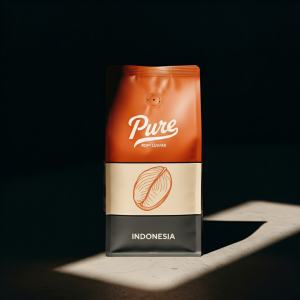
Pure Kopi Luwak
Wild civet coffee from Java. 88.5 SCA cupping score. From $125 for 100g.
The distinction matters at the moment of impression formation. A new hire who opens a welcome package and finds something they have never seen before — a bag of wild kopi luwak from Java, with a card explaining the wild civet sourcing, the enzymatic processing, and the Javanese origin — is processing a different signal than the one who opens a box of branded merchandise. The first communicates: the people who work here know things and spend time thinking about them. The second communicates: the people who work here have a vendor relationship with a merchandise company.
The Coffee Person in Every Office
In most offices, there is at least one person who takes coffee seriously. They arrive early to grind beans before the morning meeting starts. They have a burr grinder on their desk and opinions, stated without prompting, about water temperature. When a new hire’s onboarding package includes a bag of wild kopi luwak, this person notices immediately — and the conversation that follows (“where did you get this? / it came with my welcome package / they sent you kopi luwak?“) travels further than the gifting committee intended.
Corporate coffee gifting works in part because coffee is consumed socially. The new hire who shares their welcome gift with the team during their first week generates early goodwill of a specific kind — the kind that comes from introducing people to something genuinely new. Kopi luwak is rare enough to generate curiosity and shareable enough to generate goodwill simultaneously.
Remote Hires and the Physical Distance Problem
The shift toward distributed work made onboarding gifting both harder and more important. When a new hire starts in a different city or country, the logistical effort to send them something physical becomes a signal in itself — evidence that the organization thinks of them as a real person in a real place rather than a remote node on an org chart. Companies that send nothing to remote hires communicate, accurately or not, that physical distance translates to cultural distance.
Wild kopi luwak ships internationally without refrigeration, holds quality in sealed packaging for months, and arrives intact whether the recipient is in Berlin or Singapore. For organizations hiring globally, this means one gift decision rather than a logistical matrix of what is appropriate and available in each country. Everyone receives the same exceptional coffee — which is a better metaphor for how you want to treat a distributed team than “everyone receives the regional variation of branded swag.”
What to Include Alongside the Bag
The bag on its own is a complete gift. Three additions make it a memorable welcome experience: a card explaining what wild kopi luwak is — the wild civet sourcing in Java’s highlands, the enzymatic process that produces its characteristic smoothness, the fact that it cannot be replicated by industrial methods; a brief brewing note suggesting pour-over or French press for a first cup; and if budget allows, a quality measuring spoon or a bag clip for freshness.
The note matters most. Not because new hires need a coffee education, but because the note is evidence of curation — someone thought about this, knew what it was, and decided it was worth sending. That level of attention at the first contact sets a tone. The same logic that makes kopi luwak work for client gifting applies here: the gift works because it is specific and rare, not because it prints a logo cleanly or comes in a standard size. There are gifts you select from a catalog dropdown and gifts you select because you know what they are. These are fundamentally different things to receive on your first day.
Pure Kopi Luwak
Wild civet coffee from Java. 88.5 SCA cupping score. From $125 for 100g.

Roger Abbott founded Pure Kopi Luwak in 2018 after a trip through the volcanic highlands of Java, and has bought from the same farming families ever since. He only works with collectors of wild civet coffee, never caged. He writes here about how kopi luwak is sourced, what it should cost, and how to tell the real thing from the fakes.