The biohacking community’s relationship with coffee has always been slightly uneasy. Caffeine is a genuine cognitive enhancer — a 2010 paper in the Journal of Alzheimer’s Disease reviewed the literature and concluded that regular caffeine consumption is associated with improved sustained attention and processing speed — but the version most people experience through a large commercial drip involves enough caffeine to produce anxiety, elevated heart rate, and a crash in the early afternoon. The optimization question has always been whether there is a way to access the mental clarity without the physiological noise.
Wild kopi luwak from Java is not marketed as a biohacking product. But the research on its metabolite profile raises genuinely interesting questions about what the civet’s digestive transformation does to the bean’s chemistry — and whether the resulting cup profile has practical implications for people who think carefully about what they put in their bodies.
What the Research Found
A study published in PMC (PMC9960232), “Metabolite Profiling of Premium Civet Luwak Bio-Transformed Coffee Compared with Conventional Coffee Types, as Analyzed Using Chemometric Tools,” used NMR spectroscopy to compare the chemical profile of kopi luwak against conventional arabica samples. The findings on alkaloid levels were notable: kopi luwak showed caffeine at 2.85 µg/mg of dry bean, compared to 12.2 µg/mg in one conventional arabica sample and 11.1 µg/mg in another. Trigonelline — a compound that breaks down during roasting to produce pyridines that contribute to bitterness — was detected at 0.14 µg/mg in kopi luwak versus 10.6 µg/mg in the conventional comparison.
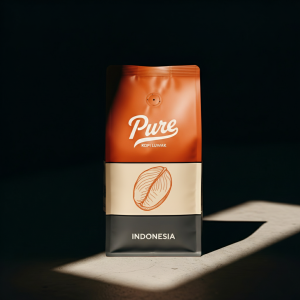
Pure Kopi Luwak
Wild civet coffee from Java. 88.5 SCA cupping score. From $125 for 100g.
These are measurements at the dry bean level using a specific methodology (NMR spectroscopy, which is a standard analytical tool in food chemistry). They are not a universal promise that every brewed cup of kopi luwak contains dramatically less caffeine than your morning espresso. The brewed caffeine content depends on dose, grind coarseness, brew method, water temperature, and contact time. A second PMC study (PMC9855040) that analyzed caffeine in brewed coffee samples found higher caffeine concentrations in its kopi luwak brew than in a Brazilian arabica comparison — which underscores that bean-level chemistry and cup-level chemistry are related but not identical variables. Anyone selling you certainty about exactly how much caffeine is in a brewed cup of kopi luwak is overreading the data.
What the research consistently shows is that kopi luwak has a measurably different alkaloid profile from conventionally processed arabica at the bean level, with the direction of difference being toward lower caffeine and trigonelline concentrations. The methodology is solid; the finding is consistent across multiple independent analyses.
Try the coffee this article is about
Wild-sourced from Java, 88.5 SCA cupping score, free US shipping. From $125 for 100g.
Shop Pure Kopi Luwak →What Changes During Fermentation
The civet’s digestive enzymes act on the coffee cherry during a roughly 24-hour transit period. The primary documented effects are protein modification — specific proteins in the bean are partially hydrolyzed, which is believed to contribute to the smoother flavor profile — and changes to the organic acid composition. Citric and malic acids, which are primary contributors to brightness and perceived acidity in coffee, are present at lower levels in kopi luwak than in conventionally processed arabica from the same region.
Lower acidity in the cup has a practical benefit that goes beyond flavor preference. The compounds responsible for coffee’s gastrointestinal irritation — which is distinct from caffeine’s effects — are partially neutralized through the fermentation process. This is why people with acid-sensitive stomachs often find kopi luwak easier to tolerate than their regular coffee. That is not a medical claim; it is a reported pattern that aligns with the documented chemistry.
The Honest Assessment
Here is what the evidence actually supports: wild kopi luwak has a different chemical fingerprint than conventional arabica, with modifications to its alkaloid content, organic acid profile, and protein-derived compounds. These differences produce a cup that most tasters describe as smoother, less bitter, and less acidic. The alkaloid reduction documented at the bean level may or may not translate proportionally to the brewed cup, but the overall effect most drinkers report is consistent with a gentler stimulant profile than the equivalent volume of conventional espresso.
What the evidence does not support is the idea that kopi luwak is a nootropic in any meaningful clinical sense. No controlled human trial has demonstrated cognitive enhancement from wild kopi luwak beyond the effects of caffeine in general. The interesting research question — whether the modified alkaloid profile changes the subjective experience of the stimulant curve — has not been studied in controlled clinical conditions. Anyone claiming dramatic cognitive performance enhancement from a cup of kopi luwak is extrapolating from the general caffeine literature and adding enthusiasm to fill the gaps.
What is more honest is this: kopi luwak is a genuinely unusual coffee with a documented chemical profile that differs from commodity arabica in ways that align with what serious drinkers report experiencing in the cup. The smoothness is real. The lower bitterness is real. The gentler stimulant effect is consistent with the alkaloid data, even if it cannot be precisely quantified without controlled study. For someone who takes their morning caffeine window seriously and has found that conventional espresso introduces as much friction as it resolves, the research case for trying wild kopi luwak is legitimately interesting — not hype, but not fully proven either.
The caffeine content breakdown covers the nuances of what the studies measure and where they have limitations. The short version: the science is more interesting than the marketing, and brewing wild kopi luwak is currently the only way to find out whether the measured differences produce a perceptible effect in your own cup. The broader health profile of wild kopi luwak covers additional compound data for anyone who wants to go further into the research.
Pure Kopi Luwak
Wild civet coffee from Java. 88.5 SCA cupping score. From $125 for 100g.

Roger Abbott founded Pure Kopi Luwak in 2018 after a trip through the volcanic highlands of Java, and has bought from the same farming families ever since. He only works with collectors of wild civet coffee, never caged. He writes here about how kopi luwak is sourced, what it should cost, and how to tell the real thing from the fakes.