The traditional anniversary gift list — paper for the first, wood for the fifth, tin for the tenth — was codified in its modern form in Emily Post's 1922 edition of Etiquette, though versions circulated earlier. Most people reference it vaguely without being able to name what year gets what. What the list was always pointing at, underneath the material categories, was a single idea: an anniversary gift should mark the occasion as distinct from any other. It should say — this is not a birthday, not a holiday, this is the specific fact that we have been doing this together for a meaningful amount of time.
That framing explains why anniversary gifts are so often difficult to get right — and why the default solutions (jewelry, dinner, a spa day) work for some people and feel disconnected from the actual relationship for others. The person who has all the jewelry they want. The couple who already eats at nice restaurants. The partner who doesn't want to be pampered; they want to try something neither of you has tried before.
The Case for an Experience Over an Object
Wild kopi luwak is not a decorative object. It's not something you display on a shelf. It's coffee — something you consume together, over however many mornings a bag lasts. A 100-gram bag yields roughly 15 to 20 cups at standard pour-over ratios. That's two to three weeks of shared morning ritual, each cup made from beans that arrived in a context the ordinary grocery run doesn't provide.
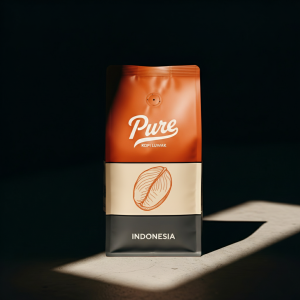
Pure Kopi Luwak
Wild civet coffee from Java. 88.5 SCA cupping score. From $125 for 100g.
The experience angle matters specifically for anniversaries because anniversaries are about time — the accumulation of shared time, and the intention to keep accumulating it. A gift that extends across two or three weeks of shared mornings isn't a metaphor for that; it's the actual thing. You start every morning of that period with something that requires a few minutes of attention, produces a cup worth pausing over, and generates a conversation the first time.
What Wild Kopi Luwak Actually Is
Wild kopi luwak is produced on the highland coffee-growing islands of Indonesia — Java, Sumatra, Sulawesi, Bali — where Asian palm civets (Paradoxurus hermaphroditus) forage through Arabica plantations at night. The animals select peak-ripe coffee cherries by scent, eating only the fruit at optimal sugar development. The beans pass through their digestive system intact, over 12-24 hours, during which proteolytic enzymes partially break down bitter-precursor proteins in the bean's outer layers.
The result is a cup that is notably smoother than any conventionally processed Arabica from the same origin. The chocolate notes arrive cleaner. The finish lingers without the sharp edge that most coffees leave. It rewards attention rather than requiring it — the opposite of most expensive food items, which ask you to acquire a taste rather than rewarding you immediately.
Wild-sourced kopi luwak from Java is the authentic version: beans collected from the forest floor beneath wild civet routes, not from caged animals fed industrial quantities of indiscriminate cherries. The distinction matters in both flavor and ethics, and it's the first thing to verify before purchasing.
Matching the Milestone
Different anniversary scales suit different presentations. For a first or second anniversary — where the couple is still building the vocabulary of what they do together — a 100-gram bag of wild kopi luwak at $125 is the right size: enough for several weeks of mornings, not so much that it feels like a bulk purchase. The accompanying note can explain the story briefly: where it comes from, what makes it different, what to expect from the first cup.
For milestone anniversaries — ten years, twenty-five, fifty — the 250-gram bag at $199 makes more sense. The volume matches the occasion, and the per-cup cost ($7 to $8 at home) is modest compared to what specialty coffee shops charge for a fraction of the rarity. If the couple has a regular morning coffee ritual, the gift integrates cleanly into something they already do together, lifting a routine into an occasion for the weeks it lasts.
How to Present It
The gift lands better with context. A brief note explaining what kopi luwak is — the civet processing, the Javanese origin, the specific smoothness it produces — turns a bag of expensive coffee into something that arrives with a story. Most people who receive this as a gift have heard of kopi luwak in passing but have never had it. The gift gives them the experience and the explanation simultaneously.
Include brewing notes: medium grind, water at 93°C, 4 minutes steep for French press or 3-4 minutes pour-over. Those specifics are the difference between a cup that tastes like any other coffee and one that demonstrates what the occasion deserves.
An anniversary gift should say something a card alone can't. The best ones mark the specific fact of the relationship — not “I got you something nice,” but “I found something that requires both of us, that we haven't done before, that will be part of how we remember this year.” Wild kopi luwak from Java, brewed on a quiet morning while the house is still, does exactly that. It doesn't ask for much. It gives back more than most things that cost twice as much.
Pure Kopi Luwak
Wild civet coffee from Java. 88.5 SCA cupping score. From $125 for 100g.

Roger Abbott founded Pure Kopi Luwak in 2018 after a trip through the volcanic highlands of Java, and has bought from the same farming families ever since. He only works with collectors of wild civet coffee, never caged. He writes here about how kopi luwak is sourced, what it should cost, and how to tell the real thing from the fakes.