The top listing for “kopi luwak” on Amazon at the time of writing offers 100 grams for $24.99 and claims to be “premium wild-sourced Indonesian civet coffee.” The photos show beans in a resealable pouch. The origin is listed as Indonesia. There is no farm name, no production date, no civet verification, and no information about whether the civets involved were wild or caged. There are 847 five-star reviews, most of which describe the coffee as smooth and pleasant. This is the American kopi luwak market’s central problem.
Buying authentic wild kopi luwak in the United States is genuinely possible — the country is one of the world’s largest markets for the product, and several verified suppliers ship directly from Java. But the volume of fake, farmed, or misrepresented kopi luwak available to US buyers through mainstream retail channels makes the purchase a minefield for anyone who hasn’t done homework. What follows is that homework, distilled.
What Authentic Wild Kopi Luwak Actually Costs
Price is the first and most reliable filter. Wild-sourced kopi luwak — produced by free-roaming civets selecting their own cherries on Javanese or Sumatran farms, then hand-collected from the forest floor — retails between $1,100 and $1,250 per kilogram from verified suppliers. That works out to approximately $110-125 for a 100-gram bag, which is the typical minimum retail quantity for premium wild-sourced product. Pure Kopi Luwak, sourced specifically from wild Java civets, sells at $125 for 100 grams, sitting at the lower end of the authentic wild-sourced price range.
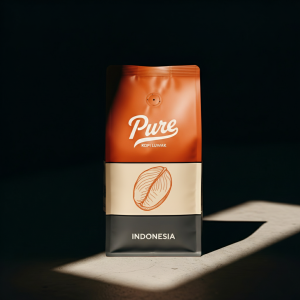
Pure Kopi Luwak
Wild civet coffee from Java. 88.5 SCA cupping score. From $125 for 100g.
Farmed kopi luwak — produced by caged civets fed controlled diets, the product that has drawn justified criticism from animal welfare organizations and the specialty coffee community — typically retails at $300-700 per kilogram. In practice, this means anything offered at $50-80 per 100 grams is almost certainly farmed rather than wild. Anything offered below $50 per 100 grams is either farmed, counterfeit, or contains such a small percentage of actual kopi luwak that the label is effectively misleading.
The $24.99 Amazon listing doesn’t pass this test. Neither do the $35 and $45 options on the same page. If the price seems too good for wild-sourced kopi luwak, it is.
Try the coffee this article is about
Wild-sourced from Java, 88.5 SCA cupping score, free US shipping. From $125 for 100g.
Shop Pure Kopi Luwak →What to Look For Beyond Price
Price is necessary but not sufficient. Several pieces of information distinguish legitimate wild-sourced suppliers from everyone else.
Farm or origin transparency is the first thing to look for. Legitimate wild-sourced kopi luwak should come with specific provenance: a named island, ideally a named farm or cooperative, and some description of the civet foraging conditions. Suppliers who describe their product as “Indonesian” without further specification have told you very little. Java, Sumatra, Sulawesi, and Flores each produce distinctive flavor profiles, and a supplier who knows where their product comes from will say so specifically.
Production traceability is the second marker. The supply chain for authentic wild kopi luwak runs: wild civet eats cherry → bean passes through digestive system → collector finds beans on forest floor → beans are washed, sun-dried, roasted → packaged. That chain takes time and involves human beings who know the land. Suppliers who can describe it with specifics — what farm, what altitude, what processing steps, what roast level — have been paying attention to something real. Suppliers who can’t are selling a story they didn’t write.
The third marker is roast transparency. Authentic kopi luwak is typically medium-roasted to preserve the enzymatic modifications that make it distinctive — the lower bitterness, the reduced acid content, the smoothness that comes from proteolytic enzyme action during digestion. Dark-roasting any coffee burns off the nuanced compounds that justify its premium. A supplier offering only dark-roasted kopi luwak may be hiding something; the roast covers for lower-quality source material.
Where Not to Buy
Amazon’s marketplace model means that any seller can list any product with any claim. Kopi luwak is not legally protected in the United States the way, for example, Champagne is in the EU or Jamaica Blue Mountain is in Japan. There is no USDA certification program for civet processing, no legal standard for what “wild-sourced” means in the context of Indonesian coffee. That regulatory vacuum is exactly what marketplace sellers exploit. The 847 five-star reviews on a $24.99 listing don’t confirm authenticity; they confirm that 847 people drank something smooth and pleasant without knowing what they were actually drinking.
Specialty coffee retailers are somewhat more reliable, but kopi luwak is outside the third-wave sourcing culture that drives most specialty coffee shops, and what some retailers carry as “kopi luwak” is farmed product sourced through commodity import channels. The buyer’s guide to the best kopi luwak goes into this more thoroughly, but the short version: if you’re buying from a specialty roaster whose core business is Ethiopian naturals and Colombian washed coffees, their kopi luwak might be an afterthought offering rather than a carefully sourced product.
Shipping and Import into the United States
Coffee beans — including kopi luwak — face no import restriction entering the United States from Indonesia. The FDA requires standard food safety compliance; roasted coffee beans present no biosecurity concern at US customs. Reputable direct-to-consumer suppliers ship internationally and fulfill US orders routinely. The package typically arrives in 5-10 business days from Java depending on the carrier.
Import duty on coffee beans is minimal — the general rate for roasted coffee from Indonesia under current US tariff schedules has historically been in the low single-digit percentage range, and most retail orders are absorbed into the product price. You don’t need to clear customs personally or file import paperwork for a personal-use food order; that’s handled at the shipment level.
The Summary Version
Wild kopi luwak at authentic prices is available online and ships to the United States without hassle. The challenge isn’t access — it’s filtering the legitimate from the fraudulent. A price below $100 for 100 grams should make you skeptical. A supplier who can’t name a farm, describe foraging conditions, or explain their processing chain should be skipped. And any listing on Amazon priced to compete with specialty coffee is almost certainly selling something other than what it claims. The real thing is verifiable — and worth the verification.
Pure Kopi Luwak
Wild civet coffee from Java. 88.5 SCA cupping score. From $125 for 100g.
Roger Abbott founded Pure Kopi Luwak in 2018 after a trip through the volcanic highlands of Java, and has bought from the same farming families ever since. He only works with collectors of wild civet coffee, never caged. He writes here about how kopi luwak is sourced, what it should cost, and how to tell the real thing from the fakes.