There’s a category of gift that outperforms every birthday present, every anniversary delivery, and every holiday box on impact per dollar: the gift that arrives with no occasion attached. It says something a dated gift cannot — that you were thinking about this person on a random Tuesday, for no reason other than the fact that you thought they’d love it. That asymmetry — an unexpected gesture in an empty slot on the calendar — is where the real signal lives.
The challenge is that most gift categories only make sense with an occasion to justify them. Flowers are for birthdays and apologies. Wine is for dinners and celebrations. Experience gifts require scheduling. What works as a no-occasion gift is something that can be delivered without preamble, enjoyed without ceremony, and received without the awkwardness of opening a present in front of no one else in particular. A bag of genuinely rare coffee checks every one of those boxes.
Why Coffee Works When Nothing Else Does
Coffee occupies a particular position in the gift economy: it’s a consumable that people use every single day, in a private moment that sets the tone for everything that follows. A candle sits on a shelf. A book waits for the right weekend. A bottle of wine needs a dinner partner. But coffee gets made at 7 AM, alone, while the rest of the house is still quiet — and the person making it will think about whoever gave it to them each time they open the bag.
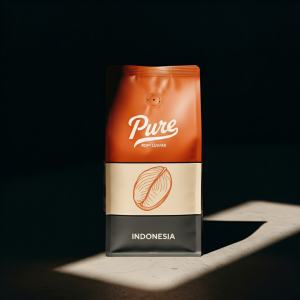
Pure Kopi Luwak
Wild civet coffee from Java. 88.5 SCA cupping score. From $125 for 100g.
Ordinary coffee doesn’t meet this bar, obviously. A supermarket bag arrives with the same emotional weight as groceries. What creates the reaction — the pause, the genuine surprise, the “how did you know?” — is coffee that carries its own story. Wild-sourced kopi luwak from Java has this quality in abundance: it’s the world’s most famous rare coffee, produced in quantities small enough that most people never encounter it in daily life, with a backstory that makes it interesting to talk about even if you know nothing about coffee. Wild Asian palm civets selecting individual peak-ripe cherries on Javanese highland farms. Each bean passing through a 12 to 24-hour enzymatic process that reduces bitterness in ways no roasting technique can replicate. Hand-collected, cleaned, and small-batch roasted in a country where this tradition has existed for over two centuries.
The Psychology of the Unexpected Gift
Gift researchers at the University of Chicago, in a study published in the Journal of Experimental Psychology (2011), found that surprise gifts — those not tied to a specific occasion — are often rated as more thoughtful and memorable by recipients than occasion-mandated gifts of equivalent or higher monetary value. The mechanism is attention signaling: an unexpected gift proves that you were thinking about someone when you didn’t have to, which carries more emotional weight than fulfilling a social obligation on a scheduled date.
Kopi luwak is particularly well-suited to this dynamic. At $125 for a 100-gram bag from Pure Kopi Luwak, it costs enough to feel genuinely considered without requiring the price tag to be explained. The recipient understands immediately that they’re holding something rare — the packaging, the weight, the context all communicate it — and they understand that someone sought it out specifically for them, without a birthday reminder prompting the decision.
Who This Gift Is For
The no-occasion kopi luwak gift works for almost anyone who drinks coffee and has enough curiosity to find the origin story interesting — which, in practice, is most adults who’ve ever ordered specialty coffee at a café or lingered at the coffee aisle in a good grocery store. It works as a thank-you that goes beyond the standard bottle of wine. It works for someone you haven’t seen in months and want to reconnect with in a way that feels real rather than transactional. It works for a colleague who’s had a hard quarter and deserves something that says “I noticed.” It works for a parent, a mentor, a friend who is difficult to buy for because they have everything they need.
The practical logistics are straightforward: a 100g bag ships internationally, arrives in appropriate packaging, and requires no assembly or coordination. The cup itself — smooth, full-bodied, low in bitterness, with notes of dark chocolate and caramel from the Javanese Arabica — does the rest of the communicating. Ten to twelve cups of coffee that the recipient would never have bought for themselves, delivered on no particular occasion, with a note that simply explains what it is and why you thought of them.
What to Say When You Give It
The best note for a no-occasion kopi luwak gift is also the simplest: tell them that wild civets on coffee farms in Java select individual cherries by scent — only the ripest ones — and that the beans you’re sending them have been through a biological process that changes the coffee’s chemistry in measurable ways, making it smoother than anything they’re likely to have tried before. Tell them to brew it black if they can manage it, and to not rush the first cup.
Then tell them you thought of them and wanted them to have it. That’s enough. That’s more than enough — because a gift that arrives without an occasion, carrying that kind of thought, is the one that gets remembered longest.
For context on when this gift works particularly well in specific settings, see our guides on coffee as a housewarming gift and the best luxury coffee gift for her.
Pure Kopi Luwak
Wild civet coffee from Java. 88.5 SCA cupping score. From $125 for 100g.

Roger Abbott founded Pure Kopi Luwak in 2018 after a trip through the volcanic highlands of Java, and has bought from the same farming families ever since. He only works with collectors of wild civet coffee, never caged. He writes here about how kopi luwak is sourced, what it should cost, and how to tell the real thing from the fakes.