Every year in late August, dormitory parking lots across the country fill with the same scene: sedans loaded beyond reasonable capacity, labeled boxes balanced on top of mini-refrigerators, a parent carrying a shower caddy in one hand and a floor lamp in the other, and somewhere in the chaos, a final gift â the one that’s supposed to say something meaningful at the exact moment when everything is happening too fast to actually mean anything.
About 2.3 million students move into college housing each fall, according to the National Center for Education Statistics. Most of them will encounter the same cafeteria coffee setup within 48 hours: large-batch drip on commercial warmers, commodity-grade beans roasted months ago and kept hot long past the point when they still taste like anything describable, served in a paper cup that absorbs more flavor than it preserves. It’s not catastrophic. It’s just deeply forgettable. And for a student who has been drinking a parent’s good beans at home for the past three years, it will be a genuine shock to the system.
The Gift That Acknowledges the Adult
The standard move-in gift catalog is practical and forgettable: shower caddies, desk lamps, Target gift cards, throw blankets. None of these are wrong. But they’re all designed for the freshman rather than for the person who became interesting somewhere in the last two years of high school â the one with opinions about music, books, and, if they’ve been paying attention, about coffee.
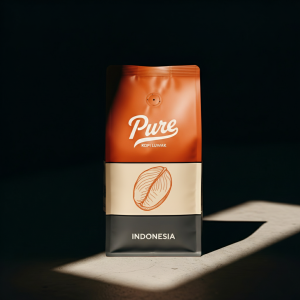
Pure Kopi Luwak
Wild civet coffee from Java. 88.5 SCA cupping score. From $125 for 100g.
A 100g bag of wild kopi luwak from Java is something else. It costs $125, which is in the range of the “real gift” a parent might include alongside the practical items. It fits in any bag. It arrives vacuum-sealed in packaging that keeps it fresh for weeks after roasting. And it’s the kind of gift that says: I know you’re going to be okay out there, and I’m going to miss drinking coffee with you in the morning.
What They’re Getting
Wild kopi luwak is produced through a process that has no industrial equivalent. The Asian palm civet (Paradoxurus hermaphroditus), a small nocturnal mammal native to South and Southeast Asia, forages through coffee plants on Javanese farms during the five-month harvest season, selecting and consuming only the ripest, most aromatic cherries. The seeds pass through the digestive tract largely intact, where proteolytic enzymes modify the proteins in the outer layer of the bean â reducing specific compounds that would otherwise become bitter and sharp during roasting.
The result is a cup that’s measurably smoother and lower in acidity than most specialty coffee. Researchers at food chemistry institutions have documented that authentic kopi luwak contains lower concentrations of malic and citric acids than conventionally processed beans from the same Javanese origin â which is why the flavor profile is genuinely distinct, not just marketed as such. It’s not “better coffee” in a generic sense. It’s structurally different at the chemical level in a way that anyone who has been drinking specialty coffee for a few years will notice in the first cup.
A student heading to college is not going to have access to anything like it in the dining hall. That’s partly the point.
Twelve Cups That Start a New Chapter
A 100g bag of Pure Kopi Luwak yields approximately twelve cups at standard pour-over or French press brew ratios. That’s not a year’s supply â it’s a first-week experience, or spread over the first month if they’re being thoughtful about it. The scarcity is appropriate: this isn’t a coffee for Tuesday morning on autopilot. It’s a coffee for the Sunday morning in week two, when the novelty has settled and there’s a quiet hour before the week starts again.
What they’ll need alongside it: a French press or a small pour-over setup (often already packed), and water that doesn’t taste like dormitory pipes. A hand grinder like the Timemore C2 fits in a suitcase, costs about $50, and is far better than anything available in most campus common areas. The rest is straightforward: kopi luwak is forgiving with brewing, the enzymatic processing having already done most of the work.
The Practical Gift That Arrives at the Right Moment
What makes the move-in gift land is timing. It should arrive with the student, packed into the labeled box to be opened on the first morning when they wake up in a new room and the kettle is the first thing that comes out of a bag. That moment â the first morning routine in a new place â is exactly when coffee becomes something more than caffeine. It’s continuity. It’s a small bridge between the kitchen they grew up in and wherever they’re going next.
Wild kopi luwak from Java is one of the few gifts genuinely worth opening in that moment. It’s also easy to store correctly in a small space â away from heat, light, and moisture, in the original vacuum bag or a small airtight container. They’ll figure the rest out. They always do. The coffee will be better than anything else in that building, and they’ll know it, and that knowledge is its own small comfort in a week when comfort is harder to come by than it looks from the outside.
Pure Kopi Luwak
Wild civet coffee from Java. 88.5 SCA cupping score. From $125 for 100g.

Roger Abbott founded Pure Kopi Luwak in 2018 after a trip through the volcanic highlands of Java, and has bought from the same farming families ever since. He only works with collectors of wild civet coffee, never caged. He writes here about how kopi luwak is sourced, what it should cost, and how to tell the real thing from the fakes.