The American business gift market generates roughly $242 billion annually, and a meaningful fraction of it goes toward gifts that nobody needs, nobody remembers, and nobody would choose for themselves. The branded golf umbrella. The engraved desk clock. The Omaha Steaks package that arrives in January. These gifts exist not to delight the recipient but to fulfill an obligation without causing offense — which is a low bar that most corporate gifting clears without clearing much else.
Wild kopi luwak from Java is a different category of gift entirely, and it’s surprisingly underused in corporate contexts despite fitting the requirements precisely: premium enough to register as serious, specific enough to demonstrate thought, and unusual enough that the recipient has likely never received it from anyone else. In a landscape where clients receive identical bottles of Bordeaux from every vendor they work with, something genuinely different functions as differentiation as much as gratitude.
Why Coffee Works for Corporate Gifting
Coffee is the most universally consumed hot beverage in American offices. The National Coffee Association’s 2024 National Coffee Data Trends report found that 67% of American adults drank coffee in the past day — a number that skews higher among professionals in knowledge industries. The probability that any given executive, senior client, or valued partner drinks coffee is statistically high. The probability that they’ve had wild-sourced civet coffee from Indonesia is, statistically, near zero.
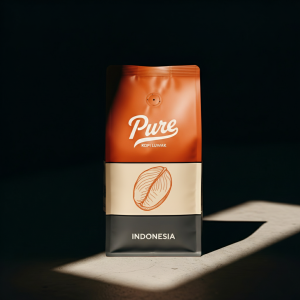
Pure Kopi Luwak
Wild civet coffee from Java. 88.5 SCA cupping score. From $125 for 100g.
That asymmetry is the corporate gift opportunity. You’re not giving someone something they already have, in a better version. You’re introducing them to something they’ve heard of — kopi luwak is famous enough to be culturally legible — but never experienced. The gift becomes a conversation starter. It travels in the way that good corporate gifts should, because the recipient mentions it to others. That’s a form of impression management that no engraved pen set achieves.
The Right Price Point and What It Signals
A 100g bag of wild kopi luwak from Java retails between $125 and $200. This occupies a meaningful middle ground in corporate gifting. It’s above the threshold where it reads as an afterthought — sub-$50 corporate gifts often do — and below the territory where it might create compliance issues at companies with gift-acceptance policies capped at $150 or $250. Most corporate gift policies that set limits are targeting liquor cases, golf outings, and event tickets. A bag of rare coffee typically clears procurement’s concerns without needing an ethics conversation.
The $125 to $200 price also scales well for multiple recipients. A team of five senior clients, each receiving a bag, runs $625 to $1,000 — a budget that falls comfortably within what a mid-sized firm might allocate for annual relationship maintenance. Each recipient gets something that feels individually chosen rather than bulk-ordered, which is the distinction corporate gifting almost always fails to achieve.
Which Recipients This Works For
The executive who has everything. The client who responded to last year’s wine gift with a polite thank-you and nothing else. The partner who explicitly said they don’t drink alcohol. The international client for whom region-specific gifts — American bourbon, local sports team merchandise — carry no resonance. Kopi luwak is geographically and culturally neutral in a way that expensive domestic gifts are not. It comes from Indonesia, appeals to a universal pleasure, and carries a story that translates across cultural contexts.
It also works well for clients who consider themselves discerning. Anyone who asks their assistant to source specialty coffee for their office, who has opinions about espresso machines, or who mentions travel to coffee-producing regions is a person for whom the gift signals that you paid attention. This is ultimately what corporate gifting is for — demonstrating that you know the person well enough to find something specific to them. Wild kopi luwak, paired with a brief explanation of its provenance, accomplishes that without requiring you to know much beyond the fact that they drink coffee and appreciate quality.
How to Present It Correctly
Whole beans travel better than ground coffee and taste significantly better when brewed fresh. Send whole beans. Include a brief card that explains what kopi luwak is — where it comes from, why the civet’s role matters, what to expect in the cup. Many executives know the name but not the story; making the story legible is part of the gift. If your client relationship is close enough, adding a quality hand grinder or a simple pour-over set creates a morning ritual rather than just a bag of coffee.
For bulk corporate orders, consider the logistics: wild kopi luwak ships internationally without restriction in most markets, making it viable for global gifting programs that alcohol-based gifts cannot touch. It’s shelf-stable for months when stored correctly — whole beans, sealed bag, cool dark place — so recipients in different time zones can enjoy it at their leisure. Check our guide to wild vs. caged civet coffee before ordering to ensure you’re sending something that reflects the quality you intend.
Pure Kopi Luwak
Wild civet coffee from Java. 88.5 SCA cupping score. From $125 for 100g.

Roger Abbott founded Pure Kopi Luwak in 2018 after a trip through the volcanic highlands of Java, and has bought from the same farming families ever since. He only works with collectors of wild civet coffee, never caged. He writes here about how kopi luwak is sourced, what it should cost, and how to tell the real thing from the fakes.