In approximately 1830, Honoré de Balzac wrote an essay called “The Pleasures and Pains of Coffee,” in which he described his dependency on the beverage with the kind of detailed, slightly unhinged clarity that could only be achieved by someone who had thought about it too hard for too long. He reportedly consumed up to 50 cups per day during periods of intense writing, and he was not apologetic about it — he was analytical about it, mapping the progression from mild stimulation to “the shaking begins” to the final state where “everything becomes agitated; ideas march into motion like battalions of a great army.” The essay is funny, accurate, and the product of a man who understood that for creative people, coffee is not incidental to the work. It is part of the work.
Johann Sebastian Bach wrote “Coffee Cantata” (BWV 211) around 1732, a comic opera in which a young woman’s father threatens various punishments to cure her of her coffee habit, and she agrees to each one while privately vowing to marry no man who will not allow her to continue drinking it. David Lynch has sold coffee under his own brand since 2006, describing the beverage as “a creative catalyst” that helps produce the calm focus his films require. The relationship between creativity and coffee is not metaphorical. It’s chemical, ritual, and historical — and it runs through almost every artistic tradition the modern world has produced.
What a Creative Person’s Coffee Relationship Actually Looks Like
The coffee habits of artists, writers, and musicians tend toward one of two patterns. The first is volume: the Balzac approach, where coffee functions as fuel, consumed at speed, in quantity, to maintain output across long sessions. The second is ritual: a single excellent cup, brewed carefully, consumed before sitting down to work — less about stimulation than about transition, the sensory signal that says the ordinary part of the day has ended and the working part has begun.
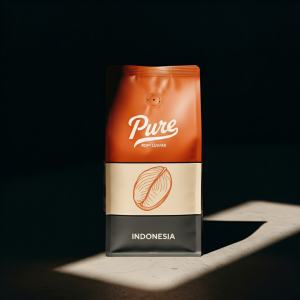
Pure Kopi Luwak
Wild civet coffee from Java. 88.5 SCA cupping score. From $125 for 100g.
Both patterns are served by quality, but the ritual drinker — the one who makes a careful cup at 7am before opening a notebook, or tunes an instrument while the French press steeps — is the one for whom wild kopi luwak from Java is most precisely made. It’s not a coffee you gulp. The flavor is too specific, too layered, too unlike anything they’ve had before. The low bitterness and dark chocolate finish demand a moment of actual attention, which is exactly what a creative ritual requires.
Try the coffee this article is about
Wild-sourced from Java, 88.5 SCA cupping score, free US shipping. From $125 for 100g.
Shop Pure Kopi Luwak →Why Rare Coffee Fits the Creative Gift Perfectly
The creative person on your gift list has already bought most of the things they need. They have instruments, or canvases, or notebooks, or recording equipment. They do not need more gear. What they might not have — what almost no one has given them — is something that enhances the ritual surrounding the work rather than the work itself.
Wild kopi luwak does exactly that. It’s not a tool. It’s the thing that happens before the tool gets picked up, the cup that exists in the forty minutes before the writing starts or the painting dries enough to receive another layer. Research published in Psychopharmacology has confirmed that caffeine improves sustained attention and task-specific focus without significantly affecting divergent thinking — which means it sharpens the kind of concentration that craft work requires while leaving the associative, exploratory parts of cognition largely undisturbed. A creative professional doesn’t need coffee to be more creative. They need it to be more precise, more patient, more able to stay with a difficult passage until it resolves. Wild kopi luwak delivers that without the bitterness spike that interrupts the calm.
The Budget: What $125 Means to a Creative Person
A 100g bag of wild kopi luwak costs approximately what a musician pays for a single replacement reed set, what a writer pays for a month of the software subscription that makes the manuscript trackable, what a visual artist pays for a good brush set that lasts a year. It’s in the zone of “serious” without being in the zone of “extravagant.” For someone who already has opinions about their tools, it’s the right amount of money for a gift that says: I take your work seriously enough to bring something into your ritual that’s also serious.
It also helps that the gift doesn’t require them to change anything about how they already brew. Wild kopi luwak works in a French press, a pour-over, a Chemex. Any method that already exists in their kitchen can handle it. The bean does the work. The gift isn’t asking them to upgrade their equipment — it’s asking them to put something extraordinary through the equipment they already love.
Giving It Well
The note matters more than the packaging for this particular recipient. A creative person will understand and appreciate the specific logic of the gift if you give it to them: “This is the rarest coffee produced in the world. The wild civets of Java select only peak-ripe cherries — the same instinct for quality that underlies everything you do. The result is a cup unlike anything else you’ve had. Brew it before you sit down to work.” That’s a note a writer will keep. That’s the kind of thing that becomes part of the story of the morning.
For other occasions where the same care applies, wild kopi luwak also makes a compelling milestone birthday gift — particularly for the creative person who has reached a significant year and deserves something that reflects the scale of the moment — and it works beautifully as a anniversary gift for the couple who has spent years building a shared ritual around a morning cup.
Balzac did not have access to wild kopi luwak. It is reasonable to assume he would have had opinions about it. Those opinions would have been published.
Pure Kopi Luwak
Wild civet coffee from Java. 88.5 SCA cupping score. From $125 for 100g.
Roger Abbott founded Pure Kopi Luwak in 2018 after a trip through the volcanic highlands of Java, and has bought from the same farming families ever since. He only works with collectors of wild civet coffee, never caged. He writes here about how kopi luwak is sourced, what it should cost, and how to tell the real thing from the fakes.