Java, the island where wild kopi luwak is sourced, sits at the geographic and cultural center of the world’s largest Muslim-majority nation. Indonesia has approximately 231 million Muslims — more than any country on earth — and Java, home to roughly 57 percent of the country’s population, is where that demographic concentration is densest. The coffee highlands in Java’s interior, where Asian palm civets forage through Arabica plantations during harvest season, are surrounded by communities that observe Ramadan, celebrate Eid al-Fitr, and have maintained coffee as a social ritual for as long as the trees have grown there.
That geographical reality gives wild kopi luwak from Java a particular resonance as an Eid al-Fitr gift — one that most people who give it haven’t considered, but that anyone who receives it will appreciate once they know it. This isn’t a luxury coffee imported from a distant culture. It’s a luxury coffee from the heart of the community the gift is meant to celebrate.
Eid al-Fitr and the Language of Generous Gifts
Eid al-Fitr — the Festival of Breaking the Fast, marking the end of Ramadan — is one of the two most significant celebrations in the Islamic calendar. The month preceding it involves a discipline that touches every part of daily life, including the morning coffee ritual. Fasting from dawn to sunset for 30 days means that the cup most people treat as automatic becomes, during Ramadan, either replaced by a pre-dawn cup before Fajr prayer or foregone entirely until the fast breaks at Iftar each evening.
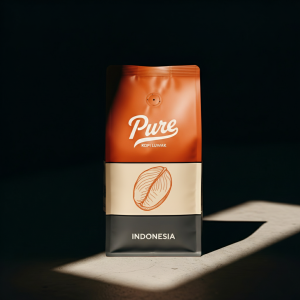
Pure Kopi Luwak
Wild civet coffee from Java. 88.5 SCA cupping score. From $125 for 100g.
The gift that arrives for Eid carries a specific promise: the return of uncompromised pleasure. Wild kopi luwak from Java — the smoothest, most complex coffee most recipients will have tasted — is a gift that honors the discipline of the preceding month with something genuinely exceptional on the other side of it.
Gift-giving at Eid has both personal and professional dimensions. Family gifts (eidi) celebrate the occasion among relatives; professional gifts for clients, colleagues, and partners are equally customary in many Muslim-majority and Muslim-significant business contexts. Wild kopi luwak works for both registers. At $125 to $199 per 100g, it sits at a price point that communicates serious regard — appropriate for a valued client or a close family member — without crossing into ostentation.
Why the Origin Story Matters for This Gift
The specificity of kopi luwak’s Java origin isn’t incidental here. When you give wild kopi luwak from Java as an Eid gift, you’re giving something that literally comes from a Muslim-majority island, grown by farming communities whose agricultural calendar includes the same Ramadan and Eid your recipient observes. The Arabica trees in Java’s highlands were first introduced by the Dutch East India Company in 1696 and have been tended by generations of Javanese farmers, most of whom are Muslim, ever since.
This is coffee with a traceable, living cultural context — not a generic premium product that happens to be expensive. For an Eid gift, that context strengthens the gesture rather than complicating it.
The Flavor Profile, in Detail
Wild kopi luwak achieves its smoothness through a specific mechanism: the Asian palm civet (Paradoxurus hermaphroditus) that processes the beans is a highly selective forager, consuming only peak-ripe coffee cherries during nightly foraging routes through the plantation. Proteolytic enzymes in the civet’s digestive tract break down proteins that would otherwise become bitter compounds during roasting, and the extended digestive transit modifies the bean’s acid profile — reducing concentrations of malic and citric acid relative to conventionally processed coffee.
The result is a cup that is notably smooth, chocolatey, and full-bodied, with very little of the bitterness or sharp acidity that characterizes most premium coffees. Wild-sourced kopi luwak from Java, properly processed and medium-roasted, is unlike anything available from a supermarket shelf or a standard specialty roaster. At 10-12 grams per cup, a 100g bag yields eight to ten cups — eight to ten mornings of something genuinely exceptional.
For a detailed look at the scarcity that makes wild kopi luwak what it is, this piece on Java’s harvest season covers the five-month window during which collection occurs and why the annual supply is inherently limited.
What to Include When You Give It
A short note explaining the origin — Java, Indonesia; wild civets; nighttime foraging; beans collected from the forest floor and roasted in small batches — transforms the gift from an expensive coffee into a story the recipient will retell. Most people who hear it have never encountered anything like it. The first cup confirms what the story implies: that this is coffee operating by different rules than anything else.
If the recipient has a preferred brewing method, it will work well with wild kopi luwak. If they don’t, a pour-over or French press at 93°C, medium-coarse grind, unhurried timing. The coffee is forgiving because the base quality is genuinely high. Pure Kopi Luwak ships worldwide, whole bean, roasted to a medium profile that preserves the enzymatic character that makes wild civet coffee worth tasting once and immediately wanting again.
For Eid al-Fitr, the gift that honors a month of deliberate restraint with something unreservedly rare is a simple concept. The execution — a bag of wild Java kopi luwak, a card with the story, a brewing note if you have one — requires almost nothing. The gesture arrives with weight proportional to its thoughtfulness.
Pure Kopi Luwak
Wild civet coffee from Java. 88.5 SCA cupping score. From $125 for 100g.

Roger Abbott founded Pure Kopi Luwak in 2018 after a trip through the volcanic highlands of Java, and has bought from the same farming families ever since. He only works with collectors of wild civet coffee, never caged. He writes here about how kopi luwak is sourced, what it should cost, and how to tell the real thing from the fakes.