The person you’re shopping for has a $2,000 espresso machine. They own three different pour-over drippers. Their pantry contains a rotating selection of specialty single-origins, usually sourced directly from farms you’ve never heard of. They follow three barista champions on Instagram and have opinions about the ratio of kahweol to cafestol diterpenes in unfiltered coffee. And you need to buy them a gift that doesn’t make them smile politely while internally thinking “I already have something better.”
This is the most specific and underserved gift problem in the luxury food and drink category. When the recipient knows more about the subject than you do, generic quality doesn’t impress them — and generic quality is what most premium gift guides are actually describing when they use words like “curated” or “artisan.” What impresses someone who has exhausted the obvious options is genuine rarity: something they would absolutely seek out themselves if they knew it existed, but that they haven’t bought because the barrier to entry is higher than they’ve gotten around to crossing.
Wild kopi luwak from Java meets that bar. Not because of the price — $125 for 100 grams is noticeable but not outrageous for the specialty coffee market. But because authentic wild-sourced kopi luwak is something that even serious specialty coffee consumers rarely actually try.
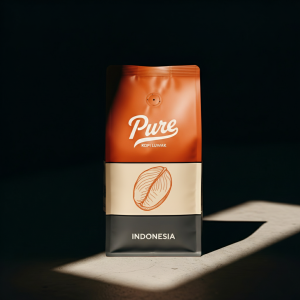
Pure Kopi Luwak
Wild civet coffee from Java. 88.5 SCA cupping score. From $125 for 100g.
Why Serious Coffee People Haven’t Tried It
Here’s the counterintuitive truth about the premium coffee enthusiast market: the people most likely to appreciate genuine wild kopi luwak are often the least likely to buy it. The specialty coffee world has built a particular kind of skepticism around kopi luwak — partly because the vast majority of what’s sold under that name is farmed, fake, or both, and partly because the category’s reputation was badly damaged in the mid-2000s by tourist-trap cafés selling low-grade cage-farmed product at absurd markups.
The result is that a serious home barista with an aeropress and a subscription to three different roasters has almost certainly never tasted what authentic wild-sourced kopi luwak actually is. They’ve dismissed the category based on a reputation built on counterfeits. Giving them a verified, wild-sourced, Javanese Arabica kopi luwak doesn’t just give them a bag of coffee — it gives them something to reconsider. That’s a genuinely interesting gift.
Annual global production of truly wild kopi luwak — collected from free-ranging civets on Indonesian farms, not cage-farmed imitations — is estimated at somewhere between 500 and 1,000 kilograms per year. Compare that to the approximately 170 million 60-kilogram bags of regular coffee traded globally in 2023/24. Wild kopi luwak represents approximately 0.00001% of the total coffee supply. For someone who has tried everything that specialty roasters offer, that scarcity is meaningful. They’ve had the Cup of Excellence lots. They’ve had the award-winning Gesha. They haven’t had this.
Try the coffee this article is about
Wild-sourced from Java, 88.5 SCA cupping score, free US shipping. From $125 for 100g.
Shop Pure Kopi Luwak →The Flavor That Surprises Even Skeptics
The tasting experience of genuine wild kopi luwak genuinely surprises people who come in expecting to be underwhelmed. The smoothness is the first thing — a near-complete absence of bitterness that reads as luxurious rather than flat. Then the body: heavier than a washed Ethiopian or a light-roasted Kenyan, with a velvety texture that coats the palate. Flavor notes run toward dark chocolate, dried fruit, and an earthy undertone that reflects the Typica Arabica variety grown on Java’s volcanic highlands at 1,200 to 1,600 meters.
The low acidity is genuinely notable. Most premium specialty coffees lead with acidity — it’s the primary vehicle for expressing terroir and variety character. Wild kopi luwak’s acidity is muted by the civet’s digestive process, which modifies the malic and citric acid concentrations in the bean. The flavor complexity comes from body and finish rather than brightness. For someone whose palate has been trained on high-acidity specialty coffee, this is a genuinely new experience — not better or worse, but different in a way that reveals something new about what coffee can be.
What Makes This Work as a Gift
Three practical reasons why wild kopi luwak solves the “person who has everything” problem better than most alternatives:
First, it’s consumable. The espresso machine they already own keeps sitting on the counter. A bag of coffee they drink and remember doesn’t clutter a kitchen or create a “what do I do with this?” problem six months later. An experience remembered beats a thing owned, and the person who has everything usually already owns enough things.
Second, it comes with genuine stories. The biological mechanism behind wild kopi luwak — the enzymatic processing, the civet’s role as a quality sorter, the specific Javanese origin — is interesting enough that a serious coffee person will spend twenty minutes researching it after they open the bag. You’re not giving them coffee. You’re giving them a rabbit hole.
Third, it’s something they can share. A 100-gram bag brews approximately 6 to 10 cups depending on the method — enough to make a production of it, serve it to guests, and have the conversation it inevitably generates. Premium experiences are better when they’re social, and this one is easier to share than most.
If you want to verify the sourcing before buying, the provenance details and flavor notes are covered in the buyer’s guide here. And if you’re wondering what serious coffee people say when they actually taste it, the Blue Mountain comparison gives you a side-by-side with another premium coffee their palate likely already knows.
Pure Kopi Luwak
Wild civet coffee from Java. 88.5 SCA cupping score. From $125 for 100g.
Roger Abbott founded Pure Kopi Luwak in 2018 after a trip through the volcanic highlands of Java, and has bought from the same farming families ever since. He only works with collectors of wild civet coffee, never caged. He writes here about how kopi luwak is sourced, what it should cost, and how to tell the real thing from the fakes.