The return from Hajj is unlike any other homecoming. The pilgrim who walks back through the door has just completed the fifth pillar of Islam — a journey to Mecca that roughly 1.8 to 2 million Muslims make each year, and that many others wait decades to undertake. The Hajj is not a vacation. It is, for those who practice it, the culmination of a lifetime of intention. What you give someone who has just returned from that is not a casual choice.
It should be worthy of the occasion. It should carry meaning. And for a coffee lover, it should be the best cup they've ever had.
The Islamic Roots of Coffee Culture
Coffee and Islam have shared a history stretching back to the 15th century. The beverage we recognize as coffee was first cultivated and traded in Yemen, where Sufi monks in Mocha — now Al-Mukha — used it to sustain concentration during nighttime prayers. The word qahwa, from which both the Arabic kahwa and the English “coffee” derive, appears in Islamic texts from the 1400s before it appears in any other written tradition. The first coffeehouses, the qahveh khaneh of 15th-century Arabia and 16th-century Istanbul, were Islamic social institutions before they became anything else.
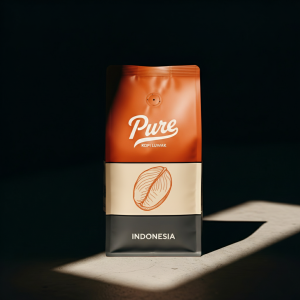
Pure Kopi Luwak
Wild civet coffee from Java. 88.5 SCA cupping score. From $125 for 100g.
For many Muslims, coffee is not incidental to their culture. It is part of it.
Wild kopi luwak from Java, Indonesia — the world's largest Muslim-majority nation, with approximately 237 million Muslims among its 272 million people — sits at a specific intersection: it is both the world's rarest coffee and a product of a country whose majority population shares the faith of the pilgrim you're welcoming home. Java's coffee highlands, where wild Asian palm civets forage among Arabica plants at elevations above 1,000 meters, are part of the same archipelago that sends more pilgrims to Mecca each year than any other single country. Indonesia regularly accounts for 200,000 or more of Hajj's annual attendees.
Halal, Tested, and Traceable
Wild kopi luwak is halal. The question arises because the coffee's unusual production method involves the beans passing through the digestive tract of a wild civet — but Islamic scholars have consistently ruled that coffee processed this way is permissible. The beans are extracted whole, thoroughly washed, sun-dried, and roasted at temperatures above 200°C, a process that eliminates any biological residue. Indonesian Muslim scholars have addressed this specifically, and the consensus holds: genuine wild kopi luwak is halal.
Pure Kopi Luwak is sourced from wild civets on Javanese farms, independently tested before every shipment, and carries complete origin traceability from collection to roast. For a gift that crosses cultural lines, this transparency matters.
Why This Gift Works for This Occasion
When a Hajji returns, the traditional reception is communal. Family gathers. There are meals, prayers, and the retelling of the journey. The pilgrim is newly titled — Hajji for a man, Hajjia for a woman — and the occasion calls for something that acknowledges the transformation of the journey, not just the completion of it.
A gift that is itself rare and carefully sourced carries a kind of resonance appropriate to this occasion. Wild kopi luwak is produced in quantities so small that the entire annual global supply from genuinely wild-sourced operations amounts to a fraction of a percent of the world's coffee market. The rarity is inherent in how the coffee is made. Wild civets cannot be farmed or scaled. The supply is limited by what the jungle produces and by the selective foraging behavior of animals that choose only peak-ripe coffee cherries. For someone who has just completed a pilgrimage that also cannot be rushed or manufactured — that takes years of preparation and a journey of genuine spiritual intention — a gift whose value is irreducible to commodity pricing feels right in a way that most gifts do not.
How to Give It
A 100g bag of Pure Kopi Luwak — sourced from Java and roasted to a medium profile that preserves the bean's smooth, low-bitterness character — yields 10 to 12 cups. The gift works best with a brief note explaining what the coffee is: wild-sourced, Javanese, halal, the product of a country whose Muslim population is larger than Saudi Arabia and Egypt combined. The geography alone makes it meaningful.
For those who prefer Arabic-style preparation, kopi luwak works well brewed with light cardamom, which complements the coffee's natural earthiness. For those who prefer the clean expression of the bean, pour-over or French press allows the full complexity to develop without interference. Either way, the cup that meets a pilgrim on the other side of Hajj deserves to be something worth returning to. The journey was extraordinary. The coffee that waits at home should be equal to it.
Pure Kopi Luwak
Wild civet coffee from Java. 88.5 SCA cupping score. From $125 for 100g.
Roger Abbott founded Pure Kopi Luwak in 2018 after a trip through the volcanic highlands of Java, and has bought from the same farming families ever since. He only works with collectors of wild civet coffee, never caged. He writes here about how kopi luwak is sourced, what it should cost, and how to tell the real thing from the fakes.