Every International Women’s Day, the global flower industry records one of its largest single-day revenue spikes of the year. In the UK alone, March 8 has become the fourth-largest flower-gifting occasion behind Valentine’s Day, Mother’s Day, and birthdays. Approximately 70 million roses are sold in the week surrounding IWD globally — and virtually every single one of them will be dead within ten days. It is, by almost any measure, the most reliable way to spend $50 on something that will be forgotten by the weekend.
The coffee case opens right there. A 100-gram bag of wild-sourced kopi luwak from Java lasts weeks, produces roughly ten genuinely exceptional cups, and costs less than a proper floral arrangement from any florist with a reputation to protect. The practical case is straightforward. The interesting question is why more people have not made this substitution already.
The Range of Relationships IWD Covers
International Women’s Day is not Valentine’s Day, and the gifting logic is different. You might be buying for a colleague, a mentor, a friend, a mother, a sister, a manager, or a business partner. The range of relationships IWD encompasses is broader than almost any other gifting occasion — which means the gift needs to translate across contexts without becoming so generic it communicates nothing.
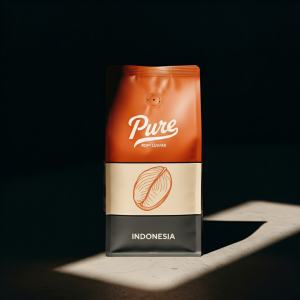
Pure Kopi Luwak
Wild civet coffee from Java. 88.5 SCA cupping score. From $125 for 100g.
Wild kopi luwak from Java works across that range in a way that jewelry or spa vouchers do not. It is consumable, so there is no awkwardness about whether it fits or whether they have room for it. It does not carry the personal intimacy of perfume or clothing — making it appropriate for professional relationships without reading as cold. And the story — wild-sourced, ethically collected, the result of a biological process that cannot be industrialized — gives the gift a narrative weight that flowers simply do not carry. You are not giving a commodity. You are giving access to something rare, with a clear reason why that rarity matters.
Women and Coffee Production
There is a dimension to this gift worth knowing even if you do not make it explicit in the giving. Women are disproportionately represented among Indonesian smallholder coffee farmers. In Java’s highland growing regions, women perform an estimated 60 to 80 percent of the manual coffee harvesting labor. A 2021 study by the Fairtrade Foundation found that women make up roughly 70 percent of the agricultural labor force in coffee-growing regions across East Africa and Southeast Asia, while owning less than 20 percent of the land — a disparity that transparency-focused producers are actively working to address.
Buying wild kopi luwak from a producer whose sourcing is documentable connects the March 8 occasion to the labor that produced it in ways that most luxury consumables do not make possible. Whether or not you say this aloud in the giving, the connection exists. For someone who pays attention to where things come from — and IWD tends to attract recipients who do — it is a detail that elevates the gift.
For the Coffee Professional
If the woman you are buying for works in coffee — roasting, cafe management, hospitality, food and beverage consulting — wild kopi luwak holds a particular symbolic position. It is the coffee the entire specialty industry conversation has been shaped around: studied, sometimes dismissed by people who encountered cage-farmed versions and generalized incorrectly, debated in professional forums. A bag of genuinely wild-sourced Javanese kopi luwak from a producer whose supply chain is traceable makes the ethical case and the quality case simultaneously.
For someone who takes coffee seriously as a profession, this is a gift that demonstrates you took the subject seriously too. The research is visible in the choice.
For the Reluctant Coffee Drinker
If the woman you are buying for drinks coffee mostly because she needs to rather than because she is excited about it, wild kopi luwak is a genuine entry point to caring. The smoothness is not subtle. The absence of bitterness that makes ordinary coffee feel medicinal is immediately apparent, even to someone who normally does not notice these differences. People put off by coffee’s usual harshness consistently find that kopi luwak’s low-acid, low-bitterness profile changes their experience enough to shift their relationship with coffee entirely.
The framing is simple: “I know you drink coffee because you have to. This one, I think you’ll drink because you want to.” That is a meaningful thing to give someone on March 8. Let the cup make the argument.
Timing and the Card
International Women’s Day 2027 falls on Monday, March 8 — early enough in the year that ordering in late February is comfortable, specific enough that it connects clearly to the occasion. A good card matters as much as the coffee. Write the story: wild civets in Java’s highlands selecting peak-ripe cherries by scent before dawn, an enzymatic transformation that produces the smoothest Arabica you can make at home, a cup that cannot be replicated by any industrial process. Tell them what it is. The first cup is better when they know what they are tasting.
Pure Kopi Luwak
Wild civet coffee from Java. 88.5 SCA cupping score. From $125 for 100g.

Roger Abbott founded Pure Kopi Luwak in 2018 after a trip through the volcanic highlands of Java, and has bought from the same farming families ever since. He only works with collectors of wild civet coffee, never caged. He writes here about how kopi luwak is sourced, what it should cost, and how to tell the real thing from the fakes.