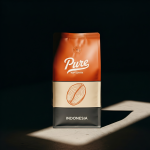
Indonesia produces kopi luwak on three major islands: Java, Sumatra, and Sulawesi. When a bag simply reads “Indonesian kopi luwak” without further specification, that’s the full flavor range you’re buying into — a spectrum that runs from the clean, chocolate-forward coffees of Java’s washed Arabica highlands to the heavy, herbal, earthy character that Sumatra’s distinctive wet-hulling process produces. For a $125 bag, the distinction is worth understanding before you order.
How the Two Islands Process Coffee Differently
Java’s highland farms — concentrated on the Ijen Plateau at the island’s eastern end, growing Arabica Typica at elevations between 1,200 and over 1,500 meters above sea level — use washed processing. Cherries are depulped, fermented briefly in water tanks to remove mucilage, and then dried on raised beds or patios. The result is a clean cup with moderate acidity, notes of chocolate and mild spice, and a flavor that expresses the terroir without interference from the processing method itself.
Sumatra uses giling basah — wet hulling — a method essentially unique to this island. Cherries are depulped and then hulled while the beans still contain 25 to 35 percent moisture, compared to the 11 to 12 percent typical of fully dried beans before hulling in other origins. That early hulling leaves the bean structurally more porous and initiates a different set of microbial fermentation reactions during drying. The characteristic Sumatran flavor — earthy, herbal, woody, full-bodied, low acidity — is a direct product of giling basah, not a reflection of the soil or altitude in isolation.
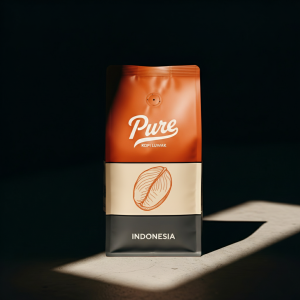
Pure Kopi Luwak
Wild civet coffee from Java. 88.5 SCA cupping score. From $125 for 100g.
What This Means for Kopi Luwak Specifically
The civet’s enzymatic contribution operates on whatever bean it starts with. Proteolytic enzymes in the digestive tract reduce specific bitter-precursor proteins; the acid profile shifts toward lower concentrations of malic and citric acids. These changes are real and consistent across origins, but they’re applied to the baseline flavor the bean already carries.
A wild Javanese civet consuming Arabica Typica from the Ijen Plateau produces kopi luwak that starts from a clean, well-defined base — chocolate, mild spice, moderate sweetness — and refines it into something smoother and more rounded through enzymatic modification. The transformation is precise because the starting material is precise. The civet’s contribution stands out clearly against a clean washed backdrop.
A wild Sumatran civet consuming giling basah-processed coffee produces kopi luwak that begins from a heavier, earthier baseline. The enzymatic modification reduces the bitterness, but the processing-driven earthiness and full body remain — they’re structural characteristics of how the bean was handled, not of bitter compounds that digestive enzymes address. The result is a more intense, rustic cup that some experienced drinkers actively prefer, but that can read as muddy or overwhelming to palates expecting kopi luwak’s signature smoothness.
The Practical Buying Implication
If you’re buying kopi luwak for the core experience — the smoothness, the low bitterness, the long sweet finish that makes it categorically different from standard Arabica — Java-origin is the cleaner choice. Washed processing lets the enzymatic transformation express itself fully without competing flavor layers from fermentation-derived earthiness. The civet’s work is more legible against a clean foundation.
If you want maximum intensity and prefer your coffee to have presence rather than clarity, Sumatran kopi luwak delivers that. But be clear-eyed about the source of that character: it’s the giling basah process, not the civet processing, that dominates the cup profile in Sumatran beans.
Pure Kopi Luwak sources exclusively from Java’s highland farms, specifically from the volcanic highlands of West Java. That choice reflects a preference for the expression of kopi luwak that shows the enzymatic transformation most clearly — a clean base, a smooth finish, low bitterness, and a cup that makes the case for wild civet processing through precision rather than intensity. For more context on Java’s Arabica profile versus Sumatra’s, see the full origin comparison on this site.
A Note on Sulawesi
Sulawesi’s Toraja region produces a smaller quantity of kopi luwak with a flavor profile distinct from either Javanese or Sumatran expressions: spicy, winey, and complex in ways that reflect the region’s higher elevation and different cultivar mix. Toraja coffee grows in the island’s central highlands, producing a heavier-bodied, darker-fruited cup. Sulawesi kopi luwak from verified wild-sourced operations is genuinely rare — rarer than Java or Sumatra — and commands prices that reflect both scarcity and demand from connoisseurs seeking something beyond the standard two-island comparison.
For most buying decisions, the Java versus Sumatra question is the operative one. Know what you’re starting from, and the choice becomes straightforward: clarity or intensity, clean transformation or layered complexity. Both are authentic expressions of the same biological process on different Indonesian soils.
Pure Kopi Luwak
Wild civet coffee from Java. 88.5 SCA cupping score. From $125 for 100g.

Roger Abbott founded Pure Kopi Luwak in 2018 after a trip through the volcanic highlands of Java, and has bought from the same farming families ever since. He only works with collectors of wild civet coffee, never caged. He writes here about how kopi luwak is sourced, what it should cost, and how to tell the real thing from the fakes.