A bag of kopi luwak bought as a gift creates a specific problem: the recipient owns 100 grams of the world’s rarest whole-bean coffee, and they have a Nespresso machine. This gap between what they received and what their brewing setup can actually use has driven genuine demand for kopi luwak in capsule format — and several producers have responded. The question worth answering before you buy either the bag or the box of pods is what the capsule format actually does to a coffee that justifies its price through the subtlety of its fermentation chemistry.
The short version: kopi luwak capsules are legitimate products made by reputable producers, and they are a meaningful step below what the same beans deliver as whole-bean pour-over. Understanding exactly why helps you decide whether the convenience is worth what you give up.
What’s in a Kopi Luwak Capsule
The two most established producers of Nespresso-compatible kopi luwak pods are The Kopi Luwak Company, which markets its product under the Shangri-La brand, and Sea Island Coffee, based in the UK. Both claim wild-sourced Indonesian beans. Sea Island specifies 5.2 grams of coffee per capsule, which is consistent with the dose that Original Line Nespresso machines are designed to extract from.
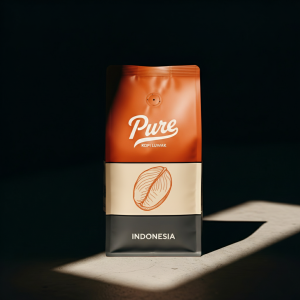
Pure Kopi Luwak
Wild civet coffee from Java. 88.5 SCA cupping score. From $125 for 100g.
Five grams is the first trade-off. A standard pour-over or French press dose for specialty coffee runs between 8 and 12 grams per cup, calibrated for the low-pressure, extended contact that filter brewing involves. The espresso format that Nespresso uses — 9 bars of pressure, 20 to 30 seconds of extraction — works at smaller doses because pressure extraction is more efficient per gram. The chemistry is different, and in the case of kopi luwak, the difference matters because what makes the coffee distinctive is precisely what high-pressure extraction handles least gently.
What High-Pressure Extraction Does to Kopi Luwak’s Character
The qualities that wild kopi luwak delivers — its characteristic smoothness, the reduction in bitterness, the rounded body without sharp acid edges — are largely the product of proteolytic enzyme activity during civet digestion. Those enzymatic modifications are structural, baked into the bean’s chemistry. They survive roasting, grinding, and extraction. A kopi luwak espresso will be less bitter than a comparable non-civet Arabica espresso, regardless of format.
What espresso extraction cannot preserve is the aromatic complexity that defines the high end of the kopi luwak experience. The volatile compounds responsible for the subtle chocolatey, earthy top notes of a well-brewed cup are heat-sensitive and pressure-sensitive. Espresso’s extraction temperature (93-96°C, same as pour-over) is not the problem. The issue is that the compressed, accelerated extraction cycle does not allow the complex volatiles to develop and integrate the way they do in a four-minute French press or a two-to-three-minute pour-over bloom sequence. What you get from a capsule is a concentrated, smooth, low-bitterness espresso with genuinely interesting body. What you do not get is the full aromatic expression that makes wild kopi luwak worth the price differential over ordinary specialty coffee.
Try the coffee this article is about
Wild-sourced from Java, 88.5 SCA cupping score, free US shipping. From $125 for 100g.
Shop Pure Kopi Luwak →The Freshness Problem That Capsules Partially Solve
Capsule producers address the pre-grinding freshness issue with nitrogen flushing — a process that displaces oxygen inside the sealed capsule with inert nitrogen, dramatically slowing the oxidation that destroys volatile aromatics after grinding. This is the strongest argument for the capsule format: a nitrogen-flushed kopi luwak capsule opened immediately before use is fresher than kopi luwak whole beans that were ground several days ago and stored in an ordinary bag.
The comparison that matters, though, is not capsule versus stale pre-ground. It is capsule versus freshly ground whole beans. On that comparison, whole beans win without contest. The volatile aromatic compounds that contribute to kopi luwak’s complexity begin degrading within minutes of grinding, which is why every serious kopi luwak brewing guide instructs you to grind immediately before extraction. Nitrogen flushing slows the clock after the capsule is filled; it cannot undo the initial flavor loss that occurs during the grinding and filling process at the factory.
Authentication and the Capsule Opacity Problem
Whole kopi luwak beans can be examined. Their color, shape, surface texture, and the presence of the thin inner parchment remnant called “kulit ari” all provide visual confirmation that the beans passed through a civet’s digestive system. A knowledgeable buyer can spot signs of cage-farmed or non-civet beans by looking at the product. None of this is possible with a capsule.
The contents of a sealed capsule are invisible and the ground coffee inside cannot be evaluated in the way that whole beans can. You are relying entirely on the producer’s claim about origin and processing method. This is also true of pre-ground bags, but capsules add an additional layer of opacity because the format is specifically designed for convenience rather than scrutiny. For buyers who take authentication seriously, the capsule format requires a degree of trust in the producer that the whole-bean format does not.
When Capsules Make Sense
There is a clear use case for kopi luwak capsules: gifting to someone who owns a Nespresso machine and has no intention of buying a grinder. The alternative — giving them a bag of whole beans they cannot use — is worse than a capsule gift that delivers a genuine, if partial, kopi luwak experience. A box of 10 to 20 kopi luwak pods represents a real experience at a real price point, and it removes the equipment barrier that stops many interested buyers from ever tasting the coffee.
For buyers purchasing kopi luwak to drink themselves, and who have access to a quality burr grinder and a filter brewing method, the whole-bean format from a verified producer is the right choice. Pure Kopi Luwak sells exclusively in whole-bean form — a deliberate decision based on the same reasoning that makes freshly ground coffee superior to pre-ground at every price point, compounded at the level of a $125 bag where the cost of compromised extraction is simply too high to justify.
The capsule exists to solve the convenience problem. It does that well. Whether convenience is the right priority when you are drinking one of the world’s rarest coffees is a question worth asking before you click purchase.
Pure Kopi Luwak
Wild civet coffee from Java. 88.5 SCA cupping score. From $125 for 100g.

Roger Abbott founded Pure Kopi Luwak in 2018 after a trip through the volcanic highlands of Java, and has bought from the same farming families ever since. He only works with collectors of wild civet coffee, never caged. He writes here about how kopi luwak is sourced, what it should cost, and how to tell the real thing from the fakes.