The most frequently cited piece of evidence against kopi luwak’s quality is a blind tasting result that has been repeated in coffee publications for more than fifteen years. Using the Specialty Coffee Association’s 100-point cupping protocol, a sample of kopi luwak scored two points below the lowest of three other coffees in the comparison, prompting the taster’s conclusion — widely quoted since — that the coffee “sold for the story, not superior quality.” The result appears in Wikipedia’s kopi luwak article. It shows up in mainstream journalism pieces whenever the coffee needs explaining. It’s treated as definitive.
The conclusion it’s used to support is that kopi luwak is a scam: an inferior product sold at premium prices because of a peculiar origin story. That argument is worth interrogating carefully, because it contains a significant logical error — one that says something important not just about kopi luwak, but about what coffee competitions actually measure.
How SCA Cupping Works and What It Rewards
The Specialty Coffee Association’s Q-grading system evaluates coffee on a 100-point scale across ten attributes: aroma (dry and wet), flavor, aftertaste, acidity, body, balance, uniformity, clean cup, sweetness, and an overall impression. To qualify as specialty grade, a coffee must score 80 or above and contain zero category-one defects per 300-gram green sample. Competition-level coffees — the kinds that appear in Cup of Excellence auctions — typically score in the high 80s or 90s.
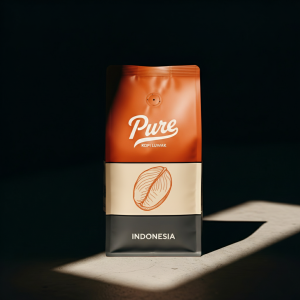
Pure Kopi Luwak
Wild civet coffee from Java. 88.5 SCA cupping score. From $125 for 100g.
The system is designed to reward a specific aesthetic: high, bright acidity, distinct fruit or floral notes, clean clear flavors with no off-notes, and a lingering distinctive aftertaste. These qualities are most commonly produced by washed-process Arabica from high-altitude origins — Ethiopian naturals and Kenyan AAs score well because they have the kind of assertive, complex profiles that the criteria are built to recognize. Gesha varieties from Panama’s Boquete region, which regularly sell for thousands of dollars per kilogram at auction, score 90+ because they present exactly the qualities the scale rewards: jasmine, bergamot, peach, precision.
What does kopi luwak present? Something almost structurally opposite. The enzymatic modification that occurs during civet digestion reduces specific bitter compounds and modifies the bean’s acid content, lowering citric and malic acid concentrations measurably. The result is a coffee that is smooth, full-bodied, earthy, chocolatey, and notably low in the bright acidity that Q-graders are trained to reward. On the SCA scale, low acidity is a characteristic that doesn’t score well. It’s penalized, or simply doesn’t earn the points that a bright Ethiopian Yirgacheffe would earn for the same attribute.
Try the coffee this article is about
Wild-sourced from Java, 88.5 SCA cupping score, free US shipping. From $125 for 100g.
Shop Pure Kopi Luwak →The Problem of Applying One Framework to Two Different Products
Imagine using a point system designed to evaluate alpine white wines — judging for crispness, acidity, minerality, and aromatic precision — to evaluate an aged Burgundy red. The Burgundy would score poorly. Its tannin structure, its warmth, its earthy complexity would look like failures through that lens. The conclusion that the Burgundy is inferior would be defensible from within the scoring system and completely wrong as a statement about the wine’s actual quality or appeal.
Something similar happens when specialty coffee evaluation tools are applied to wild kopi luwak. The SCA scale was developed to identify and reward the best expression of what specialty coffee does — the characteristics of carefully selected, carefully processed, carefully roasted Arabica. Wild kopi luwak is not attempting to do those things. Its processing is not designed to maximize brightness or acidity. It is designed — by the biology of the civet that selects and digests the cherries — to produce smoothness, depth, and a specific kind of modified complexity that the SCA scale simply isn’t built to capture.
This isn’t a defense of all kopi luwak. The market is flooded with cage-farmed, low-quality, blended, and outright fraudulent products, and those products genuinely are inferior — not just to specialty competition coffees, but to any decent Arabica. The competition results that circulate as evidence of kopi luwak’s inferiority mostly reflect those products. But what they tell us about genuine wild-sourced kopi luwak from Java, collected from free-roaming civets processing peak-ripe cherries, is essentially nothing.
What Competitions Prove — and What They Don’t
Coffee competitions serve a specific and valuable function: they create a discoverable ranking system for farmers and roasters, establishing price signals that can improve production standards across origins. A farm that wins Cup of Excellence for its washed Kenyan lot earns a meaningful premium that reinforces the practices that produced it. The system generates positive feedback loops. It works for what it’s designed to do.
What it wasn’t designed to evaluate is luxury products that operate on a different axis entirely. Aged Champagne doesn’t enter the wine competitions that judge crisp unoaked whites. Single malt Islay Scotch doesn’t compete in the blind tastings that reward easy-drinking bourbon. These products have their own markets, their own evaluation criteria, and their own price discovery mechanisms — none of which require them to place well in a competition built for something else.
Wild kopi luwak exists in that space. It doesn’t have an SCA score. Its price isn’t derived from competition placement. It’s derived from the genuine scarcity of wild civet processing, the premium of Javanese Arabica as a starting material, and the specific flavor profile that results — a profile that the competition circuit doesn’t reward and never claimed to. The two-point deficit in that 2008 blind tasting proves exactly one thing: that kopi luwak doesn’t score well on a scale designed to evaluate something else. What it doesn’t prove is that the coffee isn’t worth experiencing, or that its character isn’t real, or that the people who pay premium prices for it are simply buying a story.
They’re buying a cup that tastes different from anything the competition circuit produces — smoother, lower in acidity, more chocolatey, more settled. Whether that’s better or worse depends entirely on what you’re looking for. The competition circuit has an answer to that question. It’s not the only answer there is.
Pure Kopi Luwak
Wild civet coffee from Java. 88.5 SCA cupping score. From $125 for 100g.

Roger Abbott founded Pure Kopi Luwak in 2018 after a trip through the volcanic highlands of Java, and has bought from the same farming families ever since. He only works with collectors of wild civet coffee, never caged. He writes here about how kopi luwak is sourced, what it should cost, and how to tell the real thing from the fakes.