The first cup of genuine wild kopi luwak tends to produce a specific response in people who drink good coffee regularly: they pause, they taste it again, and then they ask the same question. “Can I actually do this every morning?” Not as hyperbole — as a real question about math and possibility and what it would mean to start every day with something this far outside the ordinary.
The answer is yes. And the math is more comfortable than you’d expect.
The Numbers, Honestly
A 100g bag of Pure Kopi Luwak costs $125. A 250g bag costs $199. Those numbers look large until you translate them into cups.
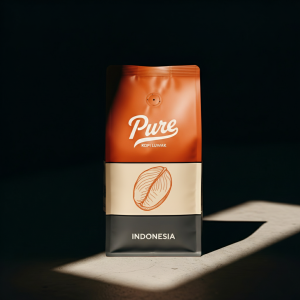
Pure Kopi Luwak
Wild civet coffee from Java. 88.5 SCA cupping score. From $125 for 100g.
For pour-over or AeroPress — both methods that give kopi luwak the clarity it deserves — a standard dose runs between 12 and 15 grams of coffee per cup. At 12g per cup, a 100g bag yields approximately eight cups. At 12g, the 250g bag yields roughly 20 cups.
That’s $15.60 per cup from the 100g bag, and $9.95 per cup from the 250g bag. The 250g bag — if you’re committed — is almost exactly $10 per cup of genuinely exceptional coffee.
Compare that to the specialty coffee shop reality: a well-made pourover in New York, London, or Sydney now commonly runs $7 to $12. A latte is $6 to $9. The gap between the café and the kopi luwak at home is smaller than the initial $125 price tag suggests. And unlike the café cup, you know exactly what’s in your cup, where it came from, and how it was processed.
What Daily Use Actually Does to the Experience
There’s a commonly held view that rarity is best preserved by rationing — that the occasional cup is more precious than the daily one. For some luxury goods this is true. For coffee, it’s wrong.
Flavor is freshness. Green coffee beans, even vacuum-sealed, undergo slow oxidative changes after roasting. The volatile aromatics that make the cup distinctive — the compounds that explain the dark chocolate register and the long, clean finish of high-quality wild kopi luwak — are most vibrant in the weeks following roasting and begin fading over months of storage.
A bag of kopi luwak rationed to one cup per week is a bag spending most of its life losing the qualities that justify its price. A bag consumed daily over eight to ten days — opened, kept in an airtight container away from light, ground fresh each morning — delivers the coffee at its best, consistently.
The Japanese concept of kanso — the simplicity that reveals complexity — applies here. A daily ritual with a genuinely excellent cup is not diminished by repetition. It’s refined by it. You notice more on the fifth cup than on the first, because you’ve learned to taste what’s actually there: the syrupy body, the specific earthiness, the absence of bitterness that most coffees carry. Daily drinking is how you learn a coffee.
The Practical Ritual
Wild kopi luwak brews best as a pour-over or in an AeroPress — both methods that let the bean’s intrinsic character dominate rather than the extraction variables of pressure or emulsification. Grind immediately before brewing, using a medium-coarse grind for pour-over or a medium-fine for AeroPress. Water temperature between 93°C and 96°C (199°F to 205°F) is the range that extracts the complex middle notes without introducing astringency.
The morning ritual this creates takes about four minutes from grinding to cup. That four minutes — quiet, focused, waiting for the bloom, pouring the water slowly in concentric circles — is qualitatively different from pressing a button on a capsule machine. It’s also different from standing in a café queue. It’s an act of deliberate attention at the start of a day, and the cup it produces rewards that attention every time.
For people who drink one cup a day and genuinely care what’s in it, the 250g bag at $199 provides 20 mornings of exceptional coffee. Over the month it lasts, the daily cost is competitive with a modest café habit — and dramatically better than a serious café habit.
The Question Behind the Question
When someone asks “can I drink kopi luwak every day,” they’re usually not asking about logistics. They’re asking for permission to want the best thing, regularly, without guilt about the expense.
The honest answer is that a $10-to-$15 morning cup is a luxury, and you should make that choice deliberately rather than accidentally. But if you currently spend $7 at a café four mornings a week, you’re already spending $28, and what you’re getting for that $28 is four cups of someone else’s beans, in someone else’s space, with no particular knowledge of the origin or processing.
The kopi luwak at home gives you more for less: a cup whose provenance you understand, whose flavor has been shaped by one of the most unusual natural processes in the coffee world, brewed by you in your kitchen in four minutes.
That’s not a hard trade to justify. Most people who try it find the harder thing is going back to anything else.
Pure Kopi Luwak
Wild civet coffee from Java. 88.5 SCA cupping score. From $125 for 100g.

Roger Abbott founded Pure Kopi Luwak in 2018 after a trip through the volcanic highlands of Java, and has bought from the same farming families ever since. He only works with collectors of wild civet coffee, never caged. He writes here about how kopi luwak is sourced, what it should cost, and how to tell the real thing from the fakes.