The Technivorm Moccamaster has sat on more kitchen counters than any other drip machine in the premium segment — and it has one genuine advantage over competitors that matters if you’re brewing kopi luwak: it reliably reaches 200°F at the showerhead. The Specialty Coffee Association sets the target window for all brewing at 195 to 205°F (90 to 96°C). Most budget drip machines never get close, stalling at 180 to 185°F and producing coffee that tastes flat, thin, or slightly sour because the temperature isn’t high enough to complete extraction.
The short answer to whether you can brew kopi luwak in a drip machine is yes — with conditions. The longer answer is that the conditions matter considerably more at $125 per 100g than they do at $15 per 250g. Here’s what to know before you use your drip machine for the world’s rarest coffee.
The Temperature Problem Most Drip Machines Have
Entry-level drip coffee makers from Cuisinart, Mr. Coffee, and similar brands typically brew between 170°F and 185°F. That’s well below the SCA’s target. Coffee under-extracted at that temperature tastes sour or weak — the soluble compounds that create sweetness and body haven’t been fully drawn out. For a commodity coffee, this is annoying. For kopi luwak, which you bought specifically for its low-bitterness, chocolate-adjacent complexity, it’s a genuine problem.
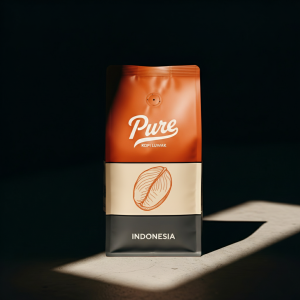
Pure Kopi Luwak
Wild civet coffee from Java. 88.5 SCA cupping score. From $125 for 100g.
The Moccamaster KBG brews consistently at 196 to 203°F across multiple third-party tests, including the SCA’s own certification process, which verifies brew temperature, total dissolved solids in the brew, and contact time. Among auto-drip machines, it’s one of a relatively short list — the Breville Precision Brewer, the OXO Brew 9-Cup, and the Bonavita 8-Cup are others — that consistently qualify for SCA certification. If you own one of these, or plan to buy one, a drip machine is a legitimate choice for kopi luwak. If you don’t, the answer changes.
What Paper Filters Do to Kopi Luwak
The other variable is filtration. Standard drip machines use paper filters, which strip oils from the brew. Those oils — primarily diterpenes called cafestol and kahweol — are responsible for the mouthfeel and body that distinguish high-quality coffee from thin, watery brews. French press and siphon methods use metal mesh that lets the oils pass through. Pour-over with a paper filter removes them. Drip with a paper filter removes them too.
For kopi luwak specifically, this is worth thinking about. One of the distinguishing qualities of wild civet-processed beans is a full, velvety body — heavier and rounder than most other premium coffees, with a mouthcoating smoothness that comes partly from the enzymatic transformation inside the civet’s digestive system. A paper filter doesn’t destroy the flavor, but it does strip some of the body that makes kopi luwak feel distinctive in the mouth. You’ll still taste the chocolate notes, the low bitterness, the clean finish. You’ll lose some of the weight.
If preserving body is a priority, French press is still the single most direct way to experience kopi luwak’s full texture. A pour-over using a thinner paper filter (Hario V60 rather than Chemex) retains slightly more oil than a drip machine’s flat-bottom filter, and gives you more control over bloom, pour rate, and timing. The drip machine comes third — acceptable, convenient, but not optimal.
Try the coffee this article is about
Wild-sourced from Java, 88.5 SCA cupping score, free US shipping. From $125 for 100g.
Shop Pure Kopi Luwak →Grind Size and Ratio for Drip Brewing
If you’re using a drip machine, use a medium grind — comparable to table salt in particle size, roughly 500 to 600 microns. This is slightly finer than you’d use for a Chemex but coarser than espresso. For kopi luwak in particular, go slightly coarser than your normal drip grind, because civet-processed beans have softer internal structure due to enzymatic protein breakdown in the digestive tract. They grind finer at equivalent settings on most burr grinders. Starting one notch coarser than usual prevents over-extraction and preserves the low-bitterness profile you paid for.
For the brewing ratio, use 10g of kopi luwak per 150ml of water (approximately 1:15). Standard drip brewing often calls for 1:17 — but kopi luwak’s syrupy body benefits from a slightly stronger ratio, and you want the full flavor, not a diluted pass at it. Most drip machines accept a water volume input: set it to whatever volume you want and measure your grounds accordingly.
The Bloom Problem in Auto-Drip
Coffee releases CO2 rapidly after roasting, and freshly roasted beans release a burst of gas when first contacted with hot water — a process called the bloom. When CO2 is present, it interferes with extraction by creating a physical barrier between water and coffee solids. In manual brewing (pour-over, French press, AeroPress), you account for this by pouring a small amount of water first, waiting 30 to 45 seconds, then continuing. The bloom purges the CO2 and produces better, more even extraction.
Most drip machines don’t bloom. They pour continuously from the start, which means the first portion of water hits the coffee while it’s still off-gassing, producing slightly uneven extraction. Some premium machines solve this: the Breville Precision Brewer has a built-in pre-infusion mode that pauses the pour for 45 seconds. The OXO Brew does the same. If your drip machine has this setting, use it for kopi luwak — the improvement is noticeable, particularly if you’re using freshly roasted beans within two to three weeks of their roast date.
When to Use a Drip Machine for Kopi Luwak
Auto-drip makes sense for kopi luwak in one specific scenario: when you’re brewing more than one cup at a time, for multiple people, and you want a relatively consistent result without standing over the kettle for four minutes. If you’re hosting and want to serve kopi luwak with a meal, a 6- to 8-cup drip machine lets you produce a full pot in under six minutes. The body won’t be quite what you’d get from a French press, but the flavor will be there.
For a single cup, especially if you want to taste what wild Javanese kopi luwak actually does to your palate, skip the drip machine. It wasn’t designed for the careful, single-serving extraction that brings out the nuance. Pour-over or French press gives you more control, more body, and a more accurate introduction to what the coffee actually tastes like. The machine is fine. It’s just not the most flattering environment for the world’s most carefully sourced bean.
Pure Kopi Luwak
Wild civet coffee from Java. 88.5 SCA cupping score. From $125 for 100g.

Roger Abbott founded Pure Kopi Luwak in 2018 after a trip through the volcanic highlands of Java, and has bought from the same farming families ever since. He only works with collectors of wild civet coffee, never caged. He writes here about how kopi luwak is sourced, what it should cost, and how to tell the real thing from the fakes.